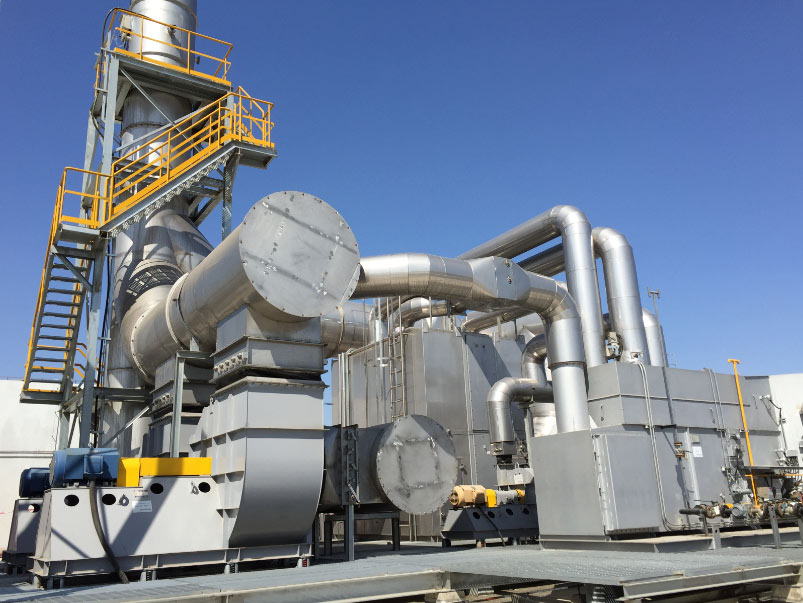

Industrial dust collection equipment must match the source, dust properties and required airflow. PollutionCtrl supplies configurable collection and extraction solutions for production lines, transfer points, hoppers, mixers, cutting stations and other industrial dust sources.
Equipment Scope
Typical equipment includes baghouse dust collectors, cartridge dust collectors, cyclone pre-separators, pulse-jet cleaning systems, fans, ductwork, hoppers, rotary valves, filter bags and control panels. We can discuss a complete dust collection system or individual replacement equipment.
What We Need for Selection
Useful design information includes air volume, number of pickup points, dust type, particle size, inlet concentration, gas temperature, humidity, operating schedule, available height and the desired discharge arrangement. These details help avoid an undersized fan or unsuitable filter media.
Maintenance and Operating Checks
Regular checks should cover pressure drop, pulse-cleaning air, filter condition, dust discharge, fan vibration, leakage and duct balance. Spare filter bags, cartridges, valves and instruments can be selected around the installed equipment.
Request an Industrial Dust Collection Quote
Send the dust type, particle size, air volume, inlet concentration, temperature, humidity, operating hours, available space and any combustible-dust requirements. We can review the process and recommend a suitable industrial dust collector configuration.
Dust Collection Fans, Ductwork and Replacement Parts
A complete industrial dust extraction system normally includes pickup hoods, ductwork, a dust collection fan, filter housing, cleaning controls and a dust discharge unit. Replacement filter bags, cartridge elements, pulse valves and pressure instruments should be selected against the installed collector and operating conditions.
Powder Handling and Process Dust
Dust collection for powder handling requires attention to transfer points, conveying velocity, product recovery, moisture and combustible-dust risk. Share the process data before selecting an industrial bag filter or pulse-jet baghouse.
Dust Collection Equipment by Application
- Industrial dust collection system
- Dust collector for food processing
- Dust collector for metalworking
- Dust collector for the chemical industry
- Explosion-proof dust collector
- Wet dust collector
- Cartridge dust collector
- Cyclone dust collector
- Silo vent filter
- Plastic sintered plate dust collector
- High-temperature pulse jet baghouse
- Low-temperature pulse jet baghouse
- Flue gas baghouse
- Dust collector filter bags
- Baghouse accessories
How do you choose a dust collection system?
Dust collection is specified from four properties of the dust and the process, not from a product name: the dust loading, the particle size distribution, the temperature and moisture of the gas, and whether the dust is combustible. Those four decide whether the answer is a baghouse, a cartridge collector, a cyclone or a wet scrubber — and getting them wrong is why a collector that works on one line fails on the next.
Dust collector types and where each fits
| Type | How it separates | Best for | Limitation |
|---|---|---|---|
| Baghouse (fabric filter) | Fabric bags, pulse-jet cleaned | Fine dust, high efficiency, high volume | Large footprint; fabric temperature limit |
| Cartridge collector | Pleated media in a compact housing | Fine dust with high filtration area in a small space | Media can blind with sticky dust |
| Cyclone | Centrifugal separation, no media | Coarse dust, pre-cleaning, high temperature | Lower efficiency on fine particles |
| Wet scrubber | Water contact, dust captured in liquid | Sticky, hot, or combustible dust | Water treatment and sludge handling |
What to measure before selecting
- Dust loading in g/m³ at the collector inlet, at the worst operating condition.
- Particle size distribution — the fraction below 10 µm drives the required efficiency.
- Gas temperature and whether it can spike, for example during a cleaning cycle.
- Moisture and dew point — condensate blinds filter media and corrodes the housing.
- Combustibility — Kst, Pmax and minimum ignition energy if the dust is combustible.
- Abrasiveness and stickiness, which decide the media and the cleaning method.
What to specify in a dust collector inquiry
A quotation is only comparable if it states the airflow, the inlet dust loading, the required outlet concentration, the gas temperature, the dust characteristics and the applicable code for the site. Without those, two suppliers will quote two different machines and the price difference will be meaningless.
Frequently asked questions
Baghouse or cartridge collector?
Baghouses handle higher temperatures and higher dust loadings and are more forgiving of sticky dust; cartridge collectors give more filtration area in less space and are easier to retrofit indoors. The choice usually follows from the dust condition, not the price.
Why does the airflow matter more than the dust loading?
Because the collector is sized on air-to-cloth ratio: airflow divided by filter area. A collector sized on dust loading alone will run at too high a ratio and blind the media.