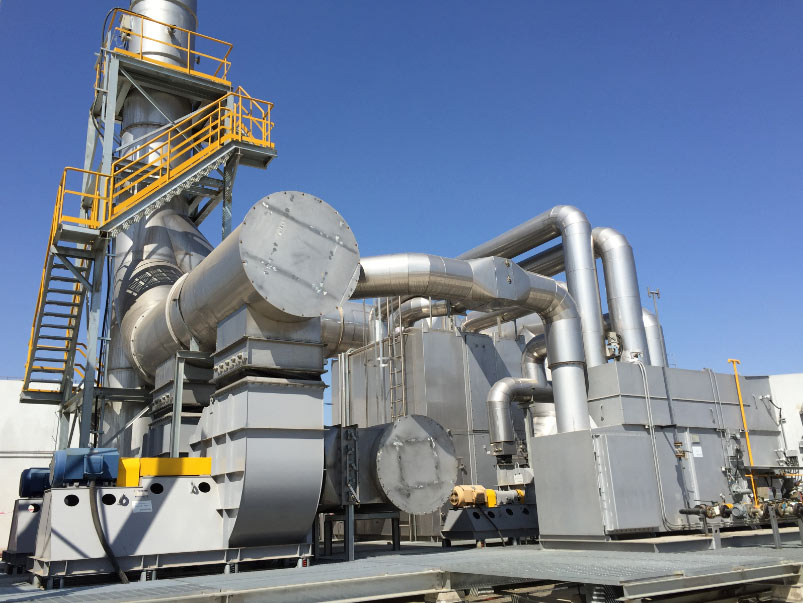

A pulse-jet baghouse engineered for boiler, kiln, incinerator, sinter and hot process exhaust, with cooling and high-temperature filter media to protect both the collector and the environment.
Key features
Click image to enlarge
Frequently asked questions
What temperature range does it handle?
The system is designed for hot process gas, with cooling stages and high-temperature media selected per application. Confirm your inlet temperature and moisture when enquiring.
Which industries use high-temperature baghouses?
Boilers, kilns, incinerators, sinter plants and other combustion or hot-process exhaust where gas must be cooled and filtered before discharge.
What cleaning system is used?
Pulse-jet cleaning with compressed air, allowing continuous operation with high dust loads and stable pressure drop.
What filter media is used for high-temperature service?
Media is selected from the inlet temperature, gas chemistry and dust characteristics. Common choices include PPS, P84, fibreglass and PTFE-based or coated media, with temperature limits matched to the actual operating window.
How is the baghouse protected from very hot gas?
Gas cooling (radiant or dilution), mixing with cooler air, or upstream heat recovery is used where the inlet temperature exceeds the media rating. Spark arrestors may also be fitted for combustion processes.
What is a High-Temperature Pulse-Jet Baghouse?
A high-temperature pulse-jet baghouse is an industrial dust collection system built to filter hot process and combustion exhaust gas. It combines a robust baghouse body with high-temperature filter media, pulse-jet cleaning and, where needed, gas cooling upstream. It is the practical choice where boiler, kiln, incinerator or sinter plant exhaust must be cleaned to an acceptable outlet dust level before discharge to atmosphere.
How it works
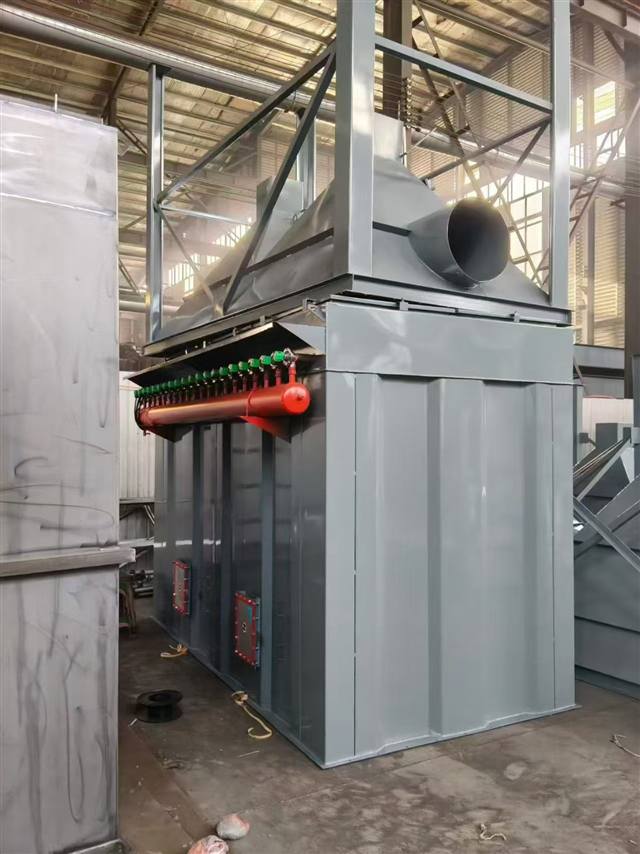
Hot, dusty gas enters the baghouse plenum and passes through the filter bags. Dust is captured on the outer surface of the media while clean gas exits the top of the unit. Pulse-jet cleaning delivers a short burst of compressed air into each row of bags, dislodging the dust cake into the hopper below. Because cleaning happens while the unit continues to operate, the collector maintains stable pressure drop and uninterrupted production. For very hot streams, a cooling stage or dilution is applied before the gas reaches the media, protecting both bags and housing.
Typical applications
- Boiler and utility flue gas
- Rotary and shaft kilns (cement, lime, ceramic)
- Incinerator exhaust after gas conditioning
- Sinter plants and pelletising lines
- Foundry and metal melting furnaces
- Drying and calcination processes
Key selection parameters
- Air volume and temperature at the inlet, including peaks
- Dust concentration, particle size and abrasiveness
- Moisture content and dew point of the gas
- Corrosive components (SOx, HCl, alkalis) in the stream
- Required outlet dust concentration or emission limit
- Available space, compressed air supply and operating hours
Related dust collection equipment
Need this dust collector sized for your process?
Send your dust source, airflow, temperature, dust load and operating conditions. We will recommend a practical system and filter configuration.
← Back to dust collection guide
High-Temperature Pulse-Jet Baghouse Selection Notes
Application: Designed for high-temperature flue gas and industrial dust streams where filter media, insulation and spark/fire protection must be selected carefully.
Key sizing data: Please provide gas temperature, airflow, dust concentration, particle size, humidity, acid gas, spark risk, emission limit and continuous operating hours.
System context: This product can be used as part of a complete industrial dust collection system. For comparison, see Flue-Gas Baghouse.
Request a quotation: Send dust source, airflow, temperature, humidity, dust concentration, particle size, emission limit, site layout and project country so our engineers can recommend the right dust collector configuration.