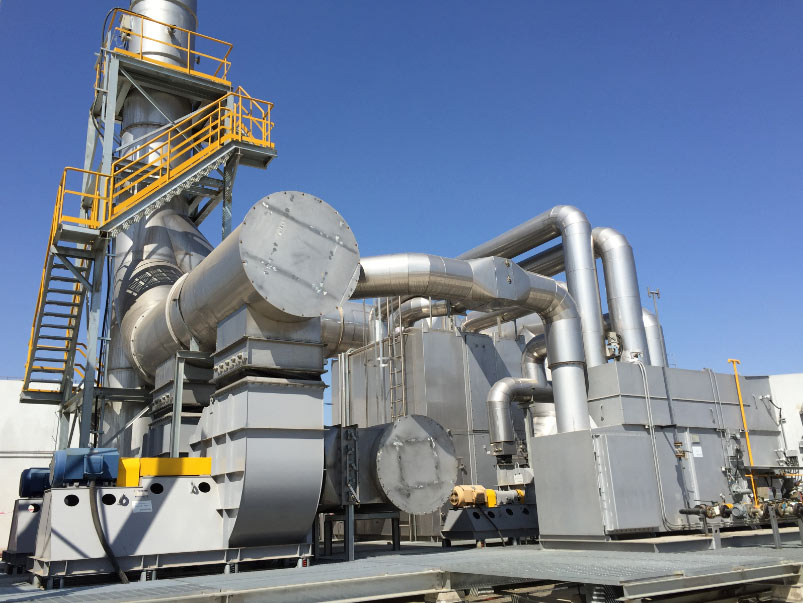

Regenerative Thermal Oxidizer Systems (RTO)
Custom two-bed, three-bed and rotary regenerative thermal oxidizer (RTO)
systems engineered around your airflow, VOC loading, process variability,
safety requirements and emission target. RTOs are a proven technology for
medium-to-high airflow industrial exhaust containing oxidizable VOCs, HAPs or
organic odors.
Performance depends on waste-gas composition, operating conditions and final
system design.
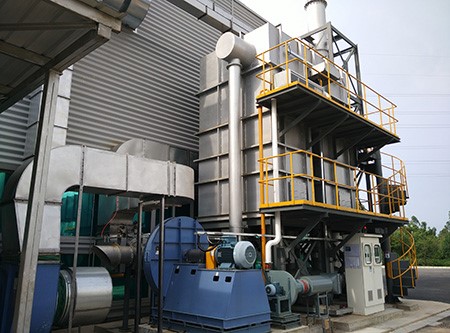
- Up to 99% VOC destruction efficiency*
- Up to 97% thermal recovery efficiency*
- 760–850 °C typical oxidation temperature
- PLC / HMI automated operation and interlocks
Is an RTO the right technology for your exhaust stream?
An RTO is commonly evaluated for medium-to-high airflow industrial exhaust
containing oxidizable VOCs, HAPs or organic odors. The ceramic beds recover
heat from the treated gas and reuse it to preheat incoming exhaust, reducing
supplemental fuel demand. Technology selection should be based on more than
airflow and concentration: VOC species, average and peak loading, LEL margin,
humidity, aerosols, particulate, corrosive compounds, operating schedule and
required outlet limits all affect the design.
Data required for preliminary selection
- Total and minimum airflow
- VOC composition and concentration range
- Inlet temperature and humidity
- Dust, oil mist and condensable content
- Daily and annual operating hours
- Required emission limit and project location
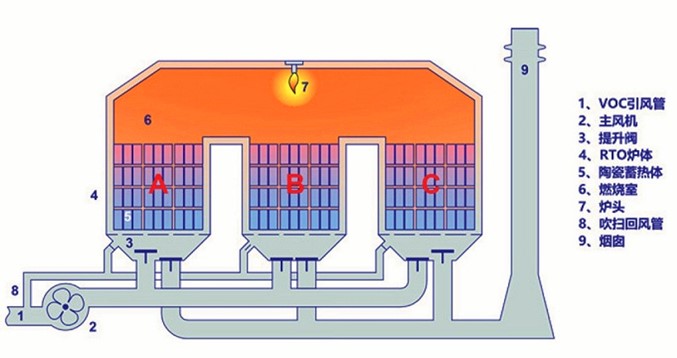
How an RTO works: heat recovery and VOC oxidation in a repeating cycle
Temperature, residence time, turbulence and oxygen availability are managed
together to achieve stable oxidation while the ceramic beds reduce fuel
consumption.
- Preheat – VOC-laden process air passes through a hot
ceramic bed and absorbs stored thermal energy. - Oxidize – The preheated stream enters the combustion
chamber, where controlled temperature and residence time oxidize organic
compounds. - Recover – Clean hot gas transfers heat to a second
ceramic bed before leaving the system. - Reverse or rotate – Switching valves or a rotary
distributor redirect the gas path so heat recovery continues.
RTO configurations: two-bed, three-bed and rotary
| Configuration | Best suited for | Key engineering consideration |
|---|---|---|
| Two-bed RTO | General industrial VOC control where the specified outlet limit can be achieved with a two-canister arrangement. |
Valve-switching carryover and the required destruction efficiency must be evaluated. |
| Three-bed RTO | Applications requiring a purge stage, lower carryover and higher overall destruction performance. |
Purge volume, switching sequence and pressure stability are coordinated with the process. |
| Rotary RTO | Large, continuous airflow where compact distribution and stable operation are priorities. |
Rotary valve sealing, sector isolation, maintenance access and turndown range. |
Typical technical parameters
| Parameter | Typical value | Note |
|---|---|---|
| VOC destruction efficiency | Up to 99%* | Project-specific |
| Thermal recovery efficiency | Up to 97%* | Project-specific |
| Oxidation temperature | 760–850 °C | Typical range |
| Airflow | Medium to high | Sized to project airflow |
| Operating duty | Continuous | Systems designed for high annual operating hours |
| Control system | PLC / HMI | Automated operation, interlocks, data recording |
| Configurations | Two-bed / three-bed / rotary | Selected by process fit |
*Actual performance depends on waste-gas composition, operating conditions and
final system design.
RTO vs. thermal oxidizer vs. catalytic oxidizer
All three technologies oxidize VOCs, but they suit different operating
profiles. A quick comparison:
| Technology | Best suited for | Key difference |
|---|---|---|
| RTO (Regenerative Thermal Oxidizer) | Medium-to-high airflow, continuous duty VOC exhaust | Ceramic-bed heat recovery, up to 97% thermal recovery, low fuel demand at steady state |
| TO (Thermal Oxidizer) | High-concentration waste gas | High-temperature oxidation without regenerative beds |
| CO (Catalytic Oxidizer) | Medium-concentration, intermittent duty | Low-temperature catalytic oxidation, lower energy at part load |
Typical applications
- Chemical manufacturing
- Pharmaceutical production
- Paint and coating lines
- Printing and flexible packaging
- Automotive components
- Rubber and composites
- Electronics and semiconductor
- Lithium-battery coating
- Food and industrial odor
- Zeolite rotor concentration systems
Key components and lifecycle service
An RTO system is only as reliable as its components. We supply and service the
critical parts of the system:
Project scope can include process evaluation, equipment sizing, mechanical and
electrical engineering, fabrication, factory inspection, installation guidance,
commissioning, operator training and lifecycle service.
Reference projects
Our reference projects cover VOC treatment for petrochemical, pharmaceutical,
painting and municipal odor applications, with systems designed for high annual
operating hours and strict safety requirements. See selected RTO cases:
Related products
Frequently asked questions
What information is required to size an RTO?
Airflow range, VOC species, average and peak concentration, inlet temperature,
humidity, particulate or aerosol content, operating hours, required outlet
limits and site utilities are required for preliminary selection.
Does an RTO always require supplemental fuel?
Fuel is normally required during start-up. Steady-state demand depends on VOC
heat release, airflow, thermal recovery efficiency, heat loss and operating
conditions. Some applications may approach autothermal operation after a
project-specific heat balance.
What is the difference between a two-bed and a three-bed RTO?
A three-bed system can use an additional purge step to return residual
untreated gas to the combustion path, reducing switching carryover. The correct
configuration depends on the required efficiency and process conditions.
When is pretreatment required?
Pretreatment should be evaluated when the exhaust contains particulate, paint
mist, oil aerosol, condensable material, acid gas or compounds that may foul,
corrode or damage downstream equipment.
What is the difference between an RTO and a catalytic oxidizer?
A catalytic oxidizer oxidizes VOCs at lower temperature using a catalyst,
which typically suits medium-concentration, intermittent duty. An RTO uses
ceramic-bed heat recovery and suits medium-to-high airflow, continuous duty.
The right choice depends on concentration, flow and operating schedule.
Can an RTO handle variable or intermittent VOC loads?
RTO systems are designed around average and peak loading. Turndown, VFD
control and bypass strategy are coordinated with the process so the system can
handle normal variation without compromising compliance.
Can waste heat from an RTO be reused?
Yes. When useful heat is available, secondary recovery can support process
air, hot water, thermal oil or steam generation after a project-specific energy
balance.
Which pollutants can an RTO destroy?
RTOs can destroy oxidizable VOCs, HAPs and organic odors. The design must
account for the specific compounds, concentration and any compounds that may
require pretreatment.
How often should ceramic media and switching valves be inspected?
Inspection frequency depends on pressure-drop trends, contaminant loading,
switching cycles and duty. Operating data should be trended, with shutdown
inspections scheduled according to the actual service conditions and
maintenance plan.
What does a full project scope include?
Project scope can include process evaluation, equipment sizing, mechanical and
electrical engineering, fabrication, factory inspection, installation guidance,
commissioning, operator training and lifecycle service. Send your project
parameters and we will recommend a practical system and configuration.
Industrial RTO system manufacturer and project scope
PollutionCtrl designs and manufactures regenerative thermal oxidizer systems for industrial VOC control. The final arrangement is selected from the actual exhaust source, airflow range, VOC concentration, temperature, moisture, operating schedule and site safety requirements.
Review VOC source, flow variation, temperature, concentration, oxygen, moisture and pretreatment needs.
Supply two-bed, three-bed or rotary configurations with burners, ceramic media, switching valves and controls.
Coordinate fabrication, refractory work, piping, instruments, control-panel wiring, inspection and shipment.
Support sizing, commissioning, maintenance, troubleshooting, component replacement and operator handover.
Related engineering pages: RTO sizing guide, RTO burner system, RTO switching valves, RTO ceramic media, RTO maintenance and repair, RTO for printing VOCs, RTO for paint shops and RTO for pharmaceutical VOCs.
Request a project evaluation
Send the process conditions – not just a request for a price. RTO selection is
based on the emission source and operating envelope. Complete as much
information as available; preliminary or estimated data is acceptable for the
first review.
Useful attachments: VOC test report, process flow diagram, site layout,
emission limit. Your information will only be used to evaluate and respond to
this project enquiry.
An industrial RTO proposal should define more than airflow and destruction performance. Compare the design basis, heat recovery arrangement, chamber configuration, burner duty, switching valves, ceramic media, pressure drop, fan scope, safety logic, bypass conditions, access for inspection and the stated battery limits. For applications with a different heat source, see when an electric heated RTO makes sense. A project comparison is meaningful only when every supplier is working from the same exhaust data and supply boundary.
What buyers should compare between RTO proposals
Proposal item Question to ask Related review VOC design basis Are normal, minimum and peak concentration cases stated? Fuel demand, temperature control and safety Particulate and aerosol Is pretreatment included where fouling is expected? Ceramic media and pressure drop Valve system How are sealing, position feedback and cycle timing monitored? RTO switching valves Combustion system What operating cases set the burner capacity? RTO burner system Service scope Are startup, training, inspection and spare parts defined? RTO maintenance
Next Steps for an RTO Project
RTO selection should be based on the complete exhaust operating envelope. A preliminary review is more useful when it includes airflow range, VOC composition and concentration, inlet conditions, contaminants, operating hours, emission limits and available utilities.
Request a preliminary RTO evaluation
Send the process information you have and we can review technology fit, configuration options and the data still needed for sizing.
Related resources: How an RTO works · RTO vs. thermal oxidizer · RTO sizing guide
Industrial RTO System Selection
PollutionCtrl designs industrial RTO systems for continuous and batch VOC exhaust. A regenerative thermal oxidizer manufacturer should review exhaust volume, VOC composition, concentration, temperature, humidity, dust loading, operating schedule and the required emission limit before selecting the chamber size, burner system, switching valves and ceramic media.
RTO system cost depends on airflow, VOC load, heat recovery, materials, controls, safety interlocks, installation conditions and local compliance requirements. We provide a preliminary configuration after reviewing process data rather than quoting a generic standard size.
RTO Applications and Support
- RTO for printing and packaging VOCs
- RTO for paint shop VOC treatment
- RTO for pharmaceutical VOC emissions
- RTO burner and combustion system
- RTO switching valves
- RTO ceramic media
- RTO maintenance and repair guidance
- VOC control project case studies
Information Needed for an RTO RFQ
For an RTO RFQ, send the airflow, VOC components, concentration range, inlet temperature, humidity, dust or mist content, production schedule, available footprint, stack requirements and local emission target. Factory manufacturing photos, equipment drawings and commissioning support can be discussed for overseas projects.
More RTO and Thermal Oxidizer Topics
- Thermal oxidizer maintenance costs and service intervals
- RTO fuel consumption and heat recovery
- RTO inspection guide
- RTO maintenance checklist
- Electric-heated RTO: when it makes sense
- RTO switching valve failure
- RTO burner failure troubleshooting
- RTO compared with RCO
- Catalytic combustion, RTO and thermal oxidizer selection
- RTO and thermal oxidizer for chemical industry VOC
- Flue gas treatment
- Recuperative thermal oxidizer
- RTO systems for Texas industry
- RTO systems for Tennessee manufacturers
- RTO systems for Virginia industry
- RTO systems for Ohio industry
- RTO systems for Minnesota industry