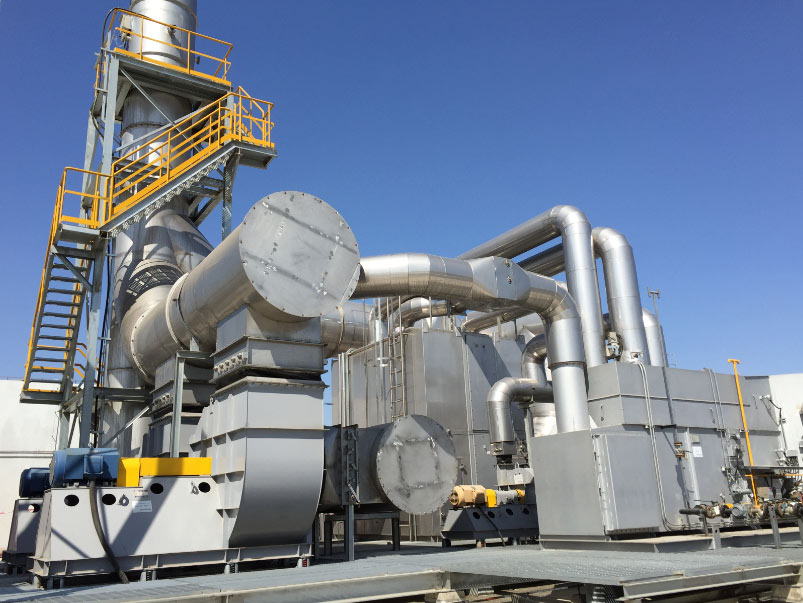

A cartridge dust collector can provide compact filtration for fine dust, welding fumes and localized industrial extraction. PollutionCtrl can review airflow, dust characteristics, filter area, cleaning method and access requirements before recommending a configuration.
Where Cartridge Collectors Fit
Cartridge collectors are often considered for welding, grinding, cutting, powder handling and other processes where fine particulate must be captured close to the source. The final choice depends on dust loading, moisture, temperature and whether the dust is sticky, abrasive or combustible.
Design Details
Important details include filter-media grade, air-to-cloth ratio, pulse-cleaning arrangement, hopper or bin design, fan capacity, inlet protection and safe access for cartridge replacement. A pre-separator may be added when coarse particles could overload the cartridges.
Metalworking Dust Collection
For metalworking, the system should be reviewed for sparks, hot particles, oil mist and combustible dust. Spark protection, grounding, isolation and other safety measures should be selected according to the process and local requirements.
Request an Industrial Dust Collection Quote
Send the dust type, particle size, air volume, inlet concentration, temperature, humidity, operating hours, available space and any combustible-dust requirements. We can review the process and recommend a suitable industrial dust collector configuration.
Cartridge Collectors for Welding Fumes and Fine Dust
A cartridge dust collector can suit welding fumes, grinding, cutting, powder coating and other fine particulate sources with moderate loading. Cartridge dust collector selection should include filter-media grade, airflow, pulse cleaning, oil or moisture content and maintenance access. Pharmaceutical and precision manufacturing applications may require additional material and hygiene review.
What is a cartridge dust collector?
A cartridge collector uses pleated filter media in a compact housing. Because the media is pleated, a cartridge packs a large filtration area into a small volume, which makes the collector suitable where floor space is limited or where the unit has to be installed indoors close to the process.
Cleaning is normally by pulse jet: a short compressed-air pulse is directed into the cartridge, flexing the pleats and releasing the collected dust into the hopper.
Cartridge versus baghouse
| Dimension | Cartridge collector | Baghouse |
|---|---|---|
| Filtration area per unit volume | High — pleated media | Lower — bags need spacing |
| Footprint | Compact, suited indoors | Large, usually outdoor |
| Temperature limit | Lower, set by the media and gaskets | Higher with appropriate fabric |
| Sticky or moist dust | Risk of media blinding | More forgiving |
| Change-out | Fast, cartridge swapped as a unit | Slower, individual bags |
| Dust loading | Better for moderate loading | Better for heavy loading |
Why cartridges blind, and how to prevent it
- Moisture — condensation in the pleats cements the dust. Keep the gas above dew point or pre-coat the media.
- Sticky dust — resinous or oily dust bridges between pleats and cannot be pulsed off. A pre-coat or a different media may be needed.
- Over-cleaning — pulsing too frequently drives dust deeper into the media. Cleaning should be on a pressure-drop setpoint, not on a fixed timer.
- Too high an air-to-cloth ratio — the collector is pushed beyond its design and the dust is forced into the pleats.
Frequently asked questions
How often should cartridges be replaced?
On pressure drop, not on a calendar. When cleaning can no longer hold the differential pressure within the design band at the design airflow, the media is spent.
Can a cartridge collector handle combustible dust?
It can, but then it must be designed as explosion-protected: venting or containment, isolation, grounding, anti-static media and a dust hazard analysis. The compact housing makes vent sizing and location a more demanding design question, not a simpler one.