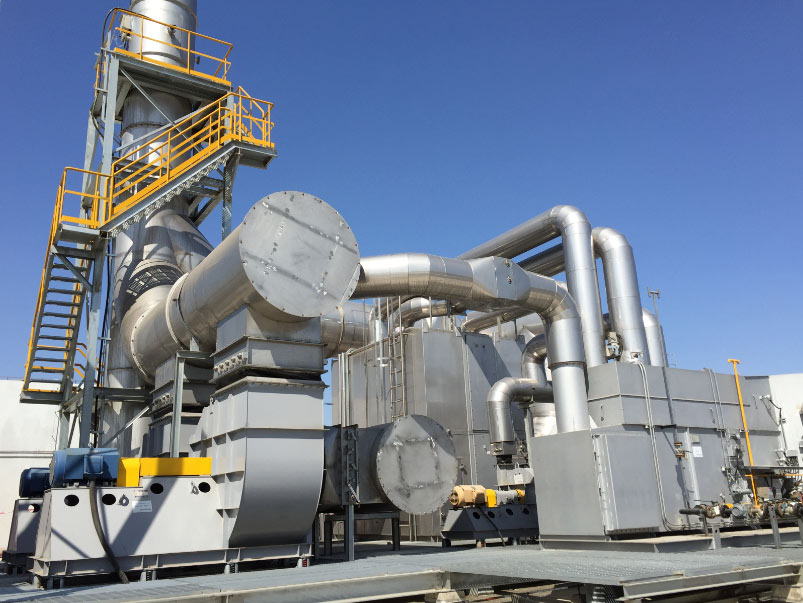

Chemical production and powder handling can involve fine, abrasive, corrosive or combustible dust. PollutionCtrl can review material properties, process temperature, moisture, chemical compatibility and containment requirements for an industrial chemical dust collection system.
Chemical Process Dust Sources
Typical sources include bag emptying, conveying, weighing, batching, charging, mixing, drying and packing. Enclosure and negative-pressure design can help keep dust at the source and reduce cross-contamination.
Materials and Filter Media
Filter media, housing materials, seals, coating and discharge components should be checked against the chemical composition and operating temperature. Fine or combustible powders also require a process-specific safety review.
System Integration
The collector should be considered together with ductwork, fans, pressure monitoring, dust discharge, process interlocks and maintenance access. Share the safety data and process conditions before equipment selection.
Request an Industrial Dust Collection Quote
Send the dust type, particle size, air volume, inlet concentration, temperature, humidity, operating hours, available space and any combustible-dust requirements. We can review the process and recommend a suitable industrial dust collector configuration.
Chemical Powder and Process Dust Collection
Dust collectors for chemical industry applications may serve charging, weighing, mixing, drying, conveying and packing points. Material compatibility, filter media, containment, pressure drop and combustible-dust information should be reviewed before specifying an industrial bag filter or cartridge unit.
Why chemical plant dust collection needs different design
Dust collection in a chemical plant differs from general industrial dust collection in three respects: the dust may be corrosive, the gas may carry acid or solvent vapour, and the material may be both combustible and toxic. Each of those changes the housing material, the media, the cleaning method and the disposal route.
What decides the design
- Corrosion — chlorides, acids and moisture attack carbon steel. Stainless steel, special alloys or coated housings are selected against the actual gas analysis, not against a general “chemical resistant” claim.
- Dew point — if the gas is cooled below the acid dew point in the collector, condensate forms and corrodes the housing and blinds the media. Insulation or preheating is a design decision.
- Toxicity — where the dust is hazardous, the collector needs safe change-out, bag-in/bag-out arrangements and a defined disposal route.
- Combustibility — many organic chemical dusts are explosible, so the explosion protection assessment applies in parallel with the corrosion assessment.
- Product recovery — where the collected dust has value, the collector design changes to avoid cross-contamination between batches.
Media selection in chemical service
The filter medium has to survive both the chemistry and the temperature. Polyester is unsuitable where hydrolysis or strong alkali is present; polypropylene and PTFE handle a wider chemical range; fibreglass is used at higher temperature. The correct approach is to check the medium against the actual gas composition and operating temperature rather than against a generic resistance table.
What to send with a chemical dust inquiry
- Gas composition, including acid gases, halogens and solvent vapour.
- Gas temperature range and the expected dew point.
- Dust concentration, particle size and bulk density.
- Dust hazard data — Kst, Pmax, minimum ignition temperature — if the material is organic.
- Required outlet concentration and the applicable emission limit.
- Housing material preference or the corrosion environment it must survive.
- Whether the collected material is waste or product to be recovered.