
A general-duty pulse-jet baghouse for silos, conveyors, crushers, screens, feed mills and dry material handling at moderate temperature — reliable, continuous-duty dust collection.
Key features
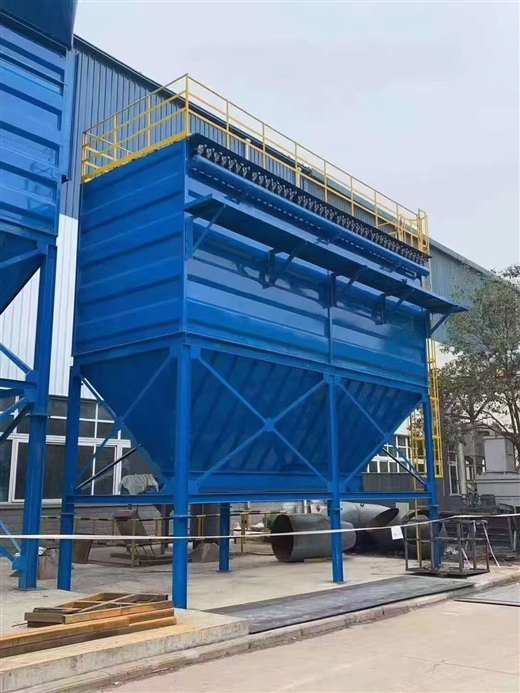
Click image to enlarge
Frequently asked questions
What applications suit a low-temperature baghouse?
Silos, belt conveyors, crushers, screens, feed mills, grain handling and general dry material handling at moderate temperature.
What media can be used?
Standard polyester and application-matched media are available depending on temperature, moisture and dust chemistry.
Is it suitable for combustible dust?
Combustible dust service requires an explosion-risk review, and may need spark control, venting and grounding. Confirm the dust type when enquiring.
How is a low-temperature baghouse sized?
Sizing starts from the required capture airflow at each dust source, plus the dust load and target outlet concentration. From this we determine filtration area, number of bags, fan duty and cleaning frequency.
Can it handle combustible dust?
Combustible dust service requires an explosion-risk review and may need spark protection, explosion venting, earthed components and ATEX-rated electricals. Tell us the dust type so the right safety measures are applied.
What is a Low-Temperature Pulse-Jet Baghouse?
A low-temperature pulse-jet baghouse is a general-duty industrial dust collector for dry process dust at moderate temperature. It is widely used across material handling, minerals, food and feed, and manufacturing because it offers reliable continuous cleaning, large filtration area and simple maintenance at a practical cost.
How it works
Dust-laden air is drawn into the collector and passed through the filter bags; particles are captured on the bag surface while clean air is exhausted by the fan. Each row of bags is cleaned in turn by a short pulse of compressed air, which flexes the media and drops the dust cake into the hopper. Rotary airlocks or screw conveyors remove collected dust continuously. The collector can be configured for indoor or outdoor installation and for negative- or positive-pressure operation.
Typical applications
- Silo and hopper venting
- Belt conveyor transfer points
- Crushers and screens
- Feed mills and grain handling
- Woodworking and biomass handling
- General dry material handling
Key selection parameters
- Design airflow and capture velocity at each dust point
- Dust type, particle size and bulk density
- Temperature and moisture at the inlet
- Explosion-risk classification where combustible dust is handled
- Footprint, access and maintenance requirements
- Fan, ducting and discharge arrangement
Related dust collection equipment
Need this dust collector sized for your process?
Send your dust source, airflow, temperature, dust load and operating conditions. We will recommend a practical system and filter configuration.
← Back to dust collection guide
Low-Temperature Pulse-Jet Baghouse Selection Notes
Application: Suitable for general workshop dust, process dust and low-temperature ventilation systems requiring automatic pulse cleaning and stable filtration.
Key sizing data: Please provide airflow, dust type, inlet concentration, humidity, particle size, target emission, installation space and dust discharge method.
System context: This product can be used as part of a complete industrial dust collection system. For comparison, see Dust Collector Filter Bags.
Request a quotation: Send dust source, airflow, temperature, humidity, dust concentration, particle size, emission limit, site layout and project country so our engineers can recommend the right dust collector configuration.