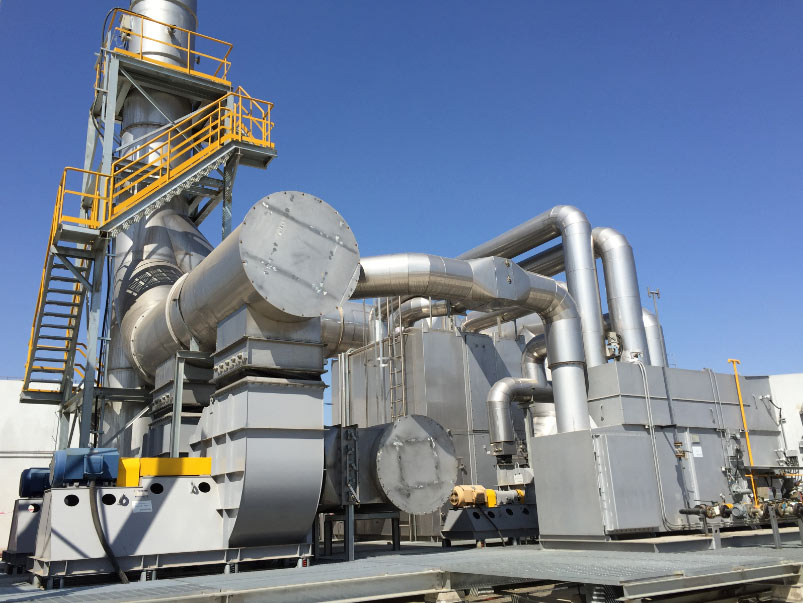

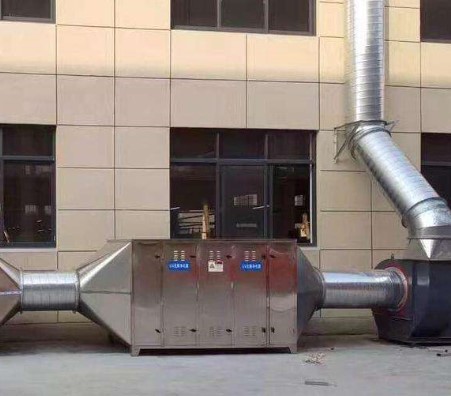
Direct answer: The correct industrial odor control system depends on the odor chemistry. Water-soluble hydrogen sulfide or ammonia may need chemical scrubbing; low-concentration mixed odor can be treated by low-temperature plasma or microwave UV oxidation; activated carbon is useful for polishing; and high VOC loads may require catalytic or thermal oxidation. Reliable treatment begins with source enclosure, airflow control and gas analysis.
PollutionCtrl designs and supplies industrial odor treatment and air-pollution-control equipment for wastewater, sludge, waste handling, food processing and chemical applications. This guide provides a practical selection framework.
What causes industrial odor?
Common odor compounds include hydrogen sulfide, ammonia, mercaptans, amines and mixed volatile organic compounds. The same facility may have several sources: wastewater inlet works, equalization tanks, sludge dewatering, waste storage, loading points and process ventilation. Concentration can change with temperature, pH, production and ventilation rate.
Odor treatment technology selection table
| Gas condition | Typical treatment | Important design point |
|---|---|---|
| Hydrogen sulfide or acid gas, water soluble | Chemical scrubber | Reagent, pH control and mist removal |
| Ammonia or alkaline odor | Acid scrubber | Mass-transfer contact and reagent control |
| Low-concentration mixed odor | Low-temperature plasma | Humidity, aerosol and electrode cleanliness |
| Wet-process odor requiring strong photochemical treatment | Microwave UV oxidation | Pretreatment and lamp cleanliness |
| Residual low-level VOC or odor | Activated carbon | Media selection, humidity and replacement |
| Continuous recoverable hydrocarbon vapor | Vapor recovery unit | Composition, pressure and recovery destination |
| High or continuous VOC loading | Catalytic oxidizer or RTO | Catalyst compatibility, heat recovery and safety |
How to treat wastewater odor
For wastewater treatment plants, first enclose the inlet works, tanks or sludge equipment and maintain controlled negative pressure. Remove droplets and corrosive aerosol before the main treatment device. Hydrogen sulfide and ammonia loading should be measured at normal and peak conditions. A scrubber may remove the bulk load, followed by plasma, microwave UV or activated carbon polishing.
Read the detailed wastewater odor control guide.
How to treat waste transfer station odor
Waste transfer stations need fast source capture because doors open frequently and vehicle movement changes the air balance. Local extraction at pits, compactors and leachate areas is usually more efficient than ventilating the entire building at one high rate. Mixed organic odor can be treated using staged filtration, plasma or microwave UV oxidation, with carbon polishing where needed.
See the waste transfer station odor control design guide.
Low-temperature plasma or microwave UV?
Low-temperature plasma odor control is a compact option for mixed low-concentration streams. Microwave UV oxidation can suit sewage and waste applications requiring photochemical oxidation. The choice should be confirmed using gas composition, humidity, particles, airflow and maintenance access.
Five-step odor control design process
- Identify sources: map every tank, room, process vent and intermittent release.
- Measure the gas: record flow, temperature, humidity, hydrogen sulfide, ammonia, VOC species and peak load.
- Capture the odor: use enclosure and negative pressure before sizing treatment equipment.
- Select a treatment train: combine pretreatment, primary removal and polishing.
- Verify performance: monitor inlet and outlet conditions and investigate complaints with operating data.
Frequently asked questions
What is the best equipment for sewage odor?
There is no universal device. Hydrogen sulfide and ammonia often favor scrubbing, while low-concentration mixed odor may use plasma or microwave UV. Carbon can polish residual odor. Gas testing determines the best combination.
Can activated carbon treat all industrial odors?
No. Carbon performance depends on the compound, humidity, concentration and media formulation. High loading can exhaust the bed quickly, so carbon is often used after another treatment stage.
Can odor be removed without high-temperature incineration?
Yes. Scrubbing, adsorption, low-temperature plasma, microwave UV oxidation and biological treatment may be suitable. Thermal oxidation is considered when the stream contains a significant continuous VOC load.
What information is needed for a proposal?
Provide airflow, temperature, humidity, pollutant concentrations, operating hours, source layout, available footprint and required outlet level.
Why consult PollutionCtrl?
PollutionCtrl can compare plasma, microwave UV, activated carbon, scrubbing, vapor recovery, catalytic oxidation and RTO rather than forcing every odor stream into one technology. Contact PollutionCtrl for an industrial odor control system review.
Industrial Wastewater Odor Sources
Odor can come from headworks, screening, wet wells, lift stations, equalization tanks, sludge holding tanks, dewatering rooms and uncovered process areas. H2S, ammonia and reduced sulfur compounds require different treatment considerations.
Capture, Extraction and Treatment
Odor control starts with covers, enclosure, negative pressure and correctly sized extraction. Treatment may use activated carbon, biological media, wet scrubbing, UV, plasma or a combined process after airflow and gas composition are reviewed.
Use the dedicated wastewater odor control system, H2S odor control and sludge odor control pages for application-specific selection and RFQ information.