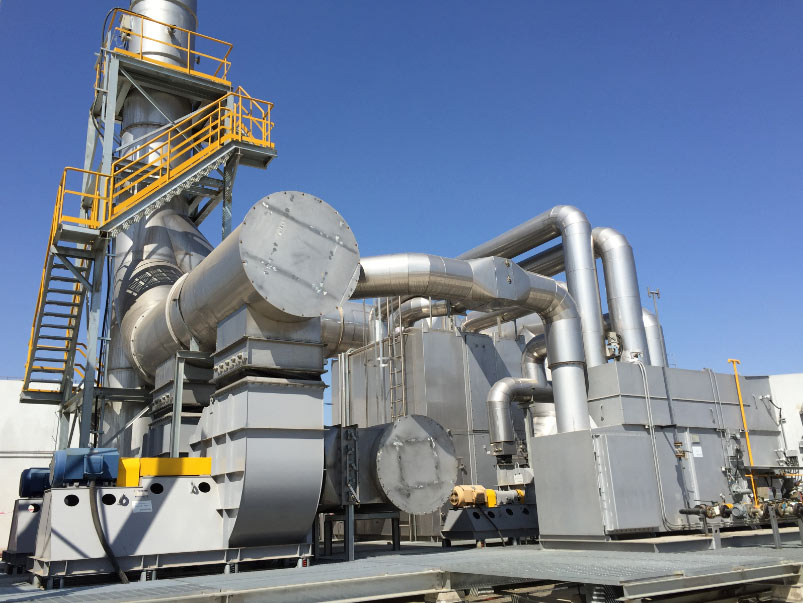

Hydrogen sulfide odor control requires attention to both the source and the treatment equipment. PollutionCtrl reviews H₂S concentration, airflow, humidity, oxygen conditions, operating pattern and corrosion risk.
What Makes Hydrogen Sulfide Difficult to Handle
H₂S is colourless, heavier than air, and forms wherever organic material decomposes without oxygen, so it collects in low-lying places — wet wells, sumps, trenches and tank bottoms.
- Odour is not a reliable indicator. H₂S smells of rotten eggs at very low concentrations, and complaints are usually the first signal of a problem. As concentration rises the sense of smell is dulled or lost, so someone who no longer smells the gas is not safer, and odour is no guide to exposure risk.
- Worker safety sets the rules. H₂S is toxic and flammable and concentrates in confined spaces — wet wells, digesters, sludge tanks, sewers. Controls are gas testing before and during entry, forced ventilation, an attendant outside, a written entry permit and rescue breathing apparatus. Exposure limits and alarm levels are set by site EHS against the requirements that apply locally.
- Corrosion is a slow, persistent cost. In moist conditions H₂S and its acids attack concrete, steel, ductwork, fan impellers and instruments, so corrosion control is a design-stage materials decision.
Where H₂S Comes From and Why Concentrations Vary
Sulfate-reducing bacteria generate sulfide under anaerobic conditions — in gravity sewers, force mains and any tank where sludge sits without oxygen. Sulfide leaves the liquid when turbulence, drop structures or aeration strip it into the gas phase, so the worst odour often appears downstream of where it formed. Sludge thickening, dewatering, headworks and digestion are consistently strong sources, as are tank farms of sulfur-bearing products and desulfurization tail gas.
Concentrations differ enormously between facilities and by time of day and weather, so sampling at representative conditions including peaks matters more than any rule of thumb.
| Source | Driver | Design point |
|---|---|---|
| Sewers and rising mains (H₂S guide) | Anaerobic biofilm, long retention, low flow | Capture downstream, where the gas releases |
| Wet wells and lift stations | Septic conditions, turbulence at drawdown | Intermittent peaks, weather-tight extraction |
| Sludge holding, dewatering and digestion | Thick, warm, anaerobic material | Higher concentration, heavy condensate load |
| Tank farms and desulfurization tail gas | Product vapour and sulfur compounds | Higher concentration; check for VOC and ammonia |
Treatment Routes and Where Each One Fits
No single technology covers every duty; the options are routinely combined, bulk sulfur removed first and polishing behind it. Most sites end up with a staged wastewater odor control system, and exact bands can only be fixed against measured data.
Wet chemical scrubbing
Packed towers pass air upward through irrigated packing against descending scrubbing liquid. Caustic scrubbing with sodium hydroxide absorbs H₂S into solution and tolerates high concentrations, volumes and shock loads, but consumes alkali and produces spent liquor needing disposal. Oxidative scrubbing converts the absorbed sulfide to sulfate or elemental sulfur, reducing the liquid-phase sulfide load and the odour of the blowdown.
Best fit: moderate to high concentrations, saturated gas, fluctuating loads, and streams also carrying organic odour or ammonia — common at sewage treatment plant odor control. Limits: chemical supply and blowdown, droplet carry-over needing a demister, freeze protection.
Dry media adsorption
Beds suit low to moderate concentrations where a stable, low outlet is required. Iron oxide impregnated carbon and zinc oxide impregnated carbon combine adsorption with a reaction that binds sulfur firmly, extending bed life on sulfide duties; Coal-based granular activated carbon remains the workhorse for odour and VOC polishing.
Best fit: low to moderate concentration, small or intermittent flows, and polishing behind a scrubber or biological stage, since consumption follows the sulfur mass. Conditions: control humidity — too dry loses effectiveness with some media, too wet blinds the bed and raises pressure drop.
Biological treatment: biofilters and biotrickling filters
Microorganisms on a media oxidise H₂S to sulfate. A biofilter passes pre-humidified air slowly through an organic or inorganic bed; a biotrickling filter uses structured packing with continuous irrigation, which controls moisture, nutrients and pH better on acid-producing duties.
Best fit: large air volumes at low to moderate, steady concentrations, with humidified air and space for the footprint. Limits: acclimatisation time, poor tolerance of long shutdowns and sudden peaks, media compaction and channelling, and management of the irrigation liquid.
Final-stage thermal and catalytic oxidation
Where the exhaust also carries VOC, mercaptans, ammonia or other organic odour, the last stage may be thermal or catalytic oxidation. Thermal oxidation converts sulfur species to sulfur dioxide, so sulfur must be accounted for in the fuel balance, the acid dew point and the hot gas path materials, and it normally sits after a scrubber or adsorber that removed most of the sulfur. Catalytic designs run cooler but need halogen-free, low-particulate gas, and sulfur compounds can shorten catalyst life, so they suit streams with a low sulfur load. Both tolerate dry hot gas far better than moisture and particulate, so pre-treatment decides.
Sizing and Design Points That Decide Whether It Works
- Flow, concentration and capture. State normal and peak cases plus the operating pattern; a fan sized on the average is wrong for peaks and a bed sized on the average is exhausted early. Hold the enclosure under negative pressure without diluting the gas so far that downstream equipment becomes uneconomic.
- Media change-out planning. Bed depth, contact time, staging and access decide how easily media is replaced; plan the interval from operating data.
- Short-circuiting and channelling. Even inlet distribution, supported media and no gaps at the bed top stop gas finding an easy path; check for settlement after the first months.
- Drains and corrosion protection. Slope ductwork, fit and drain knock-out pots, and select FRP, thermoplastics or coated steel for the wet acidic case.
Monitoring, Calibration and Operating Management
Treatment equipment performs only as well as the monitoring around it.
- Detection and calibration. Fixed detectors in wet wells, pump station headspaces, enclosed sludge areas and reagent rooms; personal monitors for mobile staff; portables for pre-entry testing, leak checks and odour surveys. Match the sensor to the gas mix, since cross-sensitivity misleads, and keep a documented calibration interval.
- Alarms and interlocks. Two-stage alarms with a defined response for each; interlock dosing to airflow, prevent extraction bypassing the treatment stage, and ventilate spaces where gas accumulates. Alarm values come from site EHS and local regulations.
- Operating data. Log bed pressure drop, fan current, scrubbing pH and media consumption; rising pressure drop signals channelling or breakthrough early. Record complaints alongside instrument data, since odour is often noticed first.
Frequently Asked Questions
Which route suits a lift station, wet well or small pump station?
Compact enclosed sources with intermittent load are usually handled by extraction plus dry media, or a small wet scrubber where the load is heavier — see wet well odor control and pump station H₂S, ammonia and VOC treatment.
Can dry media treat a high-concentration sludge tank exhaust alone?
Rarely economically: a strong stream exhausts the bed quickly, so these duties are normally staged — scrubber or biological stage first, media polishing behind it.
Why does H₂S appear intermittently when the plant load is steady?
Because sulfide formation depends on oxygen, temperature and liquid retention time. Low night flows let sewage sit septic in a rising main, warm sewage speeds the biology, and rain flushes structures that were anaerobic for hours.
How do we decide when to change out the media?
By trend rather than calendar. Pressure drop, outlet odour and consumption history show when a bed is near the end of its life, and testing a media sample is the most direct check.
Talk to an Engineer
Send source photographs, enclosure dimensions, normal and peak extraction flow, gas analysis with concentration units, humidity, operating hours and required outlet limits; identify any missing measurements so the proposal can state its assumptions. Send your project details for a configuration proposal on the H₂S duty.