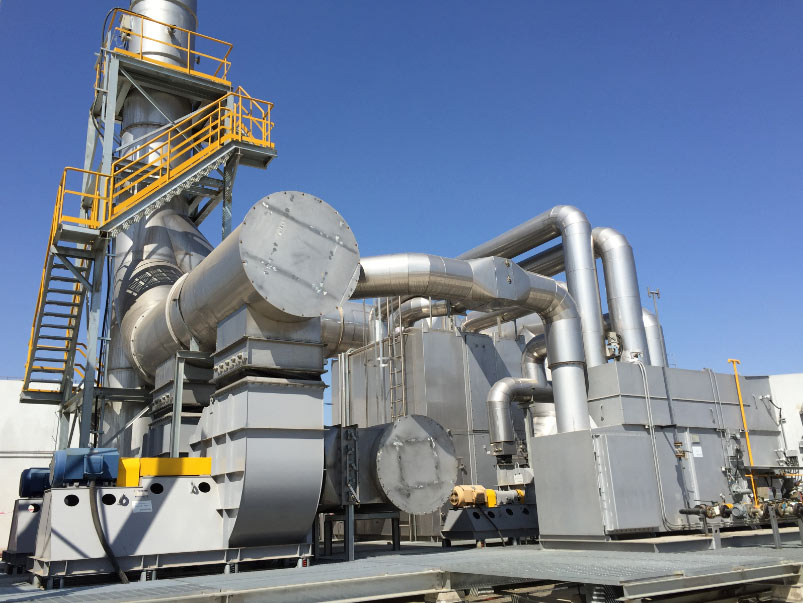

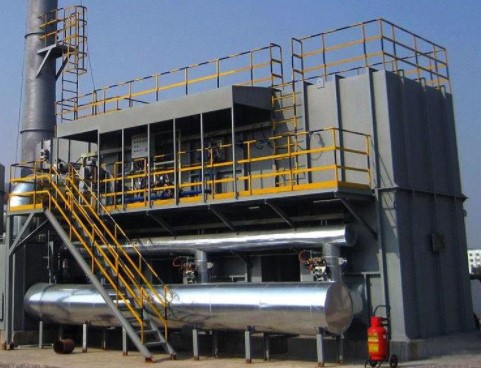
Virginia’s emitting base runs from the James River through the Shenandoah Valley to the port cities: paper and packaging, chemicals, food and beverage, automotive and OEM plants, and building products. Nearly all of them release VOCs from a coating, printing, laminating, drying or reactor step, inside a footprint that is federal in origin but administered locally. Air permitting is handled by the Virginia Department of Environmental Quality (DEQ), with NSPS and NESHAP requirements layered on by source category. For the profile that dominates here — high flow, dilute solvent loading from an oven, press or exhaust header — a regenerative thermal oxidizer remains the default, because ceramic heat recovery pays for fuel a once-through unit would buy.
Virginia’s Industrial Base and Where VOC Emissions Come From
No single industry dominates, so one quotation cycle may cover a paper coater on the James, a flavor blender in the Valley and a paint booth near Norfolk. Five groups drive most inquiries.
- Pulp, paper and packaging — coating and laminating stations, printing and converting lines, tissue and board finishing. High volume and moderate solvent load, often warm and humid.
- Chemical and specialty materials — batch and continuous reactors, resin and polymer handling, blending, and tails off solvent-recovery systems. Lower flow, longer species list, some halogen and particulate service.
- Food and beverage — roasting, baking, frying, smokehouse work, spice blending, breweries and distilleries. Low concentration, and the driver is often odor as much as mass destruction.
- Automotive and OEM manufacturing — paint and topcoat booths, primer, sealer and adhesive lines, plastic and trim coating. High volume with load that swings by model mix and shift, plus overspray particulate.
- Building materials and wood products — panel and engineered-wood pressing, cabinet and furniture finishing, laminate and flooring coating. The classic high-flow, low-concentration case, sized for volume rather than heat release.
Regional Clusters and What They Mean for a Project
The cluster shapes shipping, erection and, at the margin, the fuel decision.
| Cluster | Typical operations | Character of the exhaust stream | Project logistics |
|---|---|---|---|
| Richmond and the James River corridor | Paper and packaging, printing and converting, chemicals, food processing | Warm high-volume streams, mixed solvents, some halogen service | Mature sites; tight fence lines |
| Hampton Roads and the Port of Norfolk | Portside manufacturing, automotive OEM suppliers, coatings | Solvent exhaust mixed with humidity-laden coastal air | Deep-water port for imported equipment; salt air drives materials |
| Shenandoah Valley | Poultry and food processing, wood and furniture, engineered wood | Low-concentration odor-bearing and high-flow coating exhaust | Inland hauls; rural utilities, seasonal access |
| Northern Virginia | Electronics and cleanroom-adjacent work, printing, data-center support | Dilute, continuous, clean streams | Higher land cost, property-line noise limits; indoor layouts favored |
We ask for the site city up front: it settles whether a module ships intact, which utilities reach the fence, and how much corrosion allowance the shell and duct need.
The Permit Ring Around a Virginia VOC Project
Virginia DEQ administers air permitting in the Commonwealth, with federal NSPS and NESHAP requirements layered on for many categories. Three authorization paths cover most oxidizer projects — and the most valuable hour is the one spent choosing which applies before equipment is specified.
- Small projects on an exemption or registration route — a defined activity, or an increase small enough to qualify. Lighter documentation, but eligibility still has to be shown, not assumed.
- Moderate projects under a standard or minor source permit — a defined equipment train authorized after review of emission calculations, control-device specifications and stack parameters.
- Projects needing case-by-case or major source review — larger increases, sites near an applicability threshold, or streams where a federal requirement adds an analysis layer.
Order matters most: estimate the emission increase, then confirm the authorization path, then specify equipment. Plants that buy the oxidizer first routinely re-engineer stack height, monitoring or the required destruction level to fit an authorization they had not read. We prepare data sheets, performance values and drawings for the DEQ submittal.
Engineering and Selection Considerations in Virginia
Humidity, seasonal swing and the autothermal point
Virginia gives you humid summers and cold winter mornings, so a unit sized on a mild design day is usually wrong. Summer moisture lowers the heat available from a given VOC load and pushes the autothermal point — the concentration at which the oxidizer holds temperature without supplemental fuel — upward. Winter cold adds shell and duct losses, so moisture belongs in the sizing calculation, with drains ahead of the media bed and heat tracing on condensable lines.
Coastal air and corrosion design
Along Hampton Roads and the lower James, salt-laden air is a design input, not a maintenance note. It drives shell and duct coatings, structural preparation, fastener selection and the control-panel enclosure. A package that is correct in the Valley can be under-specified on the coast, and wind loading on tall stacks is checked against site exposure.
Indoor installation, footprint and noise
Most Virginia plants we quote are fitting an oxidizer into an existing building or fence line, not onto open acreage. Settle three constraints before the layout is frozen: space, where a rotary valve design shortens duct runs and shrinks footprint; noise, where property-line limits may require an enclosure; and heat and access, since an indoor hot shell radiates into the building.
Fuel and electricity
Natural gas is broadly available across the Richmond, Hampton Roads and Northern Virginia corridors, so a gas-fired unit is the default. That flips on a Valley or rural site with constrained gas service, or a plant with large electrical capacity. Where power is inexpensive or already contracted, an electric-heated RTO removes the gas train, fuel piping and combustion source from the permit package. The two often land close on capital, so we compare lifecycle cost at your operating hours.
Configurations We Supply
Two-bed and three-bed regenerative thermal oxidizers, rotary valve RTO designs where footprint and duct routing are binding, and direct-fired thermal oxidizers for rich or small streams. Packages include ceramic media, switching valves, burner and combustion system, optional heat recovery, and PLC controls with safety interlocks covering high temperature, flame failure, low flow and valve position.
Data We Need to Size a Unit
A complete sizing data set turns the quotation around in days; a partial one still returns a preliminary configuration.
- Design exhaust flow at the oxidizer inlet — normal, peak and minimum cases
- VOC species and concentration — full list where available, otherwise dominant solvents
- Required destruction efficiency, or the permit limit the unit has to meet
- Halogens, silicon, phosphorus or heavy metals, which drive media selection
- Particulate loading, moisture content and condensable components
- Turndown range and operating pattern — continuous, batch, campaign or shift-based
- Site ambient conditions, elevation, and footprint or noise limits
- Available fuel, electrical supply and the utility tie-in point at the fence line
- Site city, so shipping and rigging are checked before the layout is frozen
Frequently Asked Questions
Does a VOC control project in Virginia need a DEQ permit?
Usually yes, unless the project fits an exemption or registration category, and federal NSPS or NESHAP requirements may apply on top of the state review. Which path it takes is decided up front.
What destruction efficiency should be specified?
The one in your authorization. We size to the limit that applies to your site and source category, with margin for the worst case the process can produce.
RTO, direct-fired thermal oxidizer, or an electric-heated RTO?
A regenerative unit is normally the lower operating-cost choice on high-flow, dilute streams, since ceramic media recovers most of the heat. A direct-fired unit suits rich or small-volume streams; an electric-heated RTO suits constrained gas service or cheap power.
Do coastal humidity and salt air change the equipment package?
Yes. Salt exposure on the Hampton Roads side drives shell and duct coatings, structural preparation, fastener selection and enclosure specification, and it is settled at the specification stage, not after delivery.
Can an oxidizer be installed indoors at a congested Virginia plant?
Often yes — in mature industrial parks frequently the only realistic option, which puts space, ventilation, radiant heat, noise and maintenance access into the layout early.
Talk to an Engineer
Send airflow, temperature, VOC list and target destruction efficiency, plus the site city and any footprint limits; we return a preliminary configuration and budget figure within one business day. Existing installations are supported with troubleshooting and parts replacement, media and valve service and control upgrades — contact our engineering team.