
Rotary‑Type Regenerative Thermal Oxidizer (RTO)
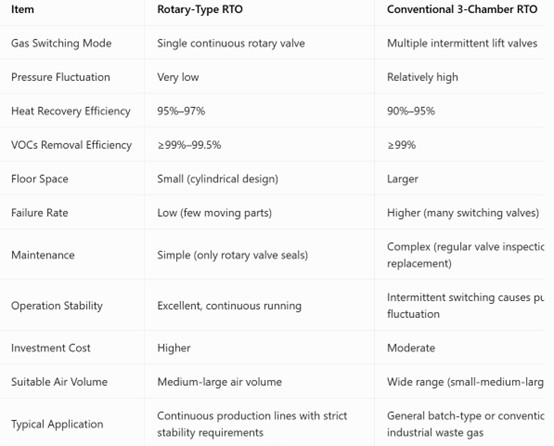
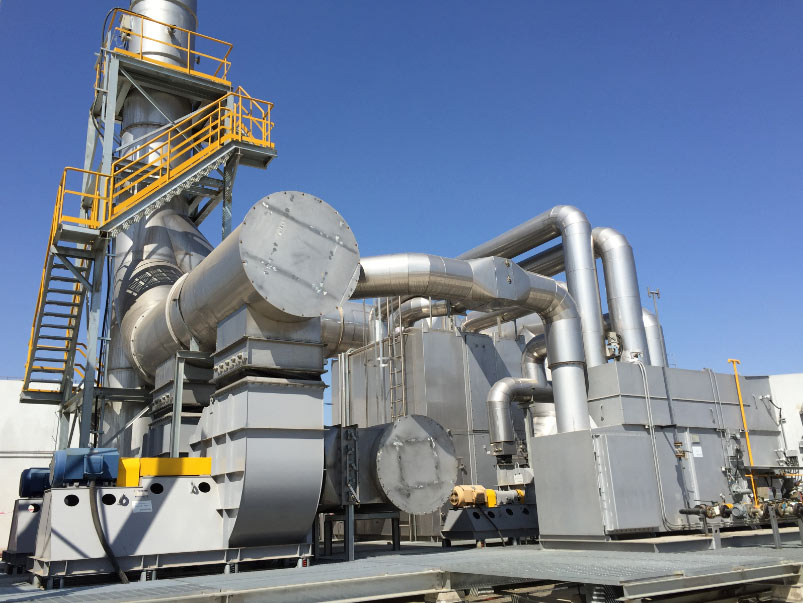
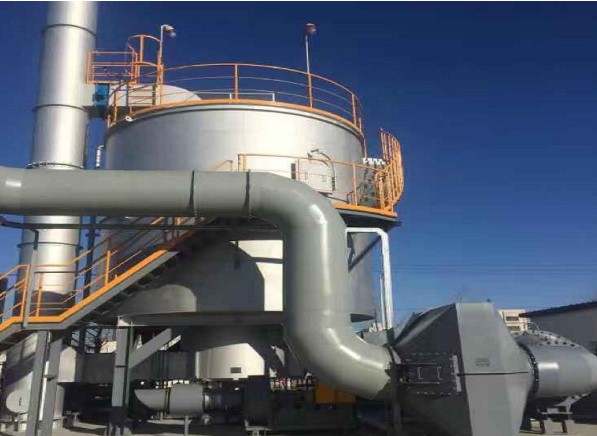
Rotary-Type Regenerative Thermal Oxidizer (RTO)Rotary RTO systems are designed to treat VOC-containing exhaust streams from industrial processes while maximizing thermal energy recovery. The system combines a rotary air distribution mechanism with a regenerative ceramic media bed, allowing the oxidation process and heat exchange cycle to occur continuously.Compared with traditional chamber-switching RTO designs, rotary configurations can provide stable airflow, reduced pressure fluctuations, and efficient operation in applications requiring continuous VOC treatment.
1. Working Principle
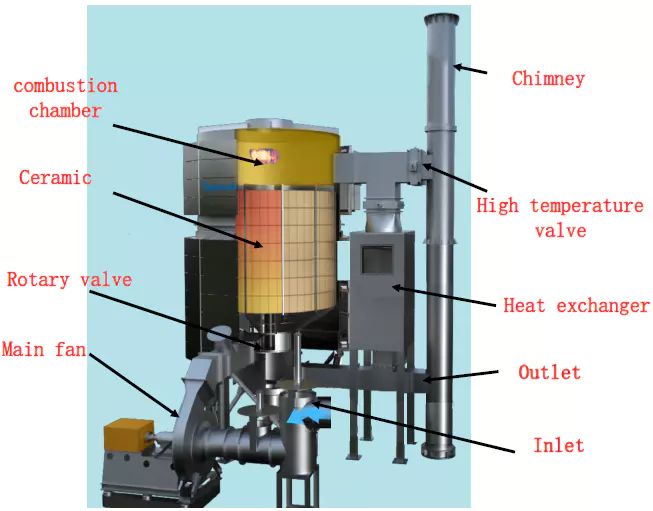
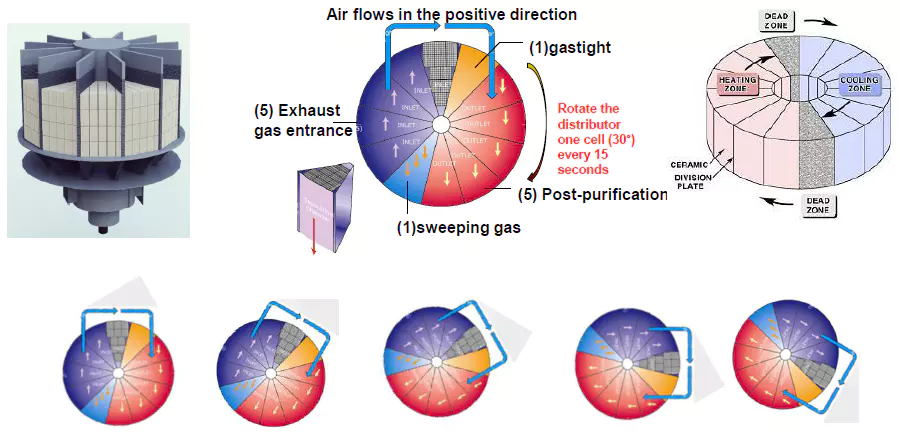
How a Rotary RTO WorksThe process air containing VOCs enters the rotary RTO through the inlet fan and passes through a heated ceramic media bed. The recovered heat raises the temperature of the incoming air stream before it enters the combustion chamber.Within the oxidation chamber, VOCs are destroyed at elevated temperatures, typically between 760°C and 850°C. The resulting clean exhaust stream then passes through another section of the ceramic media bed, where its thermal energy is captured and stored.A rotating air distribution valve continuously directs airflow through different regenerator zones. This arrangement allows heat recovery and VOC treatment to occur simultaneously while maintaining stable process airflow.In applications with moderate to high VOC concentrations, the heat released during oxidation can substantially reduce supplemental fuel requirements. Optional heat recovery systems can also be incorporated to utilize excess thermal energy for process heating, hot water generation, or steam production.
Coating, printing, pharmaceutical & fine chemical industry, coating processes, rubber manufacturing, injection molding, food processing, photovoltaic welding and other scenarios with continuously discharged large‑volume waste gas and strict requirements on pressure fluctuation stability.