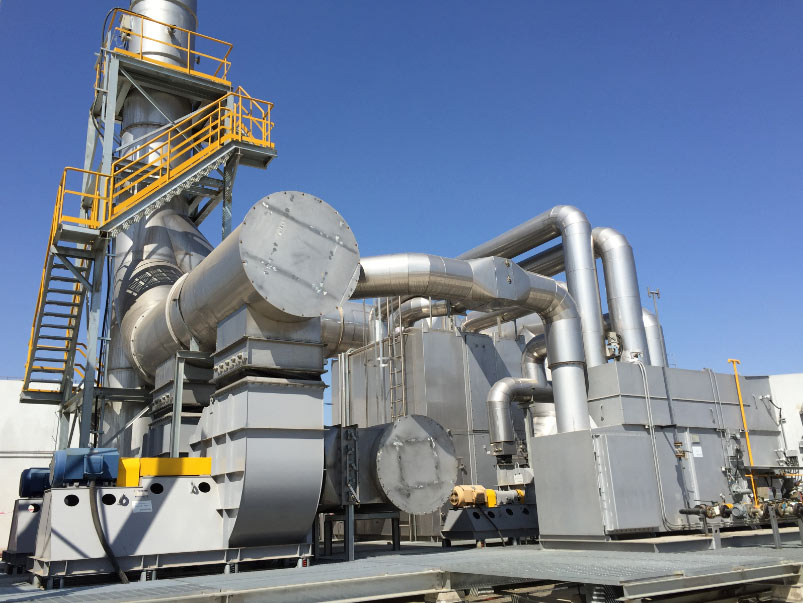

RTO sizing should be based on the complete exhaust operating envelope, not airflow alone. A preliminary design normally considers flow, VOC chemistry, concentration, temperature, contaminants, operating hours, safety requirements and the required outlet limit.
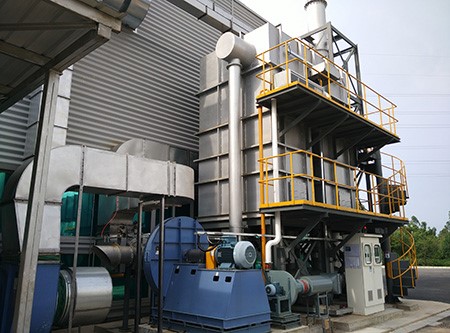
Core process data
- Total, normal and minimum airflow
- VOC composition and average/peak concentration
- Inlet temperature and humidity
- Oxygen level and LEL margin
- Dust, oil mist, aerosols and condensables
- Daily and annual operating hours
- Required emission limit and project location
How the data affects configuration
Airflow and process continuity influence the equipment capacity and whether a two-bed, three-bed or rotary configuration should be evaluated. VOC concentration and composition affect the heat balance, oxidation conditions and materials of construction. Particulate and condensables may require filtration, cooling or other pretreatment to protect ceramic media and valves.
RTO sizing data that affects the final configuration
RTO sizing should use the full operating range rather than one average airflow. Minimum, normal and peak conditions affect chamber volume, valve size, fan duty, burner capacity, ceramic media, heat recovery and control logic.
| Data | Why it matters |
|---|---|
| Normal and peak airflow | Sizes chambers, valves, fans and duct connections |
| VOC concentration and composition | Defines heat release, destruction duty, materials and safety review |
| Temperature, moisture and oxygen | Affects condensation, combustion, refractory and control limits |
| Dust and condensables | Determines pretreatment and ceramic-bed protection |
| Operating schedule | Changes startup, turndown, fuel use and maintenance planning |
Send the available data for a preliminary configuration review. The final RTO selection should also consider the burner, ceramic media, switching valves and control system.
Information useful for a preliminary quote
- VOC test report or laboratory analysis
- Process flow diagram
- Site layout and available installation area
- Existing duct and fan information
- Fuel, electricity and compressed-air utilities
- Permit or emission-limit documentation
What a project scope may include
A project can include process evaluation, equipment sizing, mechanical and electrical engineering, fabrication, factory inspection, installation guidance, commissioning, operator training, spare parts and lifecycle service. Actual performance and final dimensions remain project-specific.
See RTO system configurations or request a preliminary RTO design review.
Next Steps for an RTO Project
RTO selection should be based on the complete exhaust operating envelope. A preliminary review is more useful when it includes airflow range, VOC composition and concentration, inlet conditions, contaminants, operating hours, emission limits and available utilities.
Request a preliminary RTO evaluation
Send the process information you have and we can review technology fit, configuration options and the data still needed for sizing.
Related resources: How an RTO works · RTO vs. thermal oxidizer · RTO sizing guide
RTO Sizing Data
RTO sizing starts with normal and peak airflow, VOC concentration, VOC composition, inlet temperature, humidity, dust or mist, operating hours and the required outlet limit. These inputs affect chamber volume, burner capacity, switching frequency, ceramic media and heat recovery.
RTO RFQ Checklist
Send process data, available footprint, utility conditions, stack requirements, local emission target and preferred control interface. Compare the result with the industrial RTO system, RTO burner system and RTO switching valves pages.