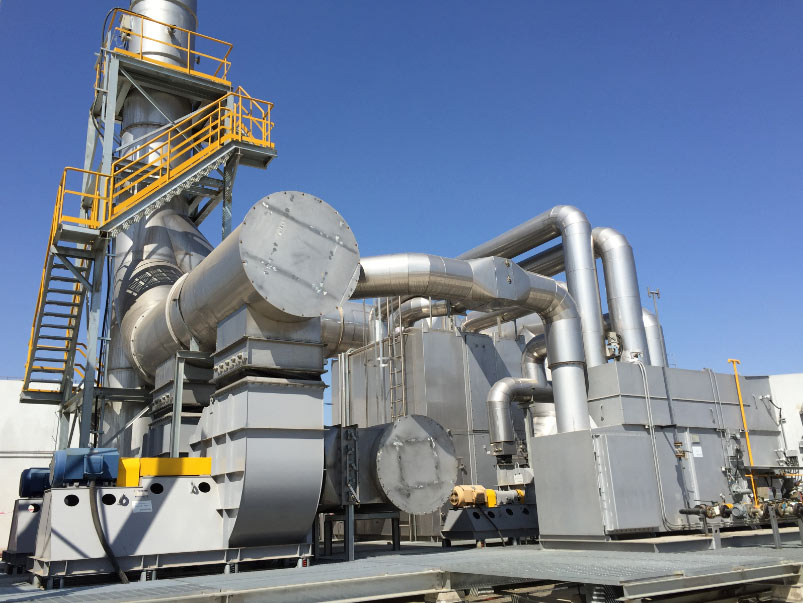

Industrial wastewater treatment equipment is a coordinated set of machines and process stages that treats contaminated water before discharge or further reuse treatment. A useful equipment proposal starts with the wastewater analysis and operating duty, then defines the required separation, biological treatment, filtration or disinfection stages.
PollutionCtrl’s water-treatment range includes packaged treatment systems and application-specific units. This page helps industrial buyers specify a project and compare the equipment scope. For an existing plant, identify the process bottleneck before ordering a replacement machine.
Explore the equipment range
- Containerised integrated wastewater treatment systems
- FRP integrated wastewater treatment systems
- Carbon-steel integrated wastewater systems
- Ink and printing wastewater treatment units
- Laboratory wastewater treatment units
- Wastewater treatment screens
- Wastewater treatment blowers
Equipment in the catalogue is a starting point for a project discussion. The final process, materials and supply scope must be confirmed against the actual wastewater; a packaged system is not automatically suitable for every industrial effluent.
Information that changes the process design
| Design input | Requested data | Effect on selection |
|---|---|---|
| Hydraulic duty | Average and peak m³/day or m³/h; batch discharge schedule | Tank volume, transfer duty and equalization |
| Organic load | COD and BOD with sampling dates and units | Biological treatment assessment and pretreatment |
| Solids and oil | Suspended solids, settleability and oil/grease | Screening and separation requirements |
| Chemistry | pH, temperature, salinity and process-specific contaminants | Materials and compatibility with the process |
| Outlet requirements | Each permitted limit and sampling basis | Treatment stages and acceptance conditions |
| Site and utilities | Available area, elevation, power and operator availability | Layout, automation and maintenance access |
Why flow rate alone is not a specification
Two factories discharging the same daily volume can require different equipment. One may release dilute wash water throughout the day; another may discharge a concentrated batch in a short period. The second case can need different equalization, dosing and downstream capacity.
As an illustrative load calculation, 100 m³/day at 500 mg/L COD carries 50 kg COD/day: flow multiplied by concentration and divided by 1,000. This is a mass-load example, not a treatment guarantee or a standard system rating. Peak conditions, biodegradability and the outlet target still need review.
Compare packaged equipment with an existing-plant upgrade
| Decision | Packaged treatment system | Upgrade to an existing plant |
|---|---|---|
| Main question | Can the proposed process treat the full inlet range? | Which measured limitation prevents the existing process from meeting its duty? |
| Interfaces | Inlet, outlet, sludge, power and external civil works | Connections, shutdown window and compatibility with installed equipment |
| Layout | Transport envelope, installation position and service clearances | Access around existing tanks, pipes and structures |
| Acceptance | Tests for the agreed full process | Tests showing the specific upgrade meets its agreed duty |
Define the boundary of the equipment quotation
Request an itemized list covering tanks or vessels, pumps, screens, aeration equipment, instrumentation, valves, the control panel and internal pipework where applicable. Identify civil works, foundations, off-skid piping, external cables, chemicals, laboratory testing and operator training separately.
For a wastewater treatment equipment manufacturer or supplier comparison, ask each bidder to use the same inlet design basis. Offers cannot be compared fairly if one includes pretreatment, sludge handling and commissioning while another covers only the central process unit.
Materials, service access and overseas delivery
Material selection should account for pH, chlorides, temperature, abrasion and the cleaning method. A material name on its own does not establish compatibility. Confirm the wetted materials and coating specification for the actual duty.
Check lifting points, the route into the plant, tank access, pump withdrawal space and consumable replacement. For export, specify supply voltage, frequency, control interfaces, documentation language and packaging. Request the dimensions and weights needed to plan transport before finalizing the site arrangement.
Coordinate odor control at tanks and sludge areas
Some projects also need covers and air extraction around enclosed tanks, inlet works or sludge storage. This is a separate air-treatment duty. Use the wastewater odor-control system guide to define it alongside the water-side package, with separate airflow and gas data.
Questions before ordering
Can you quote before a full water analysis is available?
A preliminary scope can identify assumptions and missing information. A firm treatment specification needs representative inlet data and the required outlet limits.
Does an integrated unit include every site item?
The scope varies. Confirm foundations, external pipework, power supply, chemicals and installation in the written offer.
Should every wastewater project use the same process?
No. The water composition, load variation and treatment target determine the process. A successful arrangement at another plant is a reference, not a substitute for the new design basis.