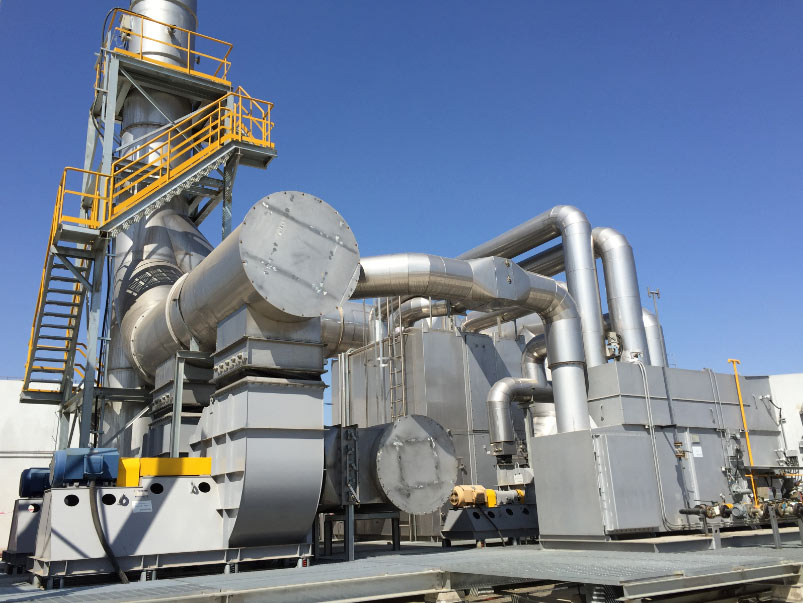

RTO Burner and Combustion System
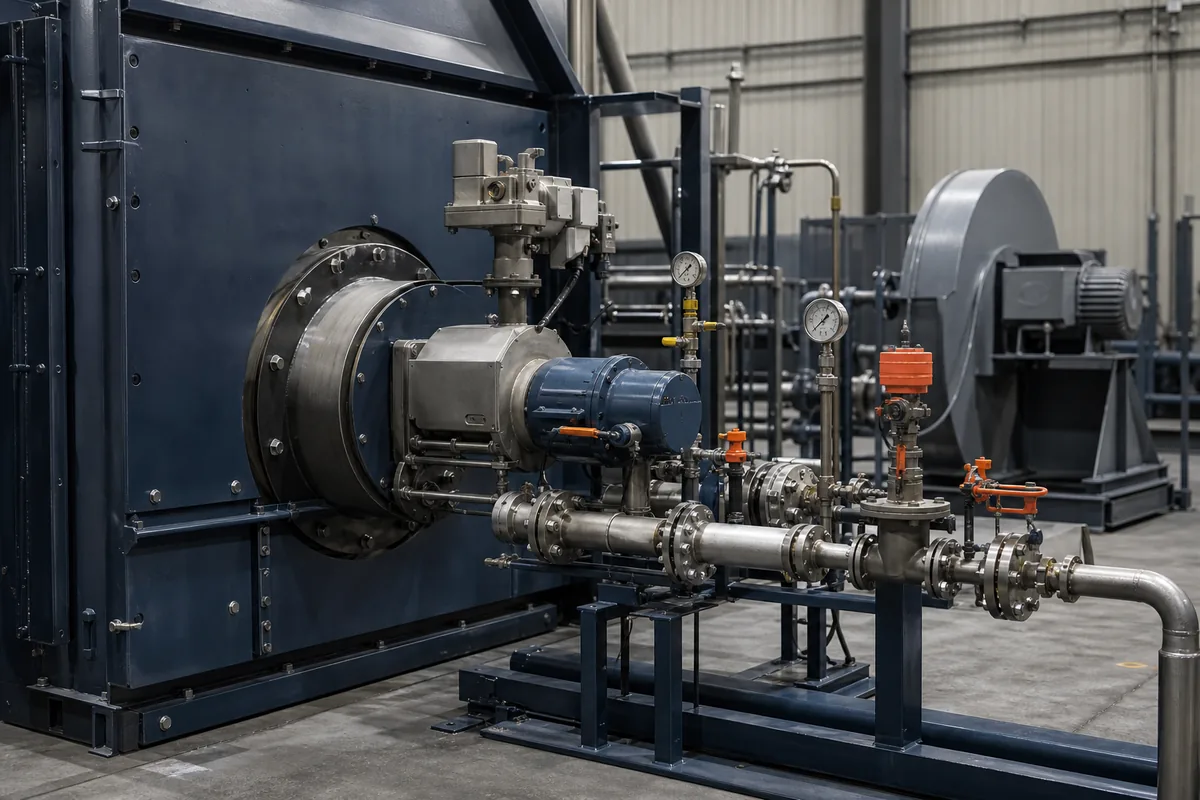
The burner package brings the RTO to operating temperature and supplies supplemental heat when VOC heat release is insufficient. Burner sizing, mixing, gas-train design and flame safeguards must be coordinated with the full airflow and load range.
Discuss your RTO projectWhat should be evaluated during component selection?
Start-up and full-flow duty
The burner is evaluated for cold start, full airflow and low-VOC operation so the chamber can reach and maintain the required oxidation temperature.
Turndown and temperature control
Stable modulation across changing process loads helps reduce cycling and temperature overshoot. Burner control is coordinated with chamber thermocouples, fan speed and heat-recovery conditions.
Fuel train and flame safety
A typical package includes isolation, regulation, safety shutoff, pressure proving, ignition and flame-detection functions selected for the fuel and project code requirements.
Temperature uniformity
Burner location, chamber geometry, mixing and residence volume are designed together to reduce cold spots and protect the refractory or ceramic-fiber lining.
Low-NOx and alternative heating
Low-NOx burners, electric heating and alternative fuels may be evaluated where required, but suitability depends on process conditions, utilities and local compliance requirements.
Maintenance access
Ignition components, flame scanner, valves, regulators and burner internals should be accessible for inspection, calibration and replacement without unnecessary downtime.
Component performance must be evaluated at system level
An RTO is not a collection of independent parts. Media pressure drop changes fan duty; valve leakage affects destruction efficiency; burner turndown affects temperature stability; and PLC logic coordinates each operating state.
Final selection should be based on the complete waste-gas analysis, required outlet limits, operating schedule, site utilities and maintenance strategy.
Related RTO technical pages
RTO Burner and Combustion System questions
Can an RTO operate without the burner after start-up?
It may require little or no supplemental fuel when VOC heat release and heat recovery are sufficient. This must be established from the actual mass and energy balance.
Why is burner turndown important?
Process airflow and VOC concentration can vary. Adequate turndown allows stable temperature control at lower heat demand and reduces unnecessary cycling.
Can an RTO use electric heating?
Electric heating can be evaluated for suitable duty, power availability and decarbonization goals. The complete electrical load, control method and temperature distribution must be engineered.
Send your VOC data for preliminary RTO sizing
Share airflow, VOC composition, concentration range, inlet temperature and operating schedule. Our engineering team will review the process conditions before recommending a configuration.
RTO burner system selection
The burner is used to bring the RTO chamber to operating temperature and support stable operation when the VOC stream does not provide enough heat. Burner duty should be checked against airflow, VOC concentration, chamber temperature, fuel type, startup time and operating variation.
- Natural gas, LPG or other available fuel and site pressure
- Startup and low-load duty, turndown and flame stability
- Burner management, flame detection, purge sequence and emergency shutdown
- Combustion-air fan, refractory interface and access for inspection
- Fuel consumption, chamber temperature and thermal recovery condition
Burner selection should be coordinated with the main RTO system, PLC safety interlocks and RTO maintenance plan.