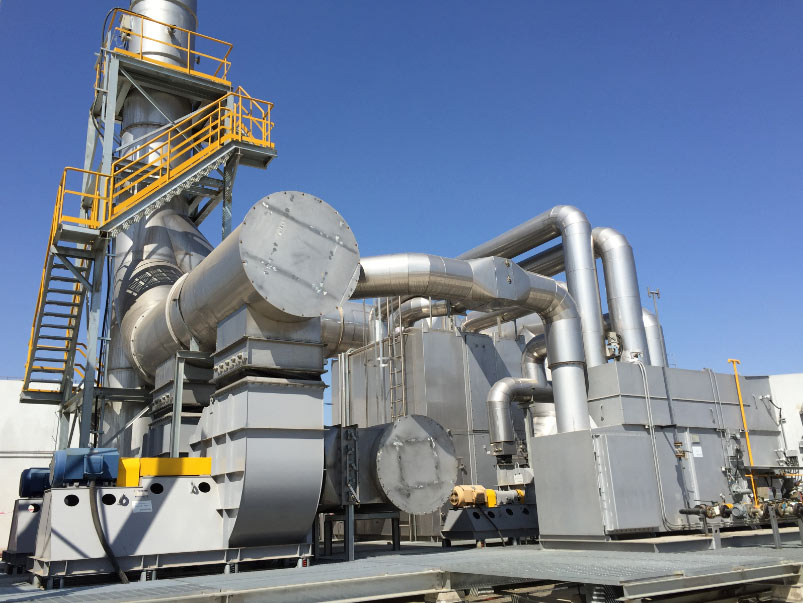

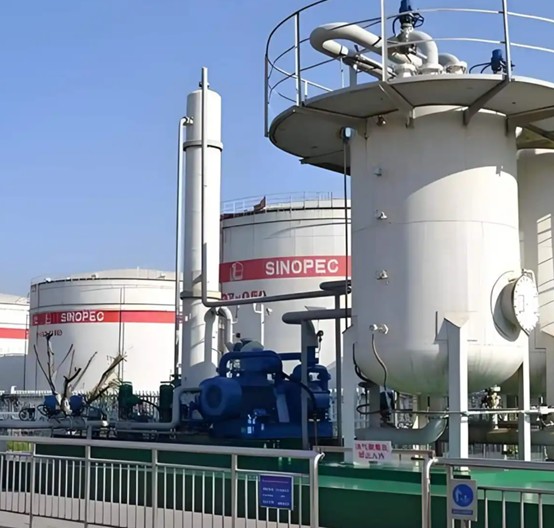
Direct answer: A marine vapor recovery system collects hydrocarbon vapor displaced from ship or barge cargo tanks during loading and routes it through a safe vapor header to recovery or control equipment. Depending on vapor composition and terminal conditions, the system may use absorption, adsorption, condensation, compression or a vapor combustion unit.
Marine vapor control must coordinate the vessel connection, dock piping, liquid separation, pressure control, safety devices and the terminal vapor recovery unit.
Where marine loading vapor comes from
As liquid cargo enters a vessel tank, hydrocarbon-rich vapor is displaced. Vapor rate follows the loading rate but may also be affected by cargo volatility, tank condition, temperature, inert gas and previous cargo. Short peaks can exceed average flow during loading changes or tank switching.
Main parts of a marine vapor recovery system
- Vessel vapor connection: transfers vapor from ship or barge to the terminal.
- Dock safety equipment: includes isolation, grounding, pressure protection and emergency shutdown interfaces.
- Vapor header: carries vapor while controlling pressure drop and condensation.
- Knockout vessel: removes entrained liquid before downstream treatment.
- Recovery or combustion equipment: captures hydrocarbons or destroys VOCs.
- Control system: coordinates loading, pressure, flow, alarms and shutdowns.
Marine vapor recovery technologies
| Technology | Best fit | Key consideration |
|---|---|---|
| Activated carbon adsorption | Hydrocarbon loading vapor | Regeneration, humidity and liquid protection |
| Absorption | Vapor compatible with an absorbent liquid | Solvent circulation and regeneration |
| Condensation | Recoverable heavier hydrocarbons | Temperature, pressure and energy demand |
| Compression | Gas with a usable destination | Suction pressure and outlet pressure |
| Vapor combustion unit | Recovery is impractical | Fuel, emissions and safety controls |
See the PollutionCtrl oil and gas vapor recovery unit for packaged recovery configurations.
Pressure control is critical
The system must avoid excessive backpressure on vessel tanks while preventing uncontrolled air ingress. Vapor piping size, hose or arm pressure drop, knockout vessel, treatment equipment and stack backpressure all contribute. Relief protection remains independent from normal pressure control.
Condensation and liquid carryover
Marine vapor may cool in long dock piping and produce liquid. Headers should be sloped and drained to a safe closed system. Knockout vessels need level indication, alarm and shutdown logic. Liquid slugs can damage compressors and contaminate carbon beds.
Safety and operating interfaces
The terminal should define ship-shore communication, emergency shutdown, grounding, inerting requirements, oxygen monitoring, flame or detonation protection where applicable, and the response to high pressure or loss of the vapor control unit. The design must follow the project jurisdiction and cargo-specific safety review.
Data needed for equipment selection
- Cargo type and vapor composition.
- Minimum, normal and maximum loading rate.
- Vessel vapor pressure limits.
- Vapor temperature, humidity and oxygen.
- Dock-to-unit pipe length and elevation.
- Expected liquid carryover and contaminants.
- Recovered product destination or combustion requirement.
- Required operating availability and loading schedule.
Marine vapor recovery versus tank VRU
A storage tank VRU usually handles breathing and flash vapor at a land facility. Marine vapor recovery follows vessel loading and can have larger short-duration flow, different pressure limits and ship-shore safety interfaces. The terminal may combine both systems but should evaluate simultaneous operation.
For tank-side design, see the storage tank vapor recovery system guide.
Frequently asked questions
What is a marine vapor recovery unit?
It is equipment that receives displaced hydrocarbon vapor from ship or barge loading and recovers usable components using adsorption, absorption, condensation or compression.
Can one unit serve several loading berths?
Yes, if header pressure drop, simultaneous loading, isolation and capacity control are designed for the full operating combinations.
When is a vapor combustion unit used?
Combustion may be selected when vapor recovery is technically or economically unsuitable. The choice should compare product recovery, utility demand, emissions and safety.
What causes high vessel backpressure?
Possible causes include undersized hoses or piping, liquid accumulation, blocked filters, a saturated treatment bed, control-valve position or excessive loading rate.
Request a marine vapor control review
Read how a VRU works and the VRU selection guide. Contact PollutionCtrl with loading and vapor data for a marine vapor recovery system proposal.