
Sludge drying rooms are one of the most difficult odor environments in a wastewater or solid waste facility. Mechanical and thermal dryers concentrate sludge to 40–90% solids, and every stage of the process — cake handling, belt dryers, paddle dryers, cyclone discharge and bagging — releases ammonia, hydrogen sulfide, organic sulfides and VOCs. The air is hot, humid and dusty, and the odor concentration is intense. Microwave UV oxidation and low-temperature plasma both offer dry, chemical-free treatment for this duty. This article focuses on the low-temperature plasma approach for sludge drying room exhaust.
Why Sludge Drying Odor Is Hard to Treat
Three factors make drying room exhaust uniquely demanding:
- High humidity: dryer exhaust is often saturated at 60–90 °C, which deactivates many adsorbents and condenses in ductwork.
- Mixed odor chemistry: ammonia (from protein decomposition), H2S and mercaptans (from sulfur compounds) and aldehydes/ketones (from thermal degradation) appear simultaneously.
- Peak intensity: during dryer start-up, cake feeding and discharge, odor concentration can spike by 5–10× above the average.
Wet scrubbers handle ammonia well but do little for neutral VOCs; activated carbon saturates fast in humid air; biofilters need large footprints and careful moisture control. Plasma oxidation oxidizes the full mixture in a compact skid.
System Layout for a Sludge Drying Room
A practical plasma system for a drying room follows this sequence:
- Heat recovery / pre-cooling: if dryer exhaust exceeds 60 °C, a heat exchanger recovers energy and brings the gas into the plasma operating window.
- Cyclone or bag filter: removes sludge dust that would foul the discharge electrodes.
- Demister: knocks out condensate droplets after the cooling step.
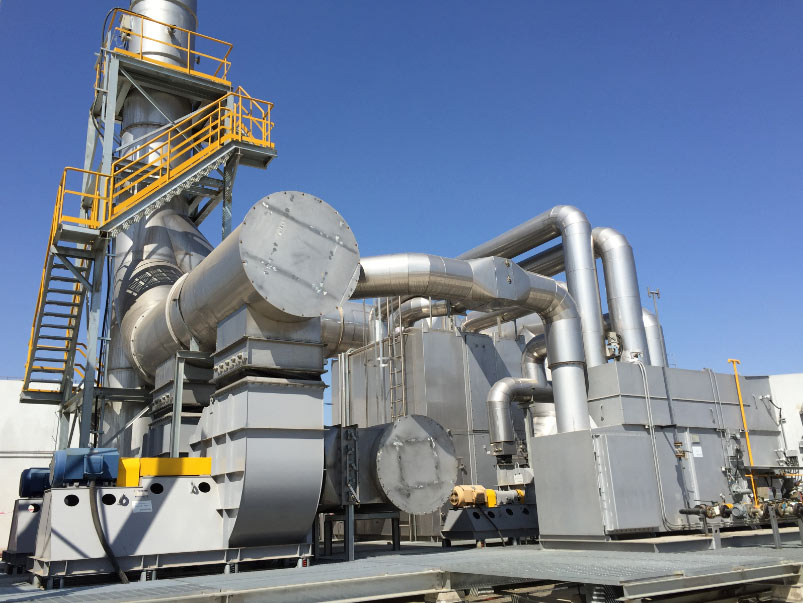
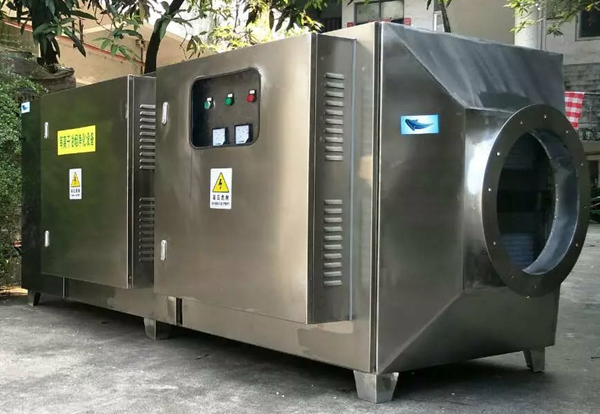
- Plasma oxidation reactor: the DBD cell treats the cooled, de-dusted stream. Residence time 1–2 s for the high loading typical of drying rooms.
- Carbon or catalytic polish: captures any residual odor and ozone; the carbon life is longer here than upstream because the plasma has done most of the work.
If the room also contains an open sludge storage bay, local extraction hoods over the bay feed the same treatment train, keeping the room air clean and the operators comfortable.
Ammonia and H2S Removal Performance
Plasma oxidation converts ammonia to nitrogen and water, and H2S to sulfur dioxide/sulfate which is captured in the polishing bed or neutralized in a small downstream caustic wash if required. Measured performance on a municipal sludge drying plant (12,000 m³/h, inlet 25–60 mg/m³ NH3, 5–15 mg/m³ H2S): ammonia removal 85–95%, H2S removal 90–98%, and odor concentration reduced from 10,000–30,000 OU to below 1,000 OU.
Operating Cost and Maintenance
Energy use is typically 5–12 Wh/m³ for drying room duty. Consumables are limited to the carbon polish bed (6–12 month replacement). Electrode cleaning is scheduled every 2–4 months depending on dust loading. There is no water consumption, no chemical purchase and no secondary wastewater — which simplifies the operating budget and the environmental permit.
FAQs for Sludge Drying Odor
Q: Can the system handle 100% humidity? A: After pre-cooling and demisting, the gas reaching the plasma cell is below saturation. The design includes drainage and corrosion-resistant internals for the humid fraction.
Q: Will the dust clog the reactor? A: The cyclone/filter upstream removes particles above 1–5 µm, which protects the electrodes. Regular cleaning intervals are designed into the maintenance plan.
Q: Is thermal drying exhaust suitable for plasma? A: Yes. The high concentration and low flow of thermal dryer off-gas is a good fit. For very high loadings we recommend a plasma + catalytic oxidation combination.
Request a Sludge Drying Odor Design
Provide your dryer type, air volume, inlet temperature and measured or estimated odor concentrations, and we will deliver a plasma-based solution with guaranteed outlet performance. Contact s18301170098@gmail.com or WhatsApp +86 19833770783.
See the full system range on our low-temperature plasma equipment page.
Related Articles
- Tank Farm Odor Control for Chemical Plants with Low-Temperature Plasma
- Reactor and Distillation Column Odor Control in Petrochemical Plants
- Hazardous Waste Warehouse and Storage Room Odor Control Guide
Compare with Incinerator Leachate Regulation Tank Odor Control with Microwave UV Oxidation for your application.