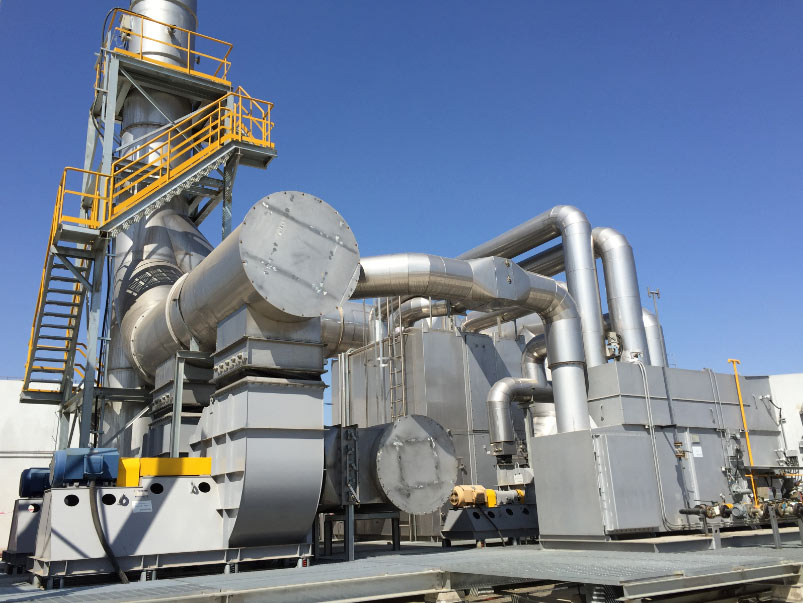

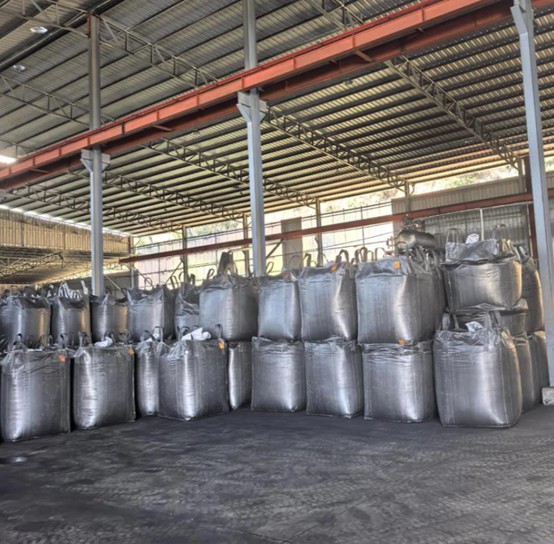
Activated carbon adsorption and catalytic combustion is a common VOC treatment process for medium and low concentration organic exhaust gas. Activated carbon first adsorbs VOCs from large air volume exhaust. When the carbon bed approaches saturation, hot air desorbs the VOCs into a smaller concentrated stream, and the concentrated gas is then oxidized in a catalytic combustion unit.
This process is widely used for coating, printing, packaging, electronics, chemical, rubber, and industrial manufacturing exhaust.
How the process works
The system usually includes:
- Pretreatment filter
- Activated carbon adsorption beds
- Desorption fan and hot air system
- Catalytic combustion reactor
- Heat exchanger
- Exhaust fan and stack
- PLC control system
During adsorption, VOC exhaust passes through the activated carbon bed. During desorption, the system switches beds and sends concentrated VOC gas to the catalytic reactor. The catalyst lowers the oxidation temperature, reducing energy consumption compared with direct thermal oxidation.
Suitable applications
| Application | Suitability |
|---|---|
| Spray painting | Common application when mist is removed before adsorption |
| Printing and packaging | Suitable for solvent VOCs with stable operation |
| Chemical exhaust | Depends on VOC type and catalyst compatibility |
| Rubber and plastics | Suitable after particulate and oil mist pretreatment |
| High humidity exhaust | Requires moisture control before adsorption |
Comparison with RTO
| Item | Activated carbon + catalytic combustion | RTO |
|---|---|---|
| Best concentration | Low to medium VOC concentration | Medium to high continuous VOC load |
| Air volume | Large air volume possible | Large air volume possible |
| Energy use | Lower when concentration is low and intermittent | Efficient for stable high heat recovery |
| Footprint | Moderate | Larger |
| Key risk | Carbon saturation, fire control, pretreatment | Valve maintenance, ceramic bed pressure drop |
Related pages:
FAQ
What is activated carbon adsorption catalytic combustion?
It is a VOC control process that adsorbs VOCs on activated carbon, desorbs them into a concentrated gas stream, and oxidizes them in a catalytic combustion reactor.
Is catalytic combustion an incinerator?
It is a type of oxidation system. Unlike direct thermal incineration, catalytic combustion uses a catalyst to oxidize VOCs at a lower temperature.
What should be checked before selecting this system?
Check VOC composition, concentration, air volume, humidity, particulate, oil mist, explosion risk, and whether the gas contains catalyst poisons such as sulfur, phosphorus, heavy metals, or silicone compounds.