
Sewage smell from a wastewater treatment plant comes mainly from hydrogen sulfide, ammonia, mercaptans, and volatile organic compounds released at the inlet works, equalization tanks, sludge areas, anaerobic zones, and pumping stations. Removing it is a three-step job: find the segment where the gas actually leaves the process, seal it and hold it under negative pressure, and only then choose a treatment process — low-temperature plasma, microwave ultraviolet oxidation, chemical scrubbing, activated carbon adsorption, or biological deodorization.
The right process depends on odor concentration, air volume, humidity, corrosion risk, discharge limits, and whether the stream is dominated by H2S or mixed VOCs. Buying equipment before the survey is the costliest mistake here.
Step 1: Find the Segment the Odor Escapes From
Most plants have several sources releasing at once, so one unit on one tank rarely fixes what neighbors notice. Walk the plant with a portable H2S detector and note where gas is leaving: an open surface, a cover gap, or the duct.
Inlet works, screens, and grit chambers
Sewage that has spent hours in a collection system arrives septic, so the strongest odor is often at the headworks, where turbulence over screens and drop structures strips dissolved sulfide out of the liquid. If the smell is worst at the boundary facing the inlet, start here.
Equalization and anaerobic tanks
Long retention plus warm weather means anaerobic conditions. These tanks are large and usually open, so emission is driven by surface area and by mixer or recirculation turbulence.
Sludge line, pumping stations, and wet wells
Sludge thickening, dewatering, storage, and cake handling release more varied odor that follows the dewatering cycle. Lift stations and wet wells are often remote, uncovered, and close to housing. See sludge odor control, sludge dewatering odor control, lift station odor control, and wet well odor control.
Outfall and discharge points
Final effluent is normally low-odor unless nitrification is poor or retained sludge is discharging; odor at the outfall is a process signal as much as an air-handling problem.
| Segment | Release trigger | Design consequence |
|---|---|---|
| Inlet works, screens, grit | Drops and turbulence on septic sewage | High H2S; corrosion-resistant materials |
| Equalization / anaerobic tanks | Open surface, long retention | Covered area drives sizing |
| Sludge thickening and dewatering | Batch release in the cycle | Intermittent flow; stage extraction |
| Lift stations and wet wells | Fill-and-draw level cycling | Small volume, high concentration |
Step 2: Field Self-Check Before You Buy Equipment
Run this checklist on the segments you identified; in most plants with disappointing results, the fault is found here rather than in the treatment unit.
- Cover integrity — inspect every cover, hatch, penetration, and seal. One missing gasket or a cover left open for maintenance defeats the whole system.
- Negative pressure established — hold a smoke pencil or tissue at each joint with the fan running. If it does not pull inward, gas is leaving by the easiest route.
- Fan matched to the network — compare design flow against the pressure drop the duct, covers, and treatment unit impose. A fan sized on flow alone loses volume as media loads.
- Short-circuiting at the hood — a slot placed too close to an air inlet, or on the wrong side of the release, pulls clean air instead of odorous air.
- Surface turbulence and drops — weirs, cascades, mixer wash, and pump-down drops are gas strippers. Baffling a drop is often cheaper than treating the extra air.
- Ducts, condensate, and cross-draughts — sagging runs, blocked drains, and corroded low points destroy the pressure balance, and room ventilation can push captured air back out.
Step 3: Match Treatment to Budget and Air Volume
The tiers rank investment, not quality. Move up when air volume, H2S load, or a nearby receptor makes the lower tier unstable.
Low-investment tier
Cover and seal the worst segment, pull it under negative pressure with a correctly sized fan, and polish the extracted air locally with granular activated carbon, plus plant-extract spraying at the source. This suits small, intermittent air volumes with no receptor close by. It does not hold against continuous load: carbon saturates quickly under high H2S and humidity, and spraying masks odor rather than removing it.
Mid-tier: biological and wet treatment
Where the load is large and stable and space allows, a biofilter or bioscrubber is usually the cheapest to operate, because the media works at ambient conditions. It needs consistent moisture, temperature, and inlet conditions, and must be sized for the real load, or the bed goes anaerobic and becomes a source itself. Add a chemical scrubber where H2S is high.
High-standard tier: oxidation and thermal
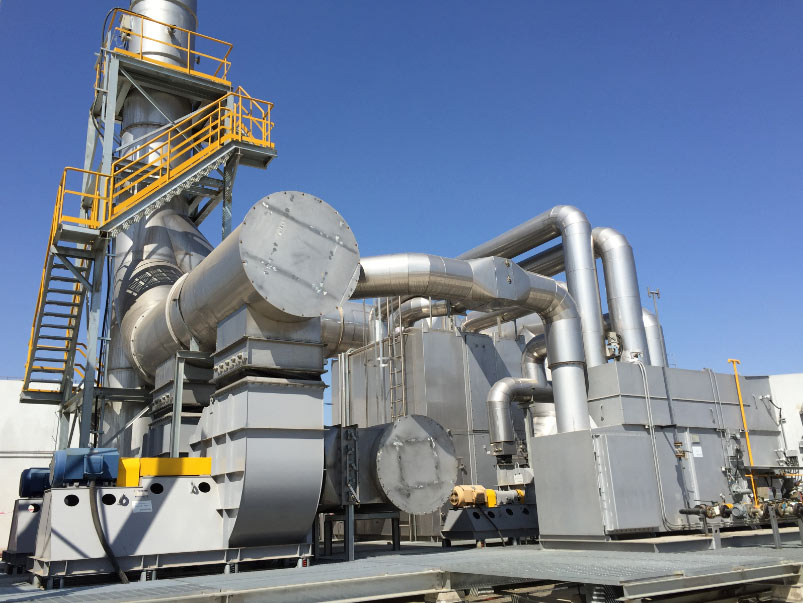
Where volume is large, the stream is a mixed VOC odor rather than a sulfur problem, or the site sits close to housing, oxidation-based systems are used. Low-temperature plasma suits compact installations needing fast start-up; microwave UV oxidation suits streams with mixed organic compounds and sulfur odor. For the largest flows, terminal thermal or catalytic oxidation is the final stage, with a scrubber upstream to take the H2S load off it.
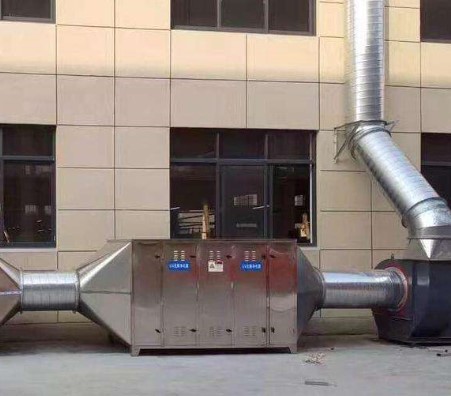
All three tiers share one structure: corrosion-resistant covers, slight negative pressure in the covered area, ducting, pretreatment for humidity and dust, treatment, then stack discharge. See the industrial odor control systems page and the wastewater odor control system overview.
Operation and Maintenance
- Media replacement — track pressure drop and the outlet odor or H2S trend rather than replacing on a calendar; rising pressure drop means loaded media or a channelling bed.
- Fan and duct maintenance — check belts, couplings, vibration, and impeller condition, and clean condensate drains on a schedule. Corroded ducts and blocked drains cause most later failures.
- Covers and dampers — H2S and moisture attack seals, hinges, and damper shafts before the structure; dampers that no longer seat let air balance drift.
- Seasonal variation — warm weather raises biological activity and sulfide release; cold weather changes media performance and can freeze condensate lines.
- Instrumentation and records — calibrate H2S and pressure or flow instruments, and log inspections, media changes, and odor events with date, segment, and weather.
Preparing for Complaints and Environmental Inspections
- Keep a current odor management procedure listing each source, its capture method, and an operating target, and update it when the plant changes.
- Maintain inspection and maintenance records for covers, fans, ducting, and media, so the site can show what was done and when.
- Handle complaints through one route: record time, weather, wind direction, location, and what the plant was doing, then check the matching segment.
- During an inspection, point to the capture zone for each source and show that it holds negative pressure with the fan running.
- Follow your local authority’s general requirements; the limits and reporting duties that apply are set by the regulator that permits the plant.
Frequently Asked Questions
What is the best way to remove sewage smell?
Enclose the odor source, collect the gas under negative pressure, and treat it with equipment matched to the gas composition. Equipment alone is less effective if the source is not sealed; most failures come from capture, not treatment.
Which segment should be treated first?
Start with the segment producing the highest concentration where people notice the odor — usually the inlet works on septic sewage. If the nearest receptor sits beside the sludge building or a remote lift station, treat that asset first.
Can activated carbon remove sewage smell?
It removes low-concentration odor and VOCs, but may saturate quickly when H2S, humidity, or high organic load is present. It is often better as a polishing stage, with a realistic replacement plan.
Is plasma equipment suitable for wastewater odor?
Yes. It treats many low to medium concentration wastewater odor gases, especially with good collection design and a compact footprint, but suits less where gas carries heavy moisture or dust without pretreatment.
How do you control H2S odor in sewage plants?
Usually with source covering, chemical scrubbing, oxidation equipment, and corrosion-resistant ducting. Because H2S drives both odor and corrosion, materials matter as much as the treatment stage — see hydrogen sulfide removal for wastewater.
Talk to an Engineer
Send the segments you identified, the covered areas, and your odor or discharge requirements through the contact page, and we will return a capture and treatment configuration proposal. If the survey is not done yet, send the plant layout and air volume estimates instead. Related reading: sewage treatment plant odor control.