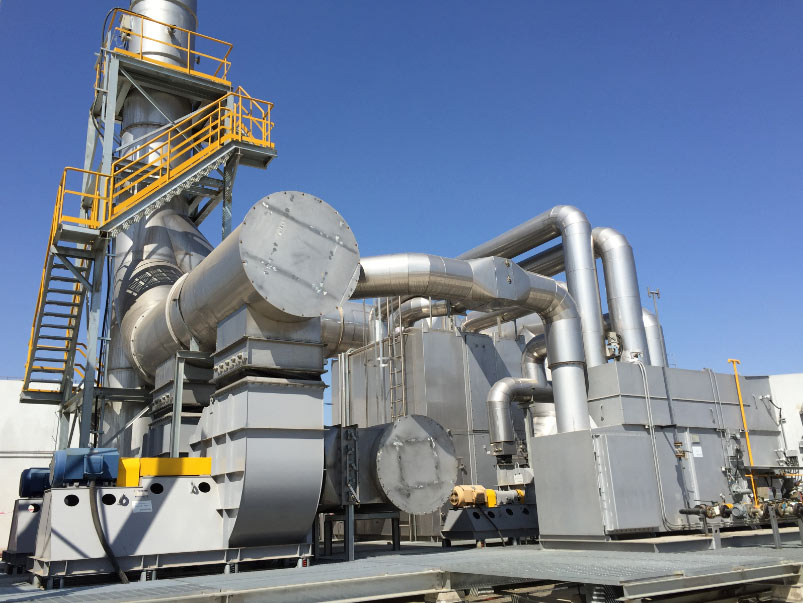

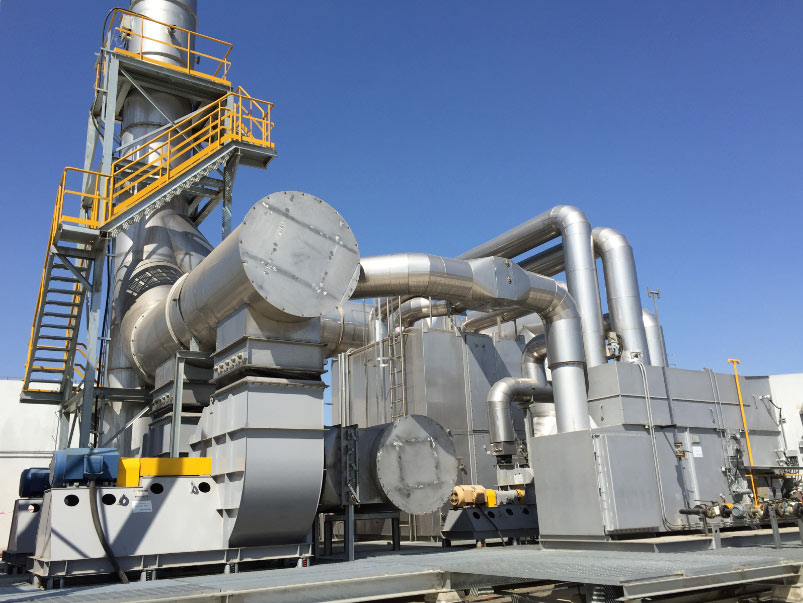
The thermal oxidizer process is used when factories need reliable VOC destruction for exhaust streams from coating, printing, chemical production, pharmaceutical production, petrochemical operations, and other industrial processes. Search data shows strong interest in thermal oxidizer and thermal oxidiser terms, so this guide explains the process in practical engineering language.
Main thermal oxidizer page: https://pollutionctrl.com/thermal-oxidizer/
Basic process flow
A thermal oxidizer collects VOC-laden exhaust, moves it through fans and ductwork, heats the air stream to the required oxidation temperature, holds it for enough residence time, and releases treated gas after heat recovery or cooling. The goal is to convert VOCs into carbon dioxide, water vapor, and trace byproducts under controlled conditions.
Key design variables
The most important design variables are airflow, VOC concentration, VOC type, inlet temperature, oxygen level, moisture, particulate content, required destruction efficiency, and operating schedule. A small change in airflow or concentration can change burner demand, chamber size, and heat recovery design.
Direct fired thermal oxidizer
A direct fired thermal oxidizer heats the exhaust stream directly in a combustion chamber. It is simple and robust, especially for streams with high temperature or limited heat recovery requirements. However, fuel use may be higher when compared with regenerative designs.
Regenerative thermal oxidizer
A regenerative thermal oxidizer, or RTO, uses ceramic media beds to recover heat from the clean exhaust and preheat incoming dirty air. This makes it one of the most energy-efficient options for many VOC control applications. See the RTO page: https://pollutionctrl.com/regenerative-thermal-oxidizer/
Catalytic oxidizer
Related equipment pages: Thermal Oxidizer | Regenerative Thermal Oxidizer | Catalytic Oxidizer | Contact PollutionCtrl
A catalytic oxidizer uses a catalyst to reduce the oxidation temperature. It can reduce fuel use when the VOC stream is compatible with the catalyst and does not contain poisoning compounds. See: https://pollutionctrl.com/catalytic-oxidizer-3/
Common process problems
Poor VOC capture, duct leakage, fouled filters, unstable airflow, contaminated heat recovery media, and incorrect control settings can all reduce performance. A thermal oxidizer should be designed as part of the full exhaust system, not as a stand-alone box.
How to choose the right process
Use an RTO for large airflow and low-to-medium VOC concentrations where heat recovery is important. Use catalytic oxidation when catalyst compatibility and lower temperature operation are favorable. Use direct thermal oxidation when the process requires a simpler high-temperature solution.
FAQ
What temperature does a thermal oxidizer use?
Many thermal oxidation systems operate at high temperature, often in the range required to achieve the target VOC destruction efficiency. The exact setpoint depends on VOC type, residence time, and system design.
What is the difference between thermal oxidizer and RTO?
An RTO is one type of thermal oxidizer. It uses regenerative ceramic heat recovery to reduce fuel consumption.
How do I size a thermal oxidizer?
Sizing starts with airflow, VOC concentration, exhaust temperature, operating hours, moisture, oxygen content, and required emission limits. For project discussion, contact us: https://pollutionctrl.com/contact/