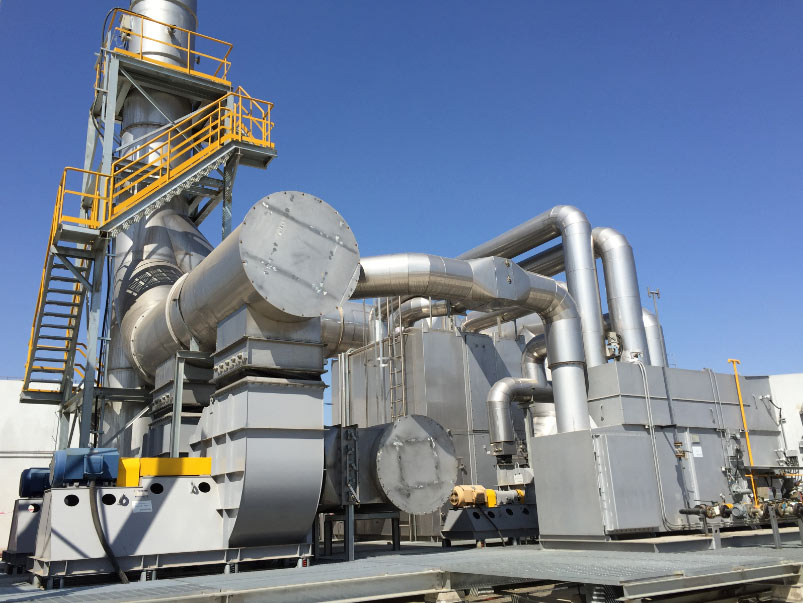

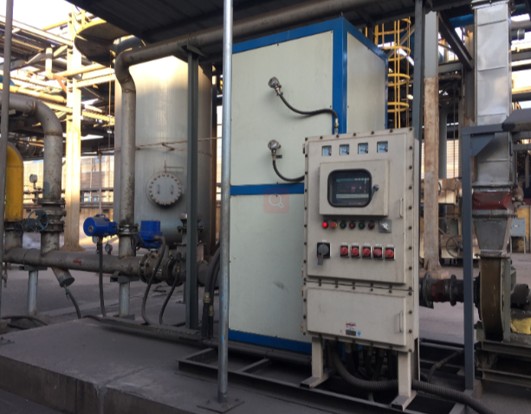
RTO vs catalytic oxidizer is a common comparison for engineers evaluating VOC emissions control. Both technologies can destroy volatile organic compounds, but they work best under different process conditions. Choosing the right system depends on airflow, VOC concentration, catalyst compatibility, operating schedule, and energy cost.
RTO reference: https://pollutionctrl.com/regenerative-thermal-oxidizer/
Catalytic oxidizer reference: https://pollutionctrl.com/catalytic-oxidizer-3/
How an RTO works
A regenerative thermal oxidizer heats VOC-laden air to oxidation temperature and recovers heat through ceramic media beds. It is especially useful for large exhaust volumes with low-to-medium VOC concentrations. The heat recovery design can significantly reduce supplemental fuel demand.
How a catalytic oxidizer works
A catalytic oxidizer passes heated exhaust through a catalyst bed. The catalyst allows VOC oxidation at a lower temperature than direct thermal oxidation. This can reduce energy use, but the catalyst must be protected from poisons such as certain metals, silicones, halogens, sulfur compounds, and heavy particulate loading.
When to choose an RTO
Choose an RTO when the airflow is large, VOC concentration varies, high destruction efficiency is required, or the exhaust contains compounds that may not be suitable for catalyst service. RTO systems are commonly used in coating, printing, chemical, pharmaceutical, and industrial drying processes.
When to choose a catalytic oxidizer
Choose a catalytic oxidizer when the VOC stream is clean, catalyst-compatible, relatively stable, and suited to lower temperature oxidation. It can be attractive when fuel savings are important and the process does not risk catalyst poisoning.
Operating cost comparison
RTO cost is strongly affected by heat recovery efficiency, pressure drop, valve operation, and VOC heat value. Catalytic oxidizer cost depends on preheat demand, catalyst life, catalyst replacement cost, and protection from contaminants.
Related equipment pages: RTO System | Catalytic Oxidizer | Thermal Oxidizer Guide | Get Selection Support
Maintenance comparison
RTO maintenance focuses on valves, ceramic media, burner systems, insulation, fans, and pressure drop. Catalytic oxidizer maintenance focuses on catalyst activity, masking, poisoning, pressure drop, burner controls, and pre-filtration.
Decision checklist
Define VOC composition, airflow, concentration range, process temperature, humidity, dust or aerosol load, target emission limit, operating hours, and available utilities. Then compare lifecycle cost, not only purchase price.
Related pages
For thermal oxidation process basics, see: https://pollutionctrl.com/thermal-oxidizer/
For RTO maintenance details, see: https://pollutionctrl.com/regenerative-thermal-oxidizer-maintenance-checklist-for-reliable-voc-control/
For chemical industry RTO applications, see: https://pollutionctrl.com/chemical-industry-regenerative-thermal-oxidizer/
FAQ
Is an RTO better than a catalytic oxidizer?
Not always. RTOs are robust for many industrial VOC streams, while catalytic oxidizers can be more efficient for clean catalyst-compatible streams.
Which system handles variable VOC loading better?
RTO systems are often selected when VOC loading or process conditions vary, but final selection should be based on actual exhaust data.
Can a catalytic oxidizer replace an RTO?
Sometimes, but only if the VOC composition and contaminants are compatible with the catalyst and the operating cost comparison supports the change. Contact us for selection support: https://pollutionctrl.com/contact/
Quick VOC Control Selection Answer
Which VOC control system should be selected? Use vapor recovery when hydrocarbons have reuse value; consider a catalytic oxidizer for catalyst-compatible VOC gas; consider an RTO for large dilute continuous exhaust; and evaluate direct thermal oxidation for smaller, concentrated or media-fouling streams. Airflow, VOC species, concentration peaks, temperature, contaminants and operating hours determine the final choice.