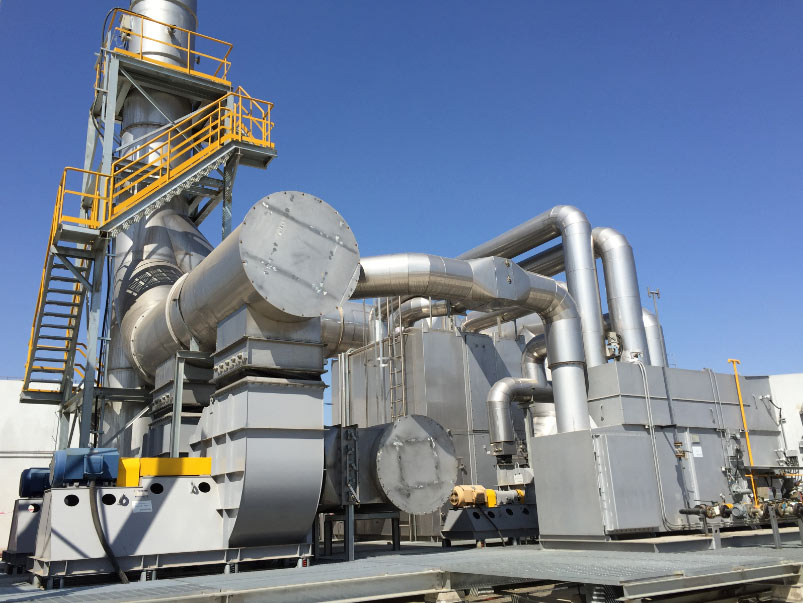

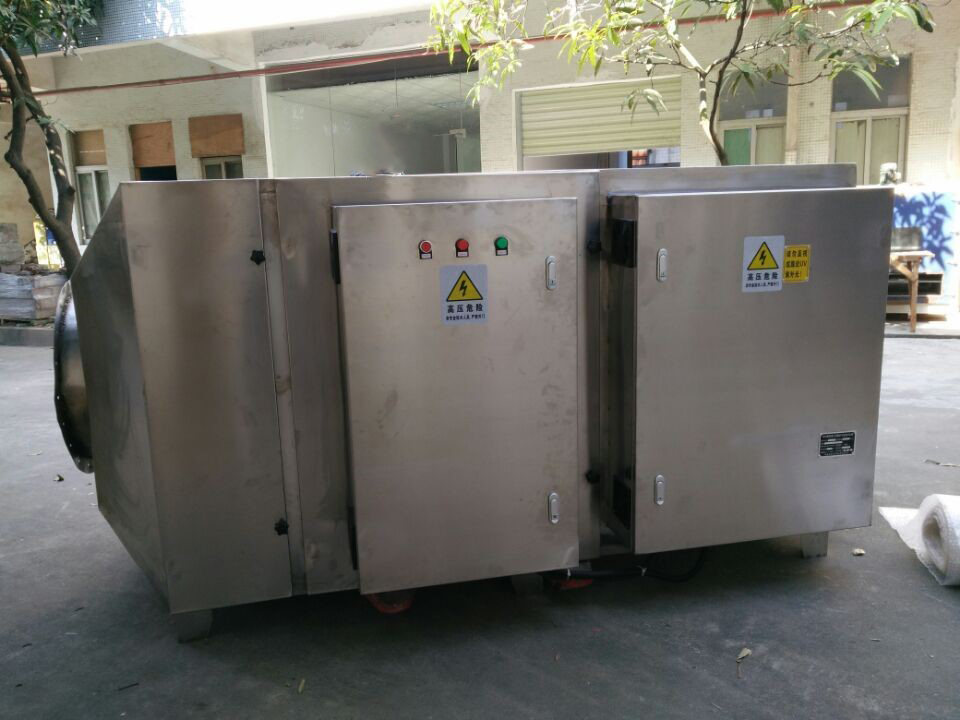
Solvent volatilization and material degradation are the hidden odor engines of the chemical and petrochemical industry. Every open process, every storage vessel, every off-spec batch and every heap of raw or intermediate material slowly releases volatile organics and decomposition gases. Unlike a single point source, this odor is diffuse, continuous and difficult to quantify — yet it is exactly the kind of nuisance that triggers neighborhood complaints and drives environmental inspection failures. Microwave ultraviolet (MW-UV) oxidation provides a practical answer for the diffuse, low-to-medium concentration odor streams produced by solvent evaporation and material degradation across the plant.
Where Diffuse Odor Comes From
In a typical chemical plant, the diffuse odor sources include:
- Open equipment and sampling points: sample ports, sight glasses, open drums and process openings release solvent vapor during routine operation.
- Storage and transfer: drum storage areas, warehouse bay doors and loading docks accumulate evaporated solvent.
- Off-spec and waste batches: off-spec product, still bottoms and spent solvent held for disposal continue to volatilize for weeks.
- Material degradation: oxidizable raw materials, aging catalysts and organic residues decompose slowly, emitting aldehydes, organic acids and amines.
- Spill and washdown residues: residual solvent in drains and sumps evaporates long after the visible spill is cleaned.
These sources are typically diluted into building or area exhaust, producing large air volumes with low concentrations — the operating window where MW-UV oxidation is uniquely efficient.
Why MW-UV Oxidation Suits Diffuse Odor Streams
Microwave UV oxidation treats dilute, complex odor mixtures with three compounding mechanisms:
- UV photolysis breaks the molecular bonds of aromatics, esters, ketones and amines directly.
- In-situ ozone and hydroxyl radicals oxidize the fragments and the less-photolyzable compounds.
- TiO2 photocatalysis on the reactor surfaces handles the persistent species and prevents by-product accumulation.
For a large air volume at low concentration — the classic diffuse-odor profile — the energy cost is modest because the lamp power is set by air volume, not by concentration. A system sized for 50,000 m³/h of plant exhaust typically draws 15–40 kW and consumes only electricity plus periodic lamp changes.
Integrating MW-UV with Building Ventilation
The most cost-effective approach for diffuse odor is to treat the building or area exhaust at the discharge point:
- Area zoning: the plant is divided into odor zones (storage, production, waste handling) based on emission intensity.
- Targeted extraction: strong local sources — drums, decanting stations, waste bays — get local hoods with higher concentration.
- Area exhaust: the general building ventilation is ducted to the MW-UV skid, with dampers balancing the zones.
- Treatment and discharge: the combined stream passes through the UV reactor and a short ozone polish duct before the stack, with a continuous odor monitor at the outlet for record-keeping.
This scheme treats the whole plant with one system instead of dozens of small scrubbers, cutting capital and maintenance cost dramatically.
What Performance to Expect
On a polymer additives plant treating 40,000 m³/h of combined production and storage exhaust (100–500 mg/m³ total VOC, including toluene, MEK, ethyl acetate and trace mercaptans), the MW-UV system reduced odor concentration from 6,000–12,000 OU to below 500 OU and cut total VOC by 85–95%, with mercaptan removal above 90%. The continuous outlet monitor provided the compliance record the plant needed for the local authority.
FAQs for Diffuse Odor Control
Q: Is UV effective at very low concentrations? A: Yes — photolysis efficiency is concentration-independent to first order, so dilute streams are treated as effectively as concentrated ones. This is the main advantage over adsorption, which becomes uneconomic at low loading.
Q: Will one system cover the whole plant? A: With proper zoning and ducting, a single modular MW-UV skid (or two in parallel) can handle the full plant exhaust. We size it from your air balance.
Q: How do we measure success? A: We recommend an inlet/outlet odor panel test (olfactometry) at commissioning plus continuous total VOC and H2S monitoring, giving both a scientific baseline and an ongoing compliance record.
Get a Plant-Wide Odor Solution
Let us map your plant’s diffuse odor sources and propose a microwave UV oxidation system that treats the whole picture, not just the worst stack. Contact s18301170098@gmail.com or WhatsApp +86 19833770783.
See the system range on our microwave ultraviolet oxidation equipment page.
Related Articles
- Incinerator Leachate Regulation Tank Odor Control with Microwave UV Oxidation
- Fly Ash and Slag Storage Odor Control with Microwave UV Oxidation
- Chemical Wastewater Station Odor Control with Microwave UV Oxidation
Compare with Tank Farm Odor Control for Chemical Plants with Low-Temperature Plasma for your application.