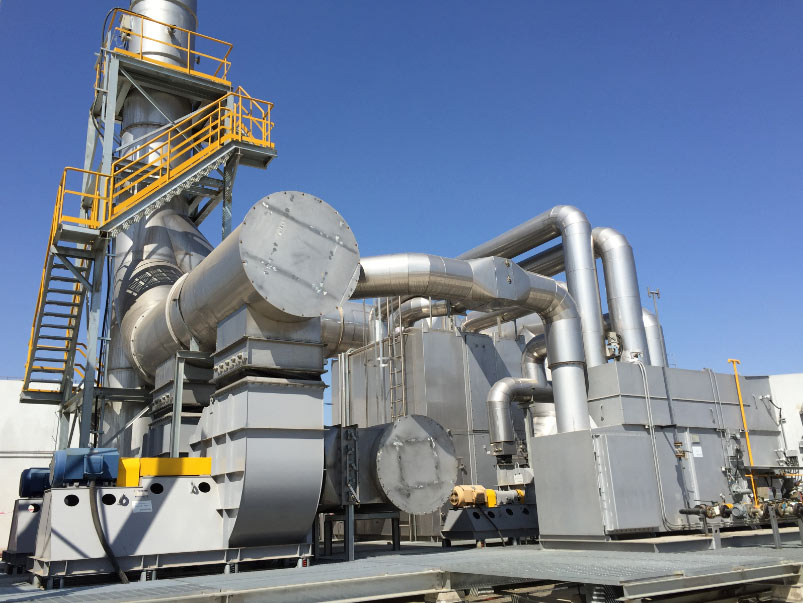

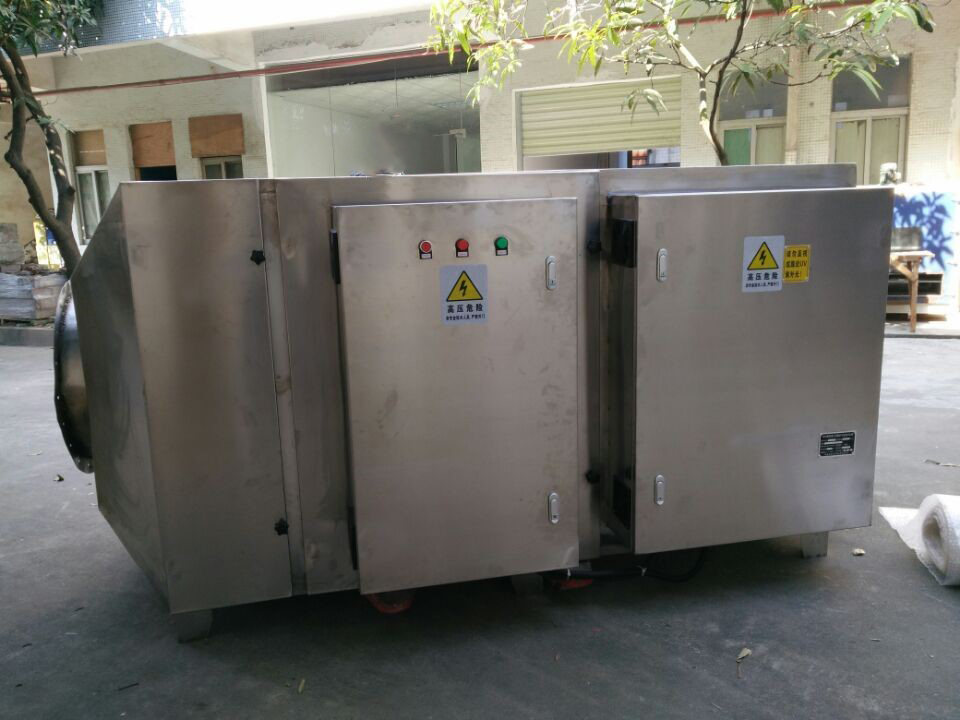
Chemical wastewater treatment stations are the most complained-about odor source inside many chemical plants. The incoming stream is hot, contains residual solvents, and carries sulfides, mercaptans and amines from the production process. Equalization tanks, flotation units, aerobic and anaerobic basins and the sludge section each release their own odor fingerprint. Microwave ultraviolet (MW-UV) oxidation is gaining ground in this service because it handles the characteristic chemical-station mixture — high humidity, fluctuating concentration, reduced sulfur plus solvent VOCs — in a single dry reactor, with no chemical inventory and no liquid waste.
Odor Sources Across the Treatment Train
Different unit operations produce different odor problems:
- Equalization and regulation tanks: hot solvent-laden wastewater releases aromatics, esters and ketones continuously.
- Flotation (DAF): air stripping carries sulfides and mercaptans off the recycled flow.
- Anaerobic section: the classic H2S and reduced-sulfur generator, with peaks during sludge blanket upsets.
- Aerobic basins: lower intensity but large surface area, releasing ammonia and bio-aerosols on warm days.
- Sludge holding and dewatering: ammonia, organic sulfides and VOCs from concentrating solids.
Because the stations are open-air in many plants, the odor is best controlled by covering the strongest sources and extracting the headspace to a treatment unit.
How MW-UV Oxidation Fits a Chemical WWTP
Microwave UV oxidation delivers three mechanisms in one pass:
- Direct photolysis: 254 nm radiation breaks the bonds of H2S, mercaptans and aromatic rings.
- ·OH and ozone generation: 185 nm radiation photolyses water vapor, producing hydroxyl radicals and ozone that oxidize the full VOC range.
- Photocatalysis: the TiO2-coated reactor surface accelerates mineralization, including the harder-to-oxidize chlorinated and nitrogenated species.
This chemistry-independent approach means the same reactor treats the solvent-rich equalization tank odor and the sulfide-rich anaerobic basin odor without retuning — a decisive operational advantage in a station where the inlet profile changes hour to hour.
Designing the Collection and Treatment System
A practical scheme for a chemical plant wastewater station:
- Covering strategy: floating covers on equalization and anaerobic tanks, rigid covers on DAF and sludge holding tanks, with sealed manholes.
- Extraction: headspace air drawn at 1–3 air changes per hour for large tanks; hoods over dewatering and sludge handling.
- Pretreatment: demister and optional quench to control temperature and humidity; a small water wash if inlet H2S exceeds 100 ppm.
- MW-UV reactor: electrodeless lamps with catalyst baffles, 2–4 s residence time, modular cells for expansion.
- Final polish: carbon or caustic wash section for residual odor and ozone.
The skid is typically placed at the station edge, with ducting sized to avoid corrosion — FRP or PP ductwork is standard for the humid, sulfide-laden header.
Performance on Chemical Station Duty
A fine chemical plant treating 20,000 m³/h of combined station exhaust (H2S 20–60 ppm, NH3 10–30 mg/m³, total VOC 100–400 mg/m³ including toluene, ethyl acetate and THF) achieved 95%+ H2S removal, 90% ammonia removal and 88–95% VOC removal with the MW-UV system, bringing odor concentration from 15,000 OU to below 700 OU at the stack.
FAQs for Chemical Wastewater Odor
Q: Is covering the tanks mandatory? A: For effective control, yes. Covering reduces the air volume 10–50× compared with treating the whole building, which makes the UV system far smaller and cheaper to run.
Q: What about high H2S peaks? A: The ozone polishing section absorbs short peaks, and the power supply modulates with inlet concentration. For sustained high H2S, a pre-scrubber is added.
Q: Does the system need continuous chemical supply? A: No. Operation requires only electricity and periodic lamp replacement, plus infrequent carbon media change. This eliminates the logistics and safety issues of onsite chemicals.
Get a Chemical WWTP Odor Solution
Send us your station layout, tank list and odor measurement data, and we will design a microwave UV oxidation system with guaranteed outlet performance. Contact s18301170098@gmail.com or WhatsApp +86 19833770783.
Explore the technology on our microwave ultraviolet oxidation equipment page.
Related Articles
- Incinerator Leachate Regulation Tank Odor Control with Microwave UV Oxidation
- Fly Ash and Slag Storage Odor Control with Microwave UV Oxidation
- Solvent Volatilization and Material Degradation Odor Control with Microwave UV Oxidation
Compare with Tank Farm Odor Control for Chemical Plants with Low-Temperature Plasma for your application.