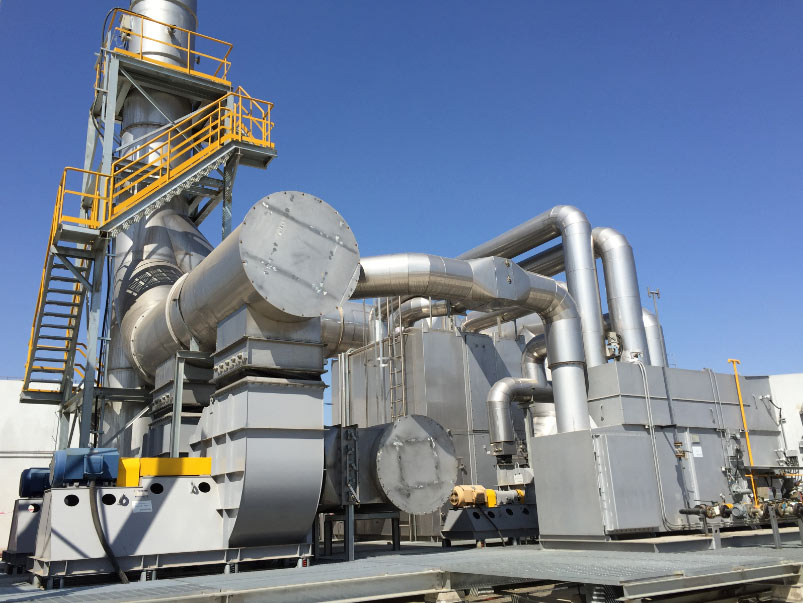

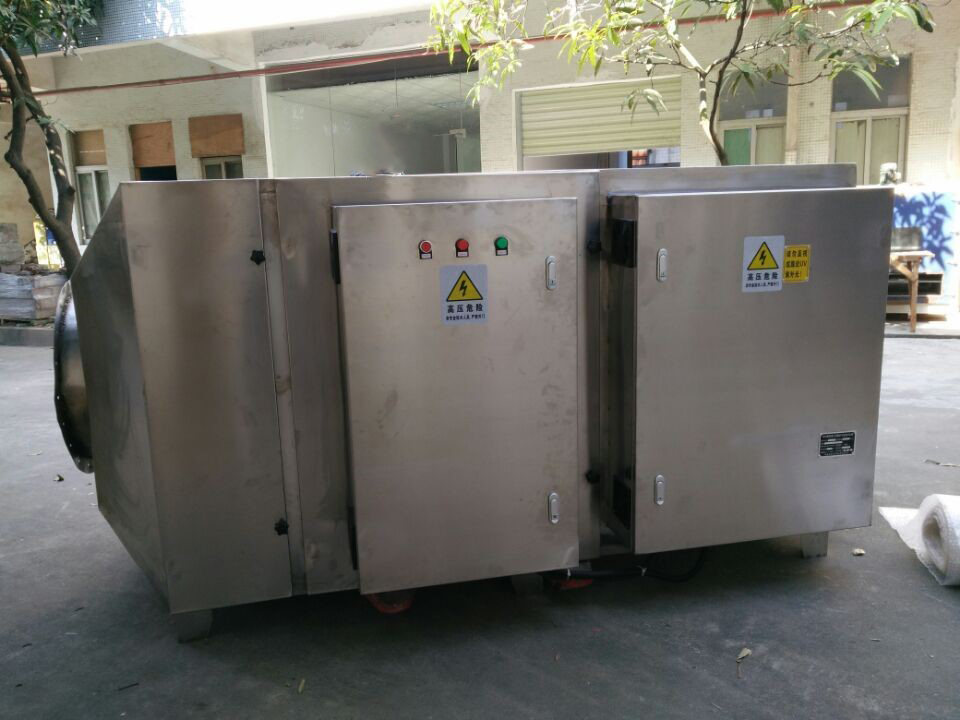
Fly ash and bottom slag storage areas in waste incineration and power plants release a distinctive, persistent odor that many operators underestimate. Fresh fly ash is alkaline, fine and reactive; it carries ammonia residue from SNCR/SCR systems, soluble salts and trace heavy metals, and when it contacts moisture it releases ammonia gas. Bottom slag, still warm from the grate, emits hydrogen sulfide and reduced sulfur compounds as it cools and reacts with water. Together these materials make ash storage silos, slag pits and temporary storage buildings a continuous odor source. Microwave ultraviolet (MW-UV) oxidation is an excellent fit for this duty because it treats the humid, dusty, ammonia-rich exhaust without consumable chemicals and with a compact footprint.
The Odor Chemistry of Fly Ash and Slag
Three mechanisms drive ash-related odor:
- Ammonia release: excess reagent from SNCR/SCR ammonia injection is adsorbed on fine fly ash and desorbs as NH3 in storage, especially in warm weather.
- Sulfide formation: residual sulfur in slag reacts with condensed water, generating H2S and mercaptans in the quench and storage stages.
- Organic decomposition: unburned carbon fines and any co-stored organic material slowly decompose, adding amines and aldehydes to the mix.
The result is a gas stream that combines alkaline ammonia with acidic reduced-sulfur compounds — a combination that neutralizes single-chemistry scrubbers and quickly destroys conventional adsorbents.
Why Microwave UV Oxidation Is the Right Tool
MW-UV oxidation attacks both ends of this chemistry simultaneously:
- The 185 nm radiation photolyses water vapor into ·OH radicals and generates ozone in situ.
- The 254 nm line directly photolyses the N–H bond of ammonia, converting NH3 to nitrogen and water.
- Ozone and radicals oxidize H2S and mercaptans to sulfate and SO2, which are captured or neutralized in the downstream section.
- The TiO2 catalyst layer accelerates the oxidation of organic amines and aldehydes.
Because the reaction is dry and uses only electricity and replaceable lamps, the system adds no water, no chemical inventory and no secondary waste — all important in an ash handling facility where space and environmental controls are tight.
System Configuration for Ash Storage Areas
A typical MW-UV installation for ash storage includes:
- Covered or enclosed storage: silo vents, slag pit hoods and storage building exhaust are collected into one header.
- Dust removal: a bag filter or cyclone upstream protects the UV lamps and catalyst from ash carryover — critical because fine ash would otherwise coat the quartz sheaths.
- MW-UV reactor: electrodeless lamps with catalyst baffles, sized for the combined air volume with 2–4 s residence time.
- Ammonia pre-wash (optional): if inlet NH3 exceeds 100 mg/m³, a small water wash captures the bulk and reduces lamp loading; the wash water is recycled to the ash conditioning process.
- Ozone destruction / polishing bed: a thin activated carbon layer removes residual ozone and traces of odor before discharge.
The modular skid can be installed on the ash silo roof or beside the slag pit, minimizing duct runs and pressure drop.
Performance Data
On a municipal solid waste incinerator treating 8,000 m³/h of combined fly ash silo and slag pit exhaust (inlet NH3 30–80 mg/m³, H2S 10–40 mg/m³, odor 8,000–20,000 OU), the MW-UV system delivered ammonia removal above 90%, H2S removal above 95% and odor concentration below 600 OU. Lamp life in the dusty service exceeded 10,000 hours with the upstream filter in place.
FAQs for Ash Storage Odor Control
Q: Is the dust a problem for UV lamps? A: With proper upstream filtration to below 5 µm, ash carryover is controlled. The electrodeless lamps also tolerate surface deposits better than electrode lamps because there are no internal electrodes to short.
Q: Does ammonia removal need a scrubber? A: Not always. MW-UV photolyses NH3 directly. A pre-wash is only recommended for very high inlet concentrations to extend lamp life.
Q: Can the system be explosion-proof? A: Yes, the electrical enclosures, fans and controls can be supplied to the hazardous area classification of your storage area, though ash storage is usually a non-hazardous or Zone 2 duty.
Request an Ash Storage Odor Solution
Share your storage layout, air volumes and measured NH3/H2S levels, and we will provide a microwave UV oxidation system with a performance guarantee. Contact s18301170098@gmail.com or WhatsApp +86 19833770783.
Learn more on our microwave ultraviolet oxidation equipment page.
Related Articles
- Incinerator Leachate Regulation Tank Odor Control with Microwave UV Oxidation
- Chemical Wastewater Station Odor Control with Microwave UV Oxidation
- Solvent Volatilization and Material Degradation Odor Control with Microwave UV Oxidation
Compare with Tank Farm Odor Control for Chemical Plants with Low-Temperature Plasma for your application.