
The leachate regulation tank is the most odor-intensive spot in a waste-to-energy or incineration plant. Leachate from the waste pit is high-strength, warm and actively fermenting: hydrogen sulfide, ammonia, mercaptans and volatile fatty acids are generated continuously, and the tank’s large open surface — often 2,000–10,000 m² of liquid — emits odor at a rate that dominates the entire plant boundary. Microwave ultraviolet (MW-UV) oxidation is emerging as the preferred technology for leachate regulation tank exhaust because it combines photolysis, ozone oxidation and photocatalytic destruction in one compact reactor that handles the high humidity and variable loading of leachate gas.
Why Leachate Tank Odor Is Uniquely Difficult
Leachate tank exhaust has four properties that break most conventional systems:
- Extreme humidity: gas above the tank is near 100% RH and warm, which rapidly saturates activated carbon and degrades scrubber performance.
- Very high H2S: concentrations of 50–300 ppm are common, far beyond what a UV lamp alone can handle.
- Slow, continuous emission: the tank emits 24/7 with seasonal and storm-driven peaks, so the system must run reliably with minimal operator attention.
- Corrosive atmosphere: H2S and sulfuric acid attack metals, so construction materials matter as much as the treatment chemistry.
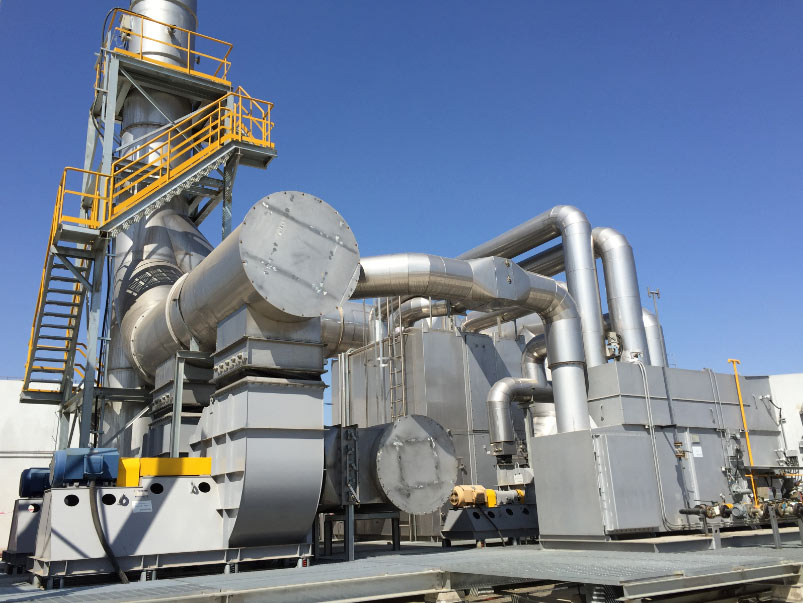
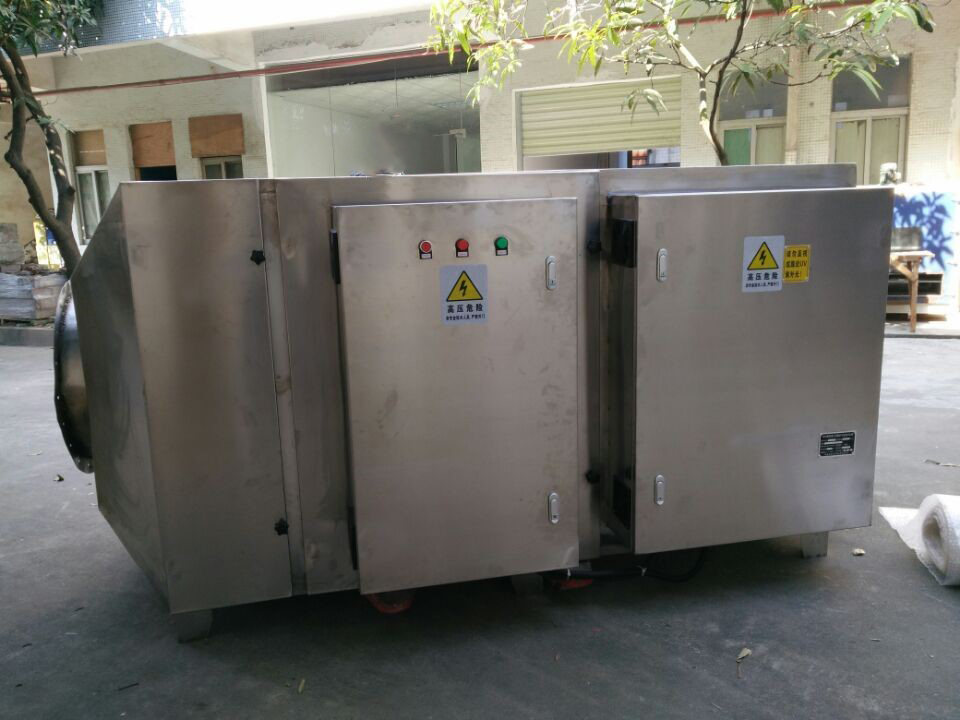
Microwave UV oxidation addresses all four: the microwave-excited electrodeless UV lamps produce intense 185 nm + 254 nm radiation and ozone in situ, while the titanium dioxide catalyst layer accelerates the oxidation of the most stubborn compounds.
How Microwave UV Oxidation Works on Leachate Gas
In an MW-UV reactor, microwave energy drives electrodeless lamps that emit deep ultraviolet. The 185 nm line photolyses water vapor and oxygen into ·OH radicals and ozone; the 254 nm line breaks S–H and N–H bonds directly. The combined effect:
- H2S is oxidized to SO2 and then to sulfate in the humid gas film, captured as dilute acid or neutralized.
- Ammonia is converted to nitrogen and water via ·OH attack.
- Mercaptans and volatile fatty acids are mineralized to CO2 and H2O.
- Residual ozone decomposes naturally downstream, so the stack carries no ozone burden.
The microwave lamps have no internal electrodes, so they are not fouled by the humid, dirty gas as quickly as conventional mercury lamps, and they can be replaced in seconds without breaking the reactor seal.
System Design for a Leachate Regulation Tank
A robust MW-UV system for this duty includes:
- Covered tank ventilation: the tank is covered with floating or rigid covers, and the headspace is extracted at a controlled rate (typically 2–6 air changes per hour based on tank area and safety).
- Demister and droplet separator: removes entrained leachate spray before the UV chamber.
- MW-UV oxidation chamber: electrodeless UV lamps arranged in the gas flow with TiO2-coated catalyst baffles; residence time 2–5 s.
- Ozone-assisted polishing section: a short reaction duct allows the ozone generated in the chamber to complete the oxidation of residual odor.
- Acid-resistant construction: FRP or PP housing with quartz lamp sheaths, because the H2S oxidation creates a mildly acidic gas film.
For very high H2S (above 200 ppm), an upstream caustic or iron-chelating wet scrubber removes the bulk of the sulfide, and the MW-UV unit polishes the remaining odor and VOCs — a combination that extends lamp life and minimizes chemical use.
Performance on Real Incineration Plants
On a 30,000 m³/h leachate tank exhaust with 80–150 ppm H2S and odor concentration of 20,000–50,000 OU, a scrubber + MW-UV combination achieved 99% H2S removal (outlet below 1 ppm) and odor concentration below 800 OU, with a 90% reduction in mercaptans. Standalone MW-UV systems on cleaner tanks achieve 90–97% odor removal with only electricity and lamp replacement as operating costs.
FAQs for Leachate Odor Control
Q: How often are UV lamps replaced? A: Electrodeless lamps typically last 8,000–16,000 hours. Replacement takes minutes per lamp and does not require draining the tank or stopping the fan.
Q: Is covering the tank required? A: For effective collection, yes — a floating cover or tensioned membrane cover concentrates the odor into a manageable air volume. We supply the cover design together with the treatment system.
Q: Can MW-UV handle storm surges? A: The air volume follows the tank ventilation rate, which is largely independent of liquid level. Concentration spikes are absorbed by the ozone polishing section, and the power can be modulated automatically.
Get a Leachate Tank Odor Solution
Tell us your tank dimensions, leachate characteristics and current odor levels, and we will engineer a microwave UV oxidation system sized for your plant. Contact s18301170098@gmail.com or WhatsApp +86 19833770783.
Review the technology on our microwave ultraviolet oxidation equipment page.
Related Articles
- Fly Ash and Slag Storage Odor Control with Microwave UV Oxidation
- Chemical Wastewater Station Odor Control with Microwave UV Oxidation
- Solvent Volatilization and Material Degradation Odor Control with Microwave UV Oxidation
Compare with Tank Farm Odor Control for Chemical Plants with Low-Temperature Plasma for your application.