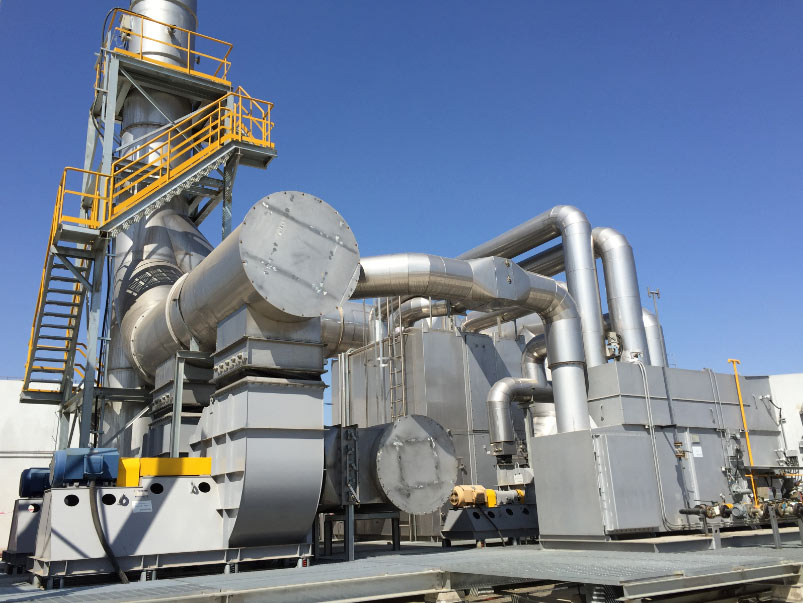

Painting and coating lines can generate large volumes of exhaust containing solvents and volatile organic compounds (VOCs). A regenerative thermal oxidizer (RTO) can be considered when the exhaust flow is high, operation is frequent and the gas composition is suitable for thermal oxidation.
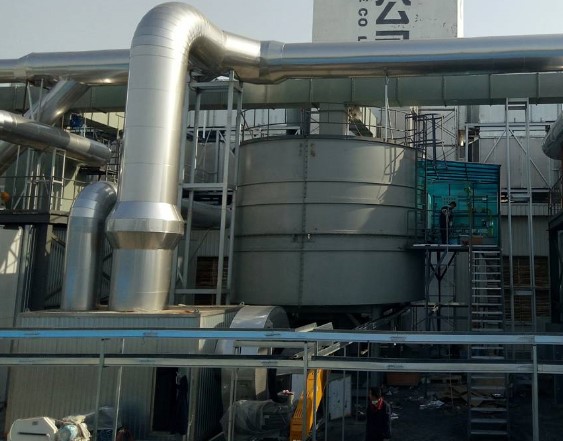
When is an RTO suitable for a painting line?
An RTO is commonly evaluated when a painting line has medium-to-high airflow and a continuous or repeatable operating schedule. Ceramic heat-recovery media preheats incoming process air with energy from the cleaned gas, which can reduce supplemental fuel demand during stable operation.
Final selection depends on solvent chemistry, average and peak VOC concentration, airflow range, inlet temperature, humidity, paint mist, oil aerosol, particulate and the required outlet limit.
Key design checks
- Measure normal, minimum and peak airflow rather than using only the fan nameplate value.
- Identify solvent species and concentration ranges, including startup and cleaning conditions.
- Evaluate paint mist, overspray, dust and condensables that may foul ceramic media or valves.
- Check LEL margin, fan pressure, duct leakage, operating hours and available utilities.
- Determine whether a filter, cooling stage, concentration rotor or other pretreatment is required.
Two-bed, three-bed or rotary RTO?
A two-bed system may fit a straightforward industrial VOC stream when carryover requirements can be met. A three-bed system adds a purge step that can reduce switching carryover. A rotary RTO may be considered for large continuous airflow where compact distribution and stable operation are priorities.
Preliminary data for an RTO quotation
Send the airflow range, VOC test report, process flow diagram, inlet temperature and humidity, operating hours, paint or solvent information, emission target, site location and available fuel, electrical and compressed-air utilities.
Review PollutionCtrl RTO systems or request a preliminary evaluation.
RTO for paint shop and coating-line VOCs
Painting lines often combine spray booths, flash-off areas and curing ovens with different exhaust conditions. The design should separate compatible streams, check solvent concentration and account for airflow changes when production shifts between products.
- Paint booth, flash-off and oven exhaust sources
- Solvent type, VOC concentration, humidity and particulate carryover
- Fan control, bypass conditions and production schedule
- Heat recovery for curing ovens or plant utilities
- Fire protection, LEL monitoring, purge and emergency shutdown
For high airflow and lower concentration, a concentration stage may be compared with direct RTO treatment. Review the industrial RTO system and the painting VOC project case.
RTO for Paint Shop VOC Treatment
Paint lines can produce solvent VOCs with changing airflow, booth exhaust, flash-off zones, ovens and production shifts. RTO design should consider VOC composition, concentration, temperature, humidity, paint mist, dust, bypass conditions and heat recovery.
Paint Line Oxidizer Selection
Send booth and oven airflow, solvent data, operating schedule, inlet temperature, particulate control, emission target and site layout. This supports a comparison between RTO, catalytic oxidizer, thermal oxidizer and adsorption.
Related: industrial RTO system and RTO burner system.