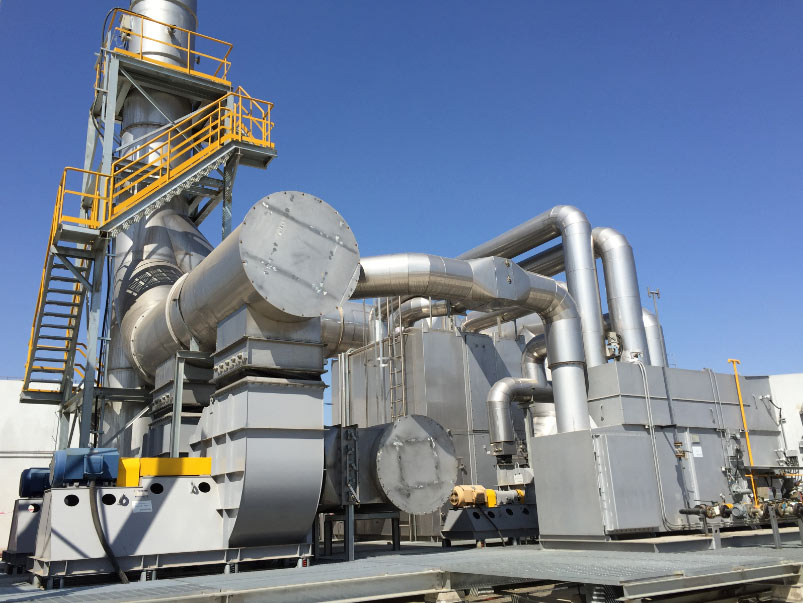

RTO and RCO systems both use regenerative heat recovery, but they oxidize VOCs in different ways. An RTO uses high-temperature thermal oxidation, while an RCO uses a catalyst to support oxidation at a lower temperature when the gas is compatible with the catalyst.
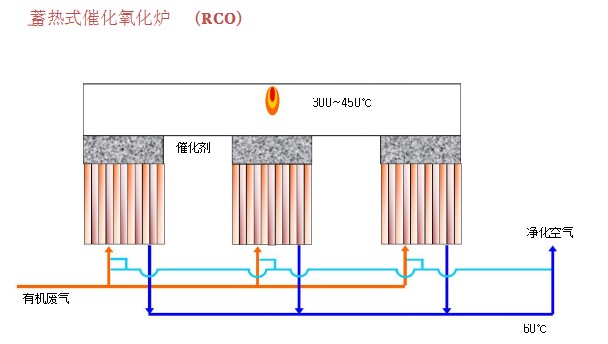
How an RTO works
An RTO preheats incoming exhaust through ceramic media, oxidizes suitable organic compounds in a combustion chamber and transfers heat back into another media bed. It is commonly considered for medium-to-high airflow and continuous VOC service.
How an RCO works
An RCO combines ceramic heat recovery with a catalyst bed. The catalyst can lower the oxidation temperature, which may reduce fuel demand, but catalyst compatibility and protection from dust, aerosols, poisons and condensables are essential.
Quick selection comparison
| Consideration | RTO | RCO |
|---|---|---|
| Oxidation route | Thermal oxidation | Catalytic oxidation |
| Typical fit | Higher airflow and continuous duty | Compatible VOC streams with catalyst conditions |
| Main risk | Fuel demand at low VOC heat release | Catalyst poisoning or fouling |
| Key data | VOC load, airflow, heat balance | VOC chemistry, catalyst compatibility, contaminants |
What should be checked before choosing?
Compare VOC species, concentration range, airflow, temperature, humidity, particulate, oil mist, sulfur, halogens, silicon compounds, operating hours, outlet limits and maintenance requirements. The lower-temperature technology is not automatically the better option if the gas can deactivate the catalyst.
See PollutionCtrl RTO systems, learn about RCO systems, or send your gas data for a technology comparison.