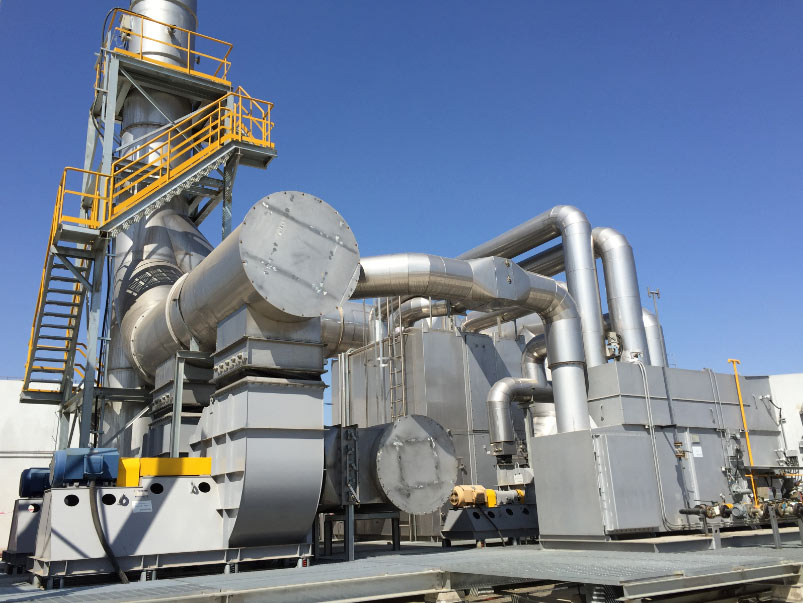
Condensation + Adsorption Vapor Recovery Unit
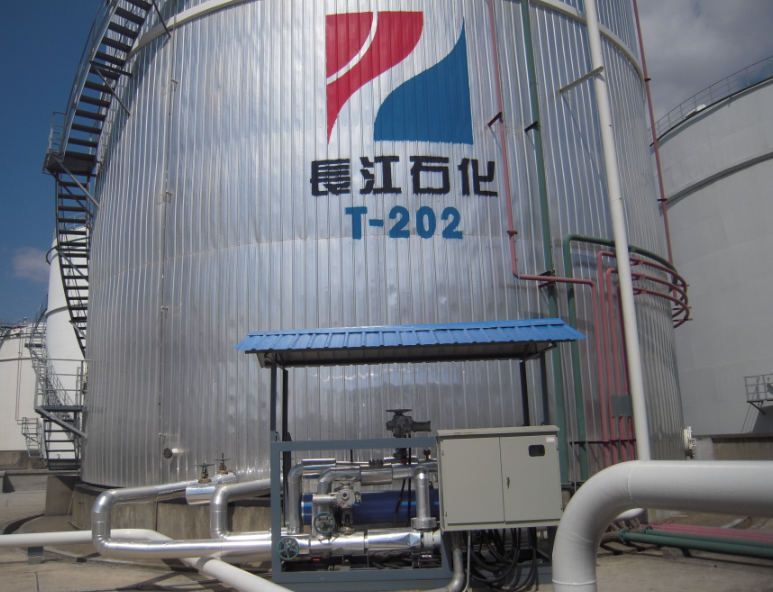
Condensation + adsorption is a combined vapor recovery route for hydrocarbon-rich exhaust from storage tanks, loading operations and process vents. Cooling first recovers condensable product, while adsorption polishes the remaining vapor before discharge or sends it back for further recovery.
How the process works
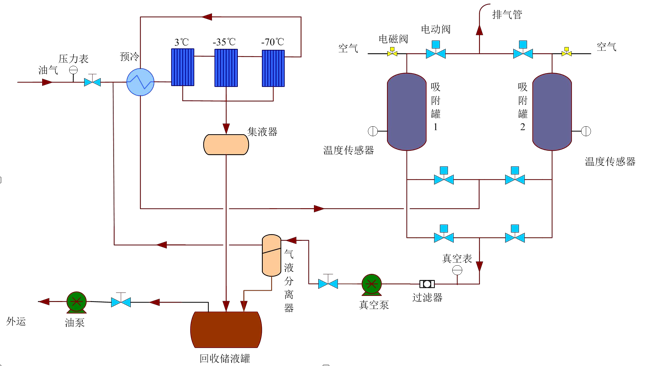
- Collection and protection: vapor is collected from the source through a pressure-controlled header and passes through separation and liquid-protection equipment.
- Pre-cooling and staged condensation: heat exchange and cooling lower the vapor temperature in stages so recoverable hydrocarbon components can condense.
- Liquid separation and return: condensed product is collected, level-controlled and routed to the approved recovery destination.
- Adsorption polishing: residual hydrocarbon vapor passes through alternating adsorption beds so the outlet can meet the project target.
- Desorption and recycle: the saturated bed is regenerated using the selected vacuum, pressure or thermal method and the desorbed vapor is returned to the recovery section when appropriate.
When to consider this VRU
- Heavier hydrocarbon components have meaningful recovery value.
- The stream has a repeatable flow pattern but may have loading peaks.
- A low residual concentration is required after primary condensation.
- The project can provide refrigeration, electrical power and safe condensate handling.
- Recovery is preferred over destruction because the product can be returned to storage or process.
Key design checks
| Design area | Questions to answer |
|---|---|
| Vapor composition | Which components condense economically, and are there water, acid gas or polymerizable compounds? |
| Flow and pressure | What are minimum, normal and peak flow, and what pressure range can the tanks tolerate? |
| Cooling system | What refrigeration duty, ambient condition, defrost method and condensate drainage are required? |
| Adsorption bed | What are the adsorbent capacity, temperature rise, pressure drop, switching and regeneration requirements? |
| Safety | How are LEL, oxygen, temperature, liquid carryover, flame protection and emergency isolation controlled? |
Information for a preliminary quotation
Send the gas analysis, normal and peak flow, inlet pressure and temperature, water content, tank or loading data, operating schedule, recovered-product destination, emissions target and available utilities. Final temperatures, recovery rates, capacity and equipment dimensions remain project-specific.
Discuss a condensation + adsorption project
We can review whether the stream is suitable for staged condensation, adsorption polishing or a different recovery route.
Related: VRU product selection · storage tank vapor recovery design · VRU design guide.