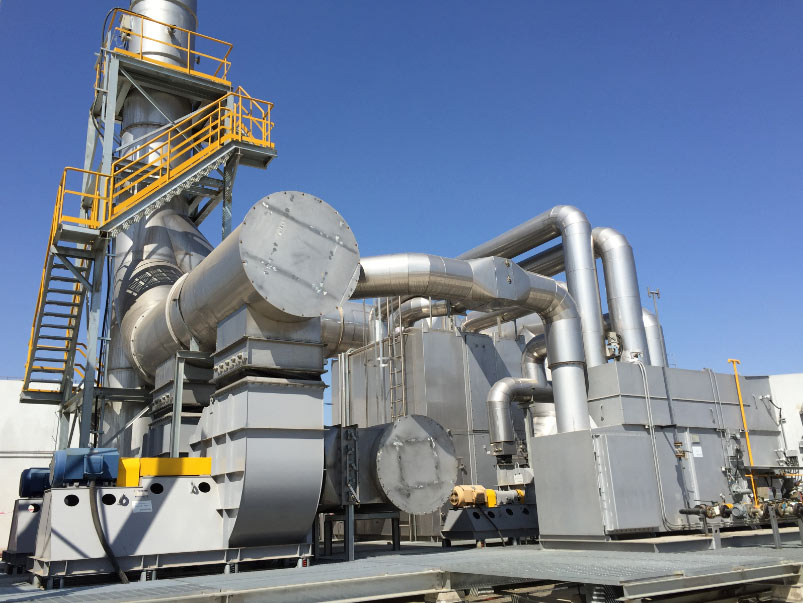

Coconut shell activated carbon for water purification is a granular, steam-activated carbon for removing dissolved organics, residual chlorine, colour, taste and odour from drinking water, process water and wastewater. It is one grade in the wider coconut shell activated carbon range.
What Water-Grade Carbon Removes
Dechlorination
Free chlorine reacts with carbon quickly; chloramine is slower because the amine bond must first break. Dechlorination uses the shortest contact time in the train, so carbon often sits directly ahead of reverse osmosis or ion exchange.
Colour, taste, odour and organics
Taste and odour compounds are small molecules, the fraction this carbon holds best, and trace organics such as pesticides, solvents and phenols sit in the same size range. Colour is mixed: the low-molecular-weight part adsorbs, while the larger humic fraction is better handled by coagulation. Removing organics before chlorination cuts THM formation, and this duty usually sets bed life.
Groundwater, municipal supply and process water
Groundwater often carries chlorine, iron, manganese or one contaminant such as a pesticide; surface water adds seasonal organic load, so it is clarified first. Municipal supply is chlorinated to a distribution standard rather than for your process. Drinking water follows your authority’s limits; process water follows the grade: food and beverage grade, pharmaceutical grade or industrial wastewater grade.
Why Coconut Shell Base
Pore size distribution
Steam activation of coconut shell gives a predominantly microporous carbon, typically quoted at 950 to 1200 m²/g surface area. Micropores match small molecules: chlorine, taste and odour compounds, pesticides and low-molecular-weight organics. Wider-pore media hold larger molecules better, so coal based granular carbon for sewage treatment often suits colour bodies.
Hardness and attrition resistance
A water bed is backwashed repeatedly and often regenerated and transported. This carbon is characteristically hard, typically 95% minimum, so it resists attrition; fines mean lost capacity, higher pressure drop and carry-over downstream.
Ash content and leaching
Ash contributes no adsorption and can release inorganics into treated water, so a low figure matters in high-purity duty. The water grade is specified at 5% maximum ash and pH 7 to 11; for ultrapure water an acid-washed grade is requested instead.
System Configurations
Fixed beds and contactors
Most water duty is a fixed bed: a pressure vessel or gravity filter holding carbon, with distribution arranged so water spreads across the cross-section instead of channelling.
Downflow and upflow
Downflow is the default: it traps particulate on top of the bed and gives a simple backwash signal from pressure drop. Upflow uses the inventory more evenly but needs a reliable solids flush.
Stratified, series and parallel arrangements
- Stratified – carbon with anthracite or sand in one vessel, so filtration and adsorption share a unit.
- Series (lead-lag) – the lead bed works toward exhaustion while the lag guard protects the outlet, using capacity more fully than scheduled replacement.
- Parallel – splits flow for turndown or maintenance, holding contact time at part load.
Working with RO, ultrafiltration and other stages
Carbon sits ahead of reverse osmosis, ultrafiltration and desalination membranes to remove chlorine and organics that would foul or degrade them. It also polishes the outlet of biological treatment or chlorine dioxide generation, with sequencing checked. For hydrogen sulphide, iron or manganese in groundwater, evaluate a catalytic iron oxide carbon. Full trains are covered under water treatment equipment and industrial wastewater treatment equipment.
Design Inputs
- Average, peak and minimum flow, with the daily and seasonal pattern
- Water analysis: pH, temperature, turbidity, iron, manganese, hardness, hydrogen sulphide, oil and grease
- Chlorine free and total, including chloramine
- Organics: DOC or TOC, UV254, colour, and the limit that applies
- Target outlet values or the regulated value to hold
- Regeneration or replacement plan and local disposal route
Contact time, velocity and bed depth
| Duty | Empty bed contact time class |
|---|---|
| Dechlorination | Short – a few minutes |
| Organics and THM precursors | Long – about ten minutes and upward |
| Trace contaminants | Set by test |
Service velocity is kept low enough to limit pressure drop and give the water time in the bed, and bed depth is set deep enough to prevent short-circuiting; both are confirmed by column testing.
Regeneration and replacement interval
Bed life is set by breakthrough, not the calendar: it follows the adsorbate load, water temperature and pH, and the outlet value you must hold. A bed protecting a membrane runs far longer than one holding a tight organic limit; estimate the interval by test.
Operation and Maintenance
Backwashing
Backwash is triggered by differential pressure and wash-water clarity, not a clock. Bed expansion is kept sufficient to release trapped solids without washing carbon out; a channelled bed passes water untreated.
Monitoring
- Inlet and outlet differential pressure across each vessel
- Outlet chlorine residual, the earliest and cheapest breakthrough indicator
- TOC or UV254, colour and turbidity, whichever governs your limit
Microbial growth control
Carbon is a nutrient-rich surface and supports a biofilm where the water is warm and carries no disinfectant residual. Treat that as a design issue: avoid stagnation and dead legs, backwash on condition, and where downstream use permits maintain a chlorine residual.
Spent carbon – regeneration and disposal
Loaded carbon goes for thermal reactivation or is disposed of under local waste rules, and the route depends on what it adsorbed – industrial residues differ from drinking water filter carbon. Reactivated carbon is lower in activity and hardness, so blend deliberately and ask for measured values on the lot.
Specifications
| Parameter | Typical specification |
|---|---|
| Iodine number | 900 – 1250 mg/g |
| Methylene blue | 135 – 210 mg/g |
| Hardness | 95% minimum |
| Ash content | 5% maximum |
| Particle size | 8×30 mesh, 12×40 mesh (others on request) |
| pH value | 7 – 11, adjustable |
Values vary by lot; request a lot-specific certificate of analysis. Heavy metal content is controlled to specification and restated per lot. Approval for drinking water use stays with the buyer: we supply specification data and lot certificates for your own qualification, and claim no drinking water certification.
Pilot Testing and Grade Selection
- Run a column test scaled to full-scale contact time, on water from the plant.
- Measure breakthrough of the governing parameter – chlorine, UV254, TOC or a specific compound.
- Test at real water temperature and pH, since capacity falls as temperature rises.
- Compare hardness across candidates; attrition shows as ongoing consumption.
Packaging and Storage
Supplied in 25 kg or 500 kg moisture-proof woven bags with an inner PE liner. Store cool, dry and away from volatile chemicals.
Frequently Asked Questions
How long does the carbon last in a water treatment system?
No universal interval: bed life follows breakthrough of the parameter you must hold and shifts with organic load, chlorine level and temperature. Establish it by column test, not a calendar.
Does it remove chloramine as well as chlorine?
It removes both, chloramine more slowly and at lower capacity, so chloramine duty needs more contact time and a shorter replacement interval. Confirm the speciation before sizing.
Can carbon soften water or remove iron?
No. Carbon adsorbs organics and reacts with oxidants; it does not remove hardness, and dissolved iron or manganese need oxidation and filtration. For hydrogen sulphide in groundwater, evaluate a catalytic iron oxide carbon.
Which mesh size for a water filter?
A balance, not a rule: 8×30 mesh gives lower pressure drop in standard vessels, while 12×40 mesh suits deeper beds. Finer carbon adsorbs faster but raises pressure drop.
Do you provide drinking water certification?
No. We do not claim that this product holds drinking water or food certification in your market. We supply specification data and lot-specific certificates of analysis; confirming it against local rules is your responsibility.
Talk to an Engineer
Send your flowrate, a recent water analysis, the outlet values you must hold and the contact time and vessel type you are working with, and we will return a grade recommendation, a bed configuration and indicative pricing. Where an analysis is incomplete, the proposal states its assumptions. Talk to an engineer.