
Honeycomb Activated Carbon – High-Performance Gas Phase Filtration
Raw Materials: Coal-Based Carbon Powder, Coconut Shell Carbon Powder, or Wood-Based Carbon Powder
Applications: VOC Adsorption, Industrial Air Treatment, Solvent Recovery, Odor Control, Catalyst Support
Keywords: Honeycomb Activated Carbon, VOC Adsorption Media, Low Pressure Drop Carbon, Air Purification Carbon, Honeycomb Carbon Block, Industrial Air Filtration
Product Overview
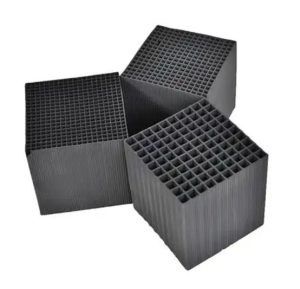
Honeycomb Activated Carbon (HAC) is a structured adsorption medium designed for gas-phase treatment applications requiring high airflow capacity and low system resistance. Unlike granular or pelletized activated carbon, honeycomb carbon is manufactured with parallel flow channels that allow process air to pass through the media with relatively low pressure loss.
The combination of adsorption capacity and airflow characteristics makes honeycomb activated carbon suitable for large-volume, low- to medium-concentration VOC treatment systems, air purification equipment, solvent recovery processes, and odor control applications.
Different formulations, dimensions, and cell densities can be selected according to airflow requirements, contaminant characteristics, and system design.
Key Features
Low Airflow Resistance
The honeycomb channel structure allows air to pass through the media with reduced pressure drop compared with many packed-bed carbon systems. This characteristic can be beneficial in applications involving large airflow volumes.
Developed Pore Structure
Depending on the raw material and activation process, the carbon contains a combination of micropores and mesopores suitable for adsorption of many organic compounds commonly found in industrial exhaust streams.
Structural Stability
The monolithic design provides mechanical strength suitable for installation in adsorption units, air treatment equipment, and filtration systems.
Configurable Cell Density
Multiple channel densities are available to accommodate different airflow velocities, adsorption requirements, and pressure drop limitations.
Impregnation Compatibility
Selected grades can be chemically impregnated for treatment of sulfur compounds, acid gases, aldehydes, and other specific contaminants.
Typical Technical Data
| Parameter | Typical Range |
|---|---|
| Appearance | Honeycomb Block (Square or Round) |
| Standard Dimensions | 100 × 100 × 100 mm, 50 × 50 × 100 mm |
| Cell Density | 100–200 CPSI |
| Iodine Number | 600–950 mg/g |
| CTC Activity | 45–55% |
| Compressive Strength | ≥0.8 MPa |
| Bulk Density | 380–450 kg/m³ |
| Dynamic Benzene Adsorption | ≥25% |
Actual specifications may vary according to product grade and application requirements.
Typical Applications
VOC Treatment Systems
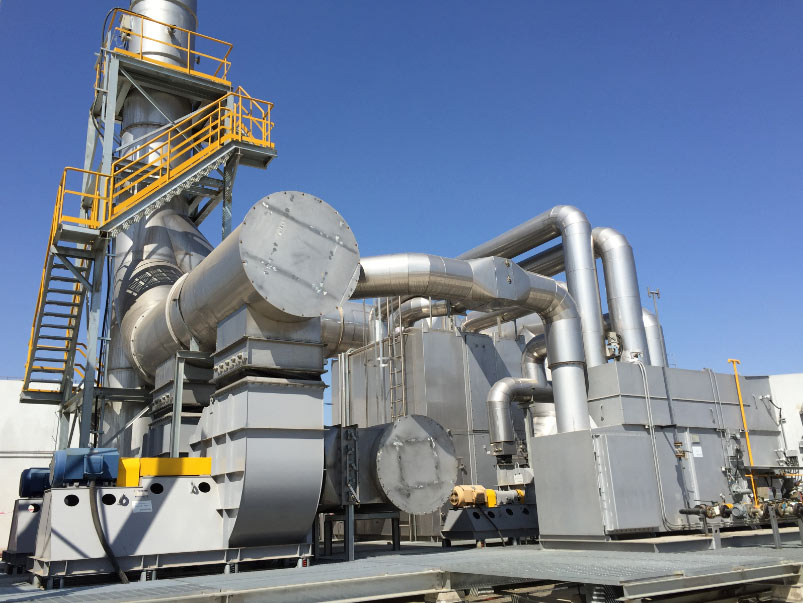
Widely used in adsorption units treating exhaust streams containing solvents and organic compounds generated by painting, printing, coating, electronics manufacturing, and chemical processing operations.
Solvent Recovery
Applied in systems designed to capture and concentrate solvent vapors prior to regeneration or recovery processes.
Air Purification Systems
Suitable for commercial and industrial air treatment equipment where airflow capacity and pressure drop are important design considerations.
Odor Control
Can be used in odor treatment systems for wastewater treatment facilities, food processing plants, waste handling operations, and other applications involving odor-causing compounds.
Catalyst Carrier Applications
The honeycomb structure may serve as a support substrate for catalytic oxidation, SCR systems, and other catalytic treatment processes.
Packaging and Storage
Packaging
Available with:
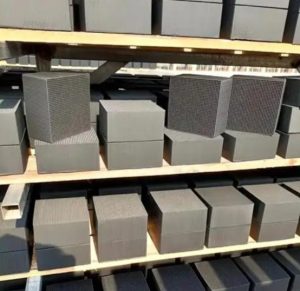
Palletized packaging
Protective wrapping
Customized packaging options
Storage Recommendations
Store in a dry, ventilated area and protect from moisture exposure and physical impact during transportation and handling.
Engineering Support
Technical support may include:
Cell density selection
Airflow and pressure drop evaluation
Carbon grade selection
Adsorption system design assistance
Media replacement planning
Regeneration recommendations
Selection Considerations
Selection of honeycomb activated carbon typically depends on:
Airflow volume
VOC composition
Inlet concentration
Relative humidity
Required pressure drop
Equipment configuration
Regeneration requirements
Service life expectations
A review of process conditions can help determine the most suitable honeycomb carbon grade and configuration for a specific application.
Related Products