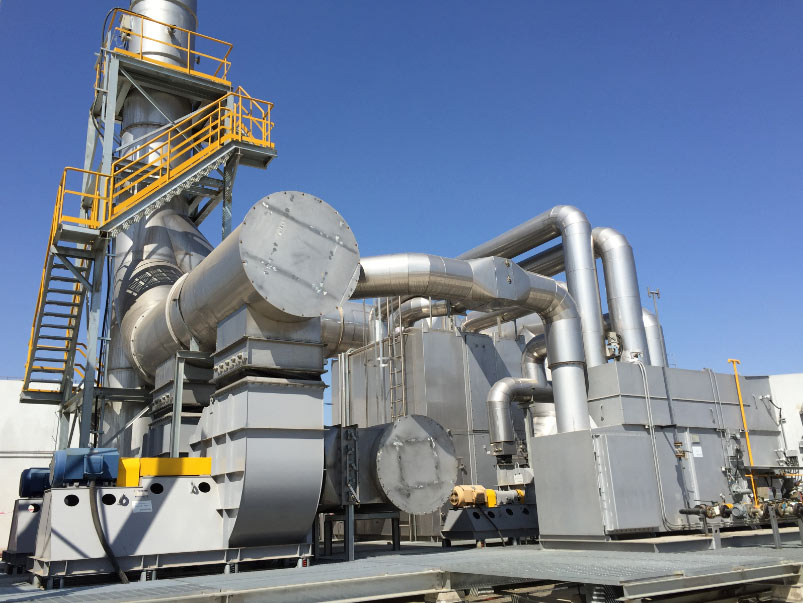

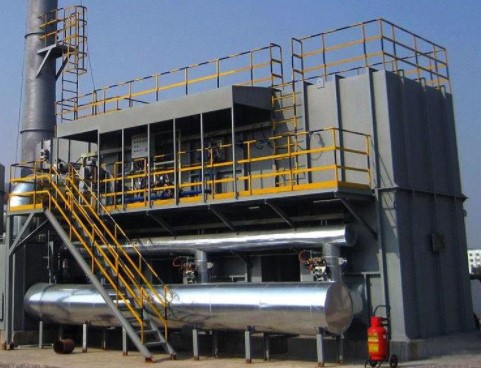
Regenerative Thermal Oxidizer (RTO) Solutions for Ohio Manufacturers
Ohio’s industrial sector includes a diverse range of manufacturers, chemical processors, and coating facilities that must manage VOC emissions as part of their environmental compliance programs. Regenerative Thermal Oxidizers (RTOs) are commonly selected for these applications because they can achieve high destruction efficiencies while recovering a significant portion of the heat generated during operation. This helps facilities balance emission control requirements with long-term operating costs.
Many Ohio manufacturers select RTO technology because it provides a practical balance between emission control performance and operating efficiency.
Emission Control Performance
RTO systems are capable of achieving high VOC destruction efficiencies and are commonly used to help facilities comply with applicable air quality regulations.
Energy Efficiency
By recovering heat from the oxidation process through ceramic media beds, RTO systems can reduce fuel consumption compared with many other thermal treatment technologies.
Proven Industrial Technology
RTOs have been successfully applied across a wide range of industries, including automotive, chemical processing, printing, and metal finishing. Their simple operating principle and durable design make them suitable for continuous industrial service.
Our services cover the full lifecycle of an RTO project, from initial system design through ongoing maintenance and operational support.
Engineering and System Selection
Each application is evaluated based on process conditions, airflow requirements, VOC loading, and facility constraints to determine the most suitable RTO configuration.
Installation and Start-Up Assistance
Technical support is provided during installation, commissioning, operator training, and performance verification.
Preventive Maintenance Programs
Scheduled inspections, valve maintenance, ceramic media assessments, burner servicing, and control system optimization help reduce unplanned downtime and maintain system efficiency throughout the equipment lifecycle.
Successful VOC control projects depend on more than equipment selection alone. System design, installation quality, operating conditions, maintenance practices, and regulatory requirements all play an important role in long-term performance. Understanding these factors early in the project can help facilities make informed decisions and achieve consistent emission control results.