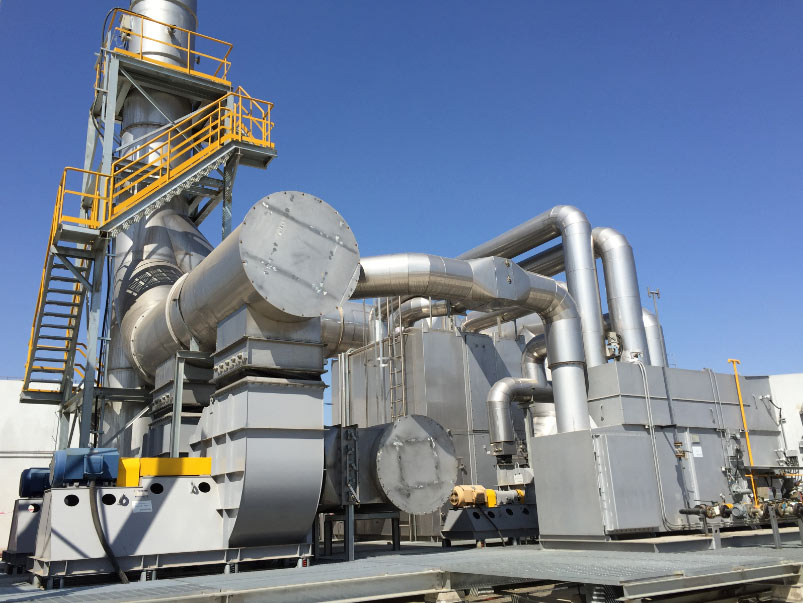

Vapour recovery testing is governed by national or regional rules, not by the equipment supplier, and the terminology changes from market to market. A buyer searching “stage 1b vapour testing” and one searching “vapor recovery test” may mean the same tank farm. This page covers what each stage’s testing examines, the methods in use, when testing is triggered, and why systems fail.
Stage I and Stage II Are Two Different Tests
“Vapour recovery” covers both the tank farm side and the dispenser side of the fuel chain: separate systems with separate test objects and failure points.
| Stage I – storage and bulk transfer | Stage II – vehicle fuelling | |
|---|---|---|
| Where it sits | Tank truck to tank, tank to tank truck, and bulk loading or unloading at a terminal, depot or fuel station | Nozzle, hose and vapour return path at the dispenser during a vehicle fill |
| What is tested | Tank vapour space, return lines, relief valves, tanker connections, and the recovery unit serving the tank or rack | Dispenser recovery hardware, balance or vacuum-assist lines back to the tank, and their controls |
Bulk transfer and storage tank work runs through vapor recovery for oil transfer and VRUs for floating roof tanks; the dispenser side is covered by petrol station vapour recovery.
Vapour or Vapor, Stage 1A or Stage 1B
European documents write “vapour” and “petrol”; US documents write “vapor”, “gasoline” and “Stage I / Stage II”. The spelling changes nothing physical, but it changes what a specification or report is called, which matters when documentation goes to an authority. Stage 1A and Stage 1B are sub-scopes used in some European regimes to separate the pieces of Stage I work. Which falls under which depends on the country and issuing body, so confirm the definitions with your competent authority or nominated tester.
What a Vapour Recovery Test Examines
Whatever the naming, the checks follow one chain of containment and control:
- Vapour tightness and leakage – return piping, flanges, gaskets and valve stems.
- Pressure and vacuum relief valves – opening performance and seating; a stuck valve reads as a leak or an over-pressure event.
- Vapour line continuity and routing – open end to end, correctly sloped, free of liquid pockets, on the right header.
- Liquid seals and drainage – traps, drains, knock-out arrangements and where accumulated liquid goes.
- Level and overfill interlocks – instruments that stop a tank being overfilled into the vapour system.
- Loading and unloading connections – couplers, hoses, swivel joints and the return coupling at the tanker interface.
- The recovery unit – functional confirmation of compressor, vacuum pump, absorber or adsorption vessel, and coolers.
- Controls and monitoring – sensor readings, alarm and shutdown behaviour, and panel set points against the design record.
See also vapor recovery unit failure modes.
Categories of Test Method
The procedure, acceptance criteria and instruments are set by the authority governing the site. Categories in use:
- Pressure and vacuum decay (tightness) testing – the system is pressurised or evacuated and the decay rate observed; the standard containment test on tanks and vapour lines.
- Handheld concentration or pressure checks – a portable meter at defined points, to find vapour where it should not be.
- Portable instrument surveys – a site walk-down to locate leaks a single-point test misses.
- Functional and dynamic tests – confirming valves shift, the recovery unit responds, interlocks act and the return path carries vapour.
- Scheduled third-party testing – an approved testing body runs the mandated periodic test and issues the report. We prepare the equipment but do not perform or certify the test.
When Testing Is Triggered
- Commissioning – before a new installation enters service, with baseline readings in known condition. Our installation and commissioning scope covers readiness for it.
- After modification – new dispensers, a re-piped or added tank, a replaced recovery unit, or any change to the vapour return network.
- Periodic testing – the recurring test the site must perform. Interval and method are set by the country or region and the issuing authority, not by the supplier; where a national or local rule applies, it governs. We help sites prepare for the date, not decide it.
- After an incident or complaint – odour reports, a high reading, a spill, an overfill or liquid carry-over justify testing out of cycle.
Why Systems Fail Tests and What Fixes Them
| Failure cause | What to do about it |
|---|---|
| Age-hardened gaskets and seals on manways, flanges and connections | Replace to the specified material and record it |
| Hoses, bellows, boots and couplings that no longer seal | Treat as consumables; inspect before the test |
| Relief valves sticking, scaled or out of tolerance | Clean, bench-check and re-set, or replace; keep spares |
| Liquid accumulating in vapour lines, or wrong slope and low points | Correct routing and drainage; clear knock-out and drain points |
| Abnormal back pressure in the tank or vapour header | Check unit, line restrictions and valve positions as one system |
| Control set points drifting, or undocumented modifications | Re-verify against the design record; rebuild the as-built |
Before the Test and After It
Before the tester arrives: a layout showing every point on the vapour return path; as-built and modification history; calibration records; valves confirmed in the correct operating positions; maintenance records for seals, hoses, relief valves and the recovery unit; and permit arrangements agreed in advance.
A usable report should record: each test point with the method used; instruments with serial numbers and calibration dates; initial and final readings; ambient and product temperature and weather; deviations or untestable points with reasons; corrective actions and items for retest; and the testing body and signatory.
What We Supply and How We Support the Test
We build the equipment side: oil and gas vapor recovery units, loading rack vapor recovery equipment, compressors and vacuum pumps, adsorption vessels and media, coolers, and the control panel and instrumentation that supervises the loop. When a system fails or is expected to fail, our work is remedial and preparatory: replacing valves, seals and gaskets, correcting piping and drainage, restoring set points, servicing compressors and vessels, and supplying the instrumentation the test depends on, with corrective parts from VRU spare parts and service. We also attend site while your nominated testing body works, and carry out the remedial work that follows a non-conformity.
What we do not claim is accreditation. Statutory or periodic testing is performed and reported by the testing body your jurisdiction recognises, under the method and criteria that authority specifies.
Frequently Asked Questions
What is a Stage 1 vapour test?
Stage I testing covers the storage and bulk transfer side: the tank and its vapour space, the return path to the tanker, the relief valves, and the recovery unit serving them. It shows that vapour displaced during a delivery goes where it should instead of escaping to atmosphere. Stage II covers the fuelling side.
How often does vapour recovery need testing?
The interval is set by the country, region or issuing authority governing the site, and can differ between Stage I and Stage II, initial and periodic tests, and jurisdictions – there is no single universal cycle. Identify the applicable rule, build the calendar around that date, and test out of cycle after any modification, odour complaint or abnormal reading.
What causes a vapour recovery test to fail?
Hardened or badly fitted gaskets, worn hoses and couplings that no longer seal, relief valves that stick or sit outside tolerance, liquid trapped in vapour lines, abnormal back pressure, drifted set points and undocumented modifications.
Can we test the system ourselves before the official test?
Yes. A pre-test inspection by your own maintenance team or ours checks seal condition, valve freedom, line drainage, coupling condition and panel set points against the design record. It does not replace the official test, but it catches most non-conformities in time to fix them.
Do you perform or certify vapour recovery testing?
No. We supply and service vapour recovery equipment and support the process from the equipment side. The statutory or periodic test is performed and reported by a testing body recognised in your jurisdiction. We prepare the system, attend site and carry out the remedial work a failed test identifies.
Talk to an Engineer
Send your site layout, the vapour path from tank to dispenser, and the suspect points – we will return the equipment and maintenance scope needed to get the system test-ready. Start at contact.