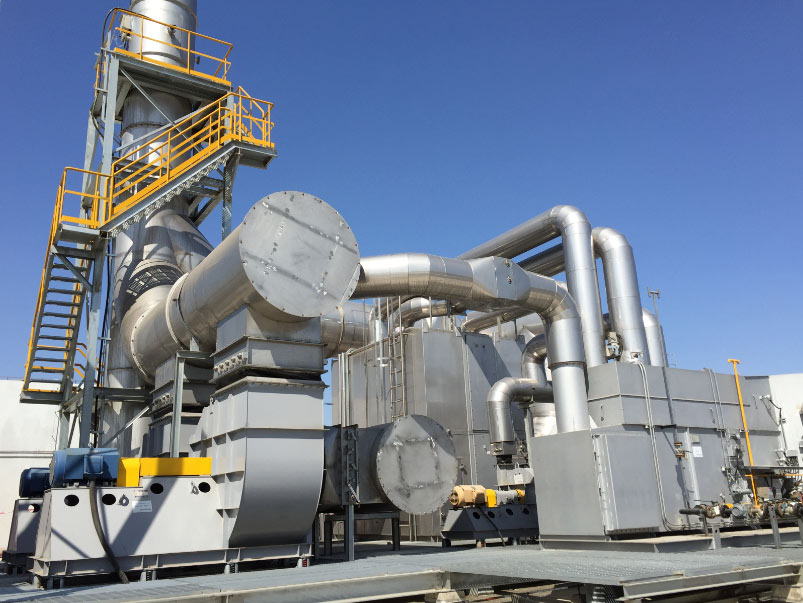

Combustible dust requires more than a standard filter housing. PollutionCtrl can review dust properties, process sources, airflow, ignition risks and the required protection strategy for an industrial explosion-proof dust collection system.
When a Safety Review Is Needed
Fine metal, chemical, food, pharmaceutical and other organic powders may require a combustible-dust assessment. The dust’s Kst, Pmax, minimum ignition energy, layer buildup and process temperature are important inputs where available.
Protection Measures
Depending on the assessment, the system may require explosion venting or suppression, isolation, spark detection, grounding, conductive components, pressure relief and process interlocks. These measures must be selected for the specific dust and site layout.
Do Not Treat Safety as a Keyword
Explosion-proof equipment should be specified from documented process data and applicable local requirements. Send the safety data sheet, dust test information, equipment layout and operating conditions for a responsible preliminary review.
Request an Industrial Dust Collection Quote
Send the dust type, particle size, air volume, inlet concentration, temperature, humidity, operating hours, available space and any combustible-dust requirements. We can review the process and recommend a suitable industrial dust collector configuration.
Combustible Dust Collection and Safety Review
An explosion-proof dust collector project may involve combustible metal, chemical, food or powder dust. Review the dust test data, ignition risk, grounding, isolation, venting or suppression, fan location and control interlocks. ATEX dust collector or NFPA dust collection requirements should only be stated when the project design and documentation support them.
What makes a dust collector explosion-proof?
A dust collector is explosion-protected when the whole system is designed against a documented dust hazard analysis — not when a single component carries a certificate. The protection has to cover five separate things: preventing ignition sources, containing or venting the pressure from a deflagration, isolating the collector from the building and from the rest of the ductwork, preventing flame propagation through the duct, and managing the dust layer that could be disturbed into a cloud.
The five elements of a compliant design
- Dust hazard analysis (DHA) — establishes Kst, Pmax, minimum ignition energy, minimum ignition temperature of the dust layer and cloud, and whether the material is explosible at all. Without it, every downstream decision is guesswork.
- Deflagration venting or containment — the collector must either be strong enough to contain the maximum pressure or be fitted with venting sized to the reduced pressure, directed to a safe location.
- Isolation — a fast-acting valve or rotary valve on the inlet duct and on the discharge, so a deflagration cannot travel back into the building or forward into the process.
- Ignition source control — bonding and grounding of every conductive part, anti-static filter media, avoidance of spark-generating materials in the air stream, and control of hot particles from the process.
- Housekeeping — dust layers on surfaces are the fuel for a secondary explosion; the design should minimise horizontal surfaces where dust accumulates.
Which standards apply
- NFPA 652 — the general dust hazard requirement, and the basis for the DHA obligation.
- NFPA 654 — combustible particulate solids in general.
- NFPA 68 — deflagration venting sizing.
- NFPA 69 — explosion prevention systems, including isolation.
- ATEX 2014/34/EU — equipment certification and zoning in Europe.
- IEC 60079 — the international electrical equipment series.
The applicable code is set by the site, so the destination market should be stated in the inquiry — a collector built to ATEX zoning is not automatically acceptable under an NFPA-governed installation.
Common design failures
- Venting the collector indoors or into a congested area, so the vent itself becomes the hazard.
- Relying on a certificate on the fan motor while the duct and hopper are unprotected.
- No isolation between the collector and the building, allowing pressure and flame to travel back.
- Ignoring the dust layer on overhead surfaces, which is the fuel for the secondary event.
- Sizing the vent on a Kst value from a similar material rather than from testing of the actual dust.
Frequently asked questions
Is a dust collector with an explosion vent automatically compliant?
No. Venting is one of five required elements, and it must be sized to the actual Kst and Pmax of the dust and directed to a safe location. Venting alone does not satisfy the code.
Does the dust hazard analysis have to be done before the collector is ordered?
Effectively yes. The DHA sets Kst, Pmax and the ignition sensitivity, which determine the vent area, the isolation method and the electrical classification. Ordering the collector first means the design is guessed and then documented afterwards.
What about conductive filter media?
Anti-static or conductive media is used to prevent static charge accumulation in the filter, and it has to be bonded to the grounded housing. Media conductivity without a grounding path provides no protection.