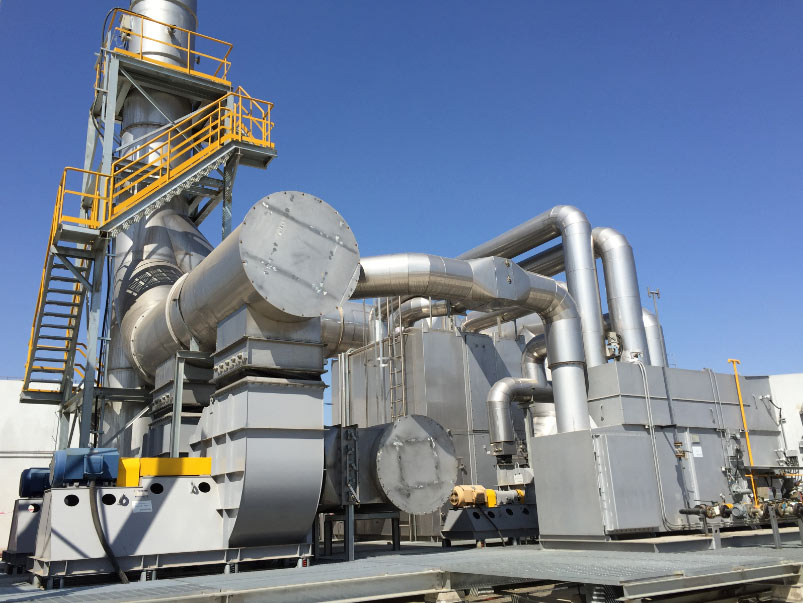

Industrial vapor recovery and air pollution control equipment background

Pharmaceutical Tail-Gas Catalytic Oxidation Project

This pharmaceutical project uses catalytic oxidation to treat tail gas containing ethanol, butanol, acetone and ethyl acetate.

Project Scope

  • Industry: pharmaceutical manufacturing
  • Airflow: 5,000 m³/h
  • Technology: catalytic oxidation
  • Quantity: 2 sets
  • Scope: equipment supply, system integration and commissioning support

Engineering Considerations

Pharmaceutical tail gas can contain mixed solvents and fluctuating concentrations. Pretreatment, safe operating controls, catalyst selection and heat management should be evaluated together during system design.

Explore catalytic oxidizer solutions or download the English project reference portfolio.

Request a Technical Proposal

Provide solvent composition, airflow, inlet concentration, operating hours and emission requirements so the treatment configuration can be reviewed by an engineer.

Design Basis

Pharmaceutical tail gas projects start with a solvent balance: which solvents are used, their vapor pressures and batch emission patterns. Catalytic oxidation suits dilute, halogen-free streams; scrubbing upstream handles acid gases when halogenated solvents are present.

System Composition

A typical package includes knock-out and filtration, heat recovery (recuperative or regenerative), a burner or electric preheat section, catalyst modules sized for the worst-case hourly load, and continuous temperature monitoring to protect catalyst life.

Operation Notes

Catalyst inlet temperature is the key control parameter. Start-up on clean air, controlled ramp-up and periodic pressure-drop checks keep performance stable across batch cycles.