
Project Overview
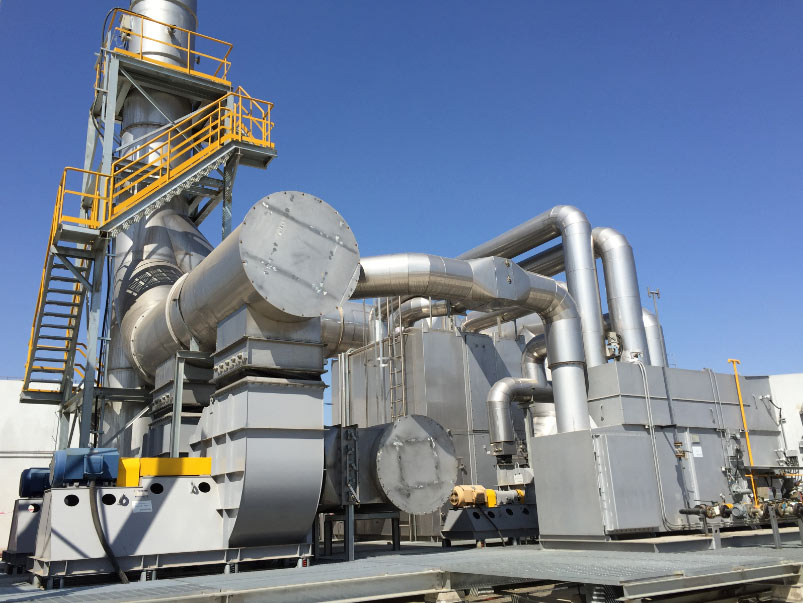
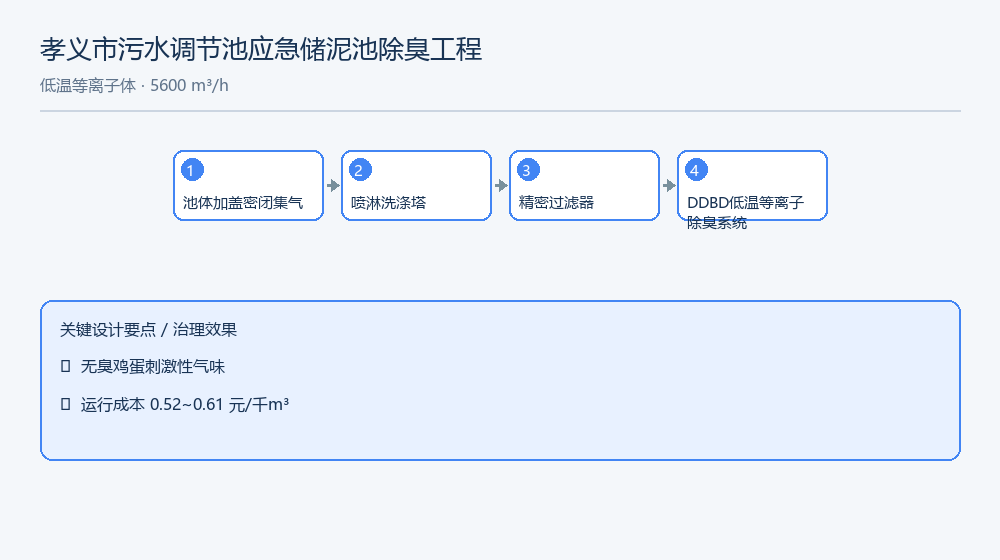
Odor control for the regulation tank and emergency sludge holding tank of an industrial park enterprise WWTP. Design air volume: 5,600 m3/h.
Odor Components
Hydrogen sulfide, volatile sulfides and small-molecule organic acids
Operating Challenges
Very limited reserved space; retrofit project; exhaust is humid and emitted intermittently.
Treatment Process
Sealed tank cover collection → water scrubber tower → fine filter → low-temperature plasma deodorization system → elevated discharge
Main Equipment
Corrosion-resistant fan, scrubber tower, fine filter, DBD low-temperature plasma unit
Treatment Results
No obvious rotten-egg odor around the tanks; stably meets environmental inspection requirements.
Operating Cost
0.52–0.61 CNY / 1,000 m3 of exhaust gas
Technical Highlights
Compact layout fits tight retrofit space; fine filter protects the plasma chamber under humid intermittent duty.
This project uses a Low-Temperature Plasma combined process. Learn more about the technology on our Low-Temperature Plasma equipment page. For a similar design, contact us at info@pollutionctrl.com / WhatsApp +86 19833770783.