
Project Overview
Odor treatment for the grinding and cooking sections of a feed processing plant. Design air volume: 11,000 m3/h.
Odor Components
Amines from protein decomposition, volatile fatty acids and traces of VOC
Operating Challenges
Exhaust carries fine feed dust; production starts and stops intermittently; limited installation space in the workshop.
Treatment Process
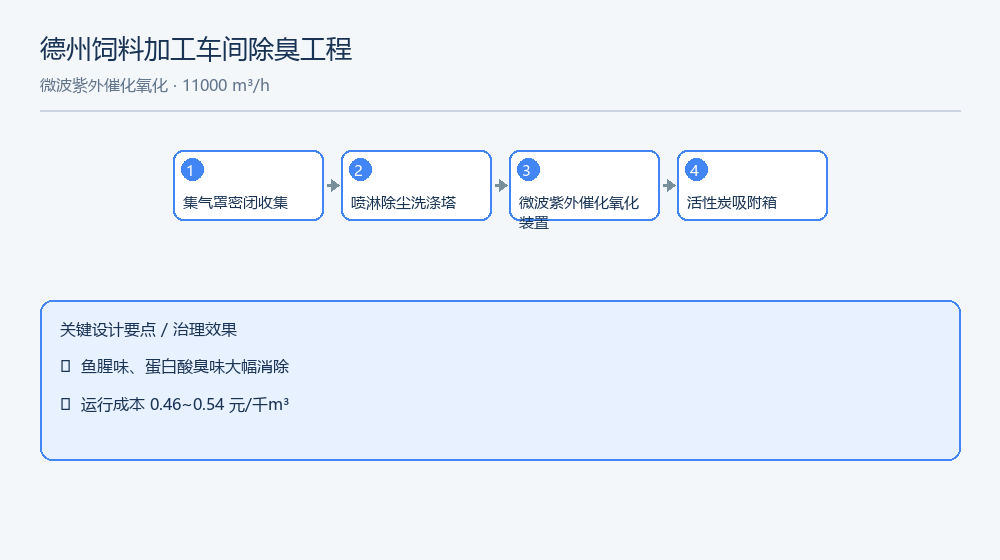
Hood sealed collection → spray dedusting scrubber → MW-UV catalytic oxidation unit → activated carbon adsorber for compliant discharge
Main Equipment
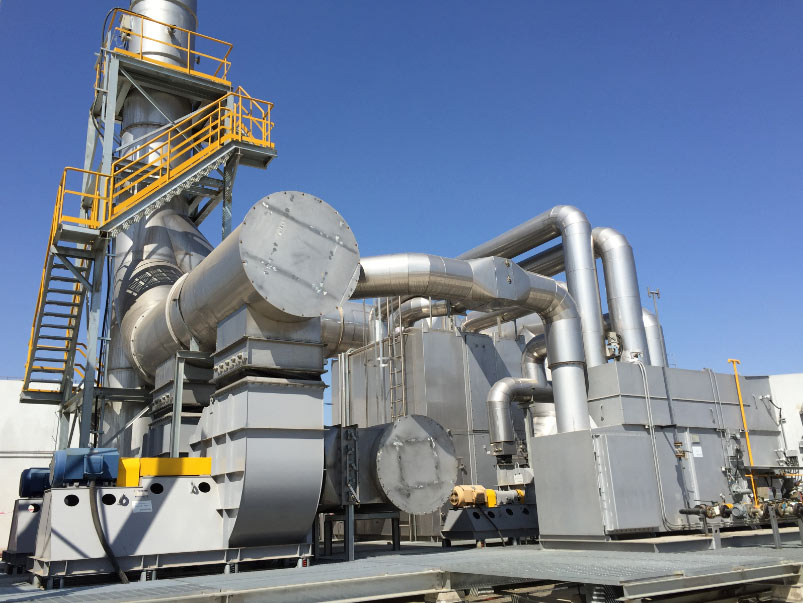
Centrifugal corrosion-resistant fan, spray scrubber tower, MW-UV unit, activated carbon adsorber
Treatment Results
Fishy and protein-acid odor in the workshop largely eliminated; working environment for operators improved.
Operating Cost
0.46–0.54 CNY / 1,000 m3 of exhaust gas
Technical Highlights
Spray dedusting upstream protects UV lamps; adapts to load fluctuation from intermittent production.
This project uses a Microwave UV Oxidation combined process. Learn more about the technology on our Microwave UV Oxidation equipment page. For a similar design, contact us at info@pollutionctrl.com / WhatsApp +86 19833770783.