
Industrial vapor recovery and air pollution control equipment background

Taiyuan Township Sewage Pump Station – Odor Control (MW-UV)

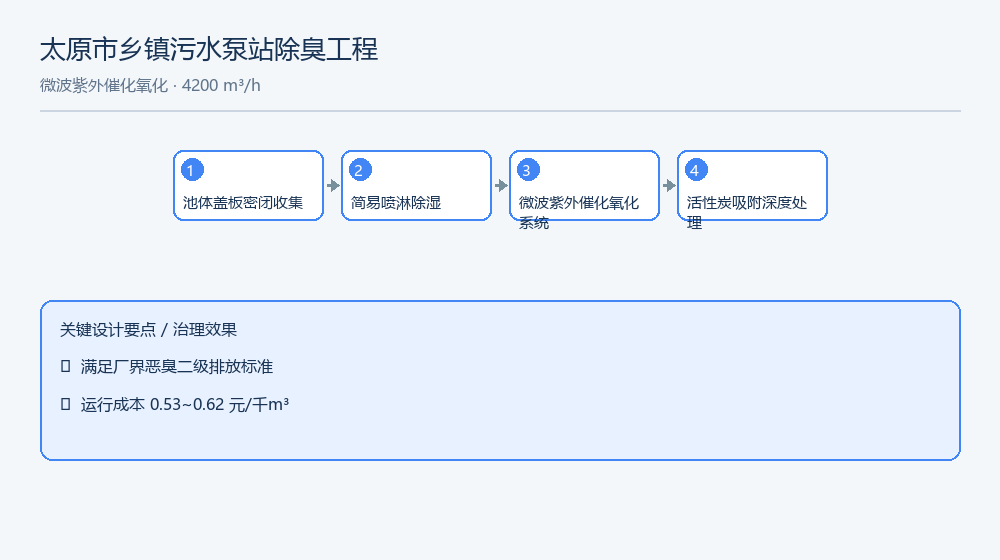
Taiyuan Township Sewage Pump Station – Odor Control (MW-UV) process flow
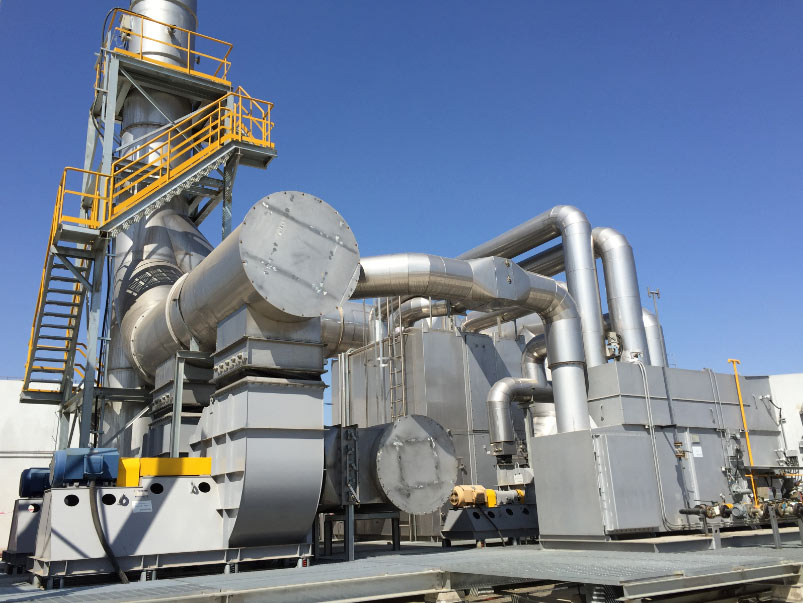
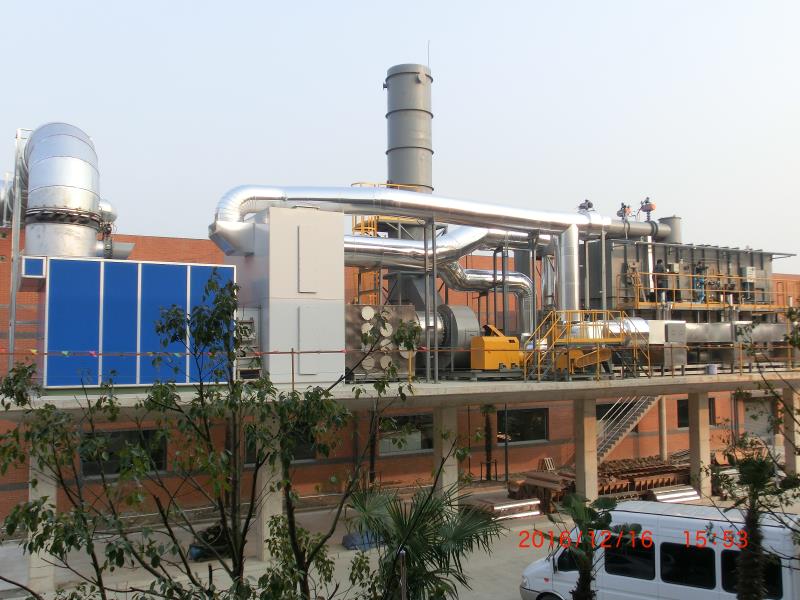
Taiyuan Township Sewage Pump Station project equipment

Project Overview

Odor control for a township sewage lift station and an integrated sewage treatment unit. Design air volume: 4,200 m3/h.

Odor Components

Hydrogen sulfide, ammonia and small-molecule organic acids

Operating Challenges

Scattered outdoor stations; limited budget requiring modular, compact equipment; relatively high humidity in the exhaust.

Treatment Process

Sealed tank cover collection → simple spray dehumidification → MW-UV catalytic oxidation system → activated carbon polishing

Main Equipment

FRP corrosion-resistant fan, compact scrubber tower, MW-UV unit, activated carbon adsorber

Treatment Results

No irritating odor around the pump station; meets Grade II boundary odor emission standard.

Operating Cost

0.53–0.62 CNY / 1,000 m3 of exhaust gas

Technical Highlights

Modular skid design, lift-and-install on site; FRP construction withstands outdoor humid operation.

This project uses a Microwave UV Oxidation combined process. Learn more about the technology on our Microwave UV Oxidation equipment page. For a similar design, contact us at info@pollutionctrl.com / WhatsApp +86 19833770783.

Engineering Approach

Odor-control retrofits begin with capture: hoods and duct routing are arranged so the fan sees the lowest practical excess air, then the treatment stage – low-temperature plasma or microwave-UV – is sized against the measured or estimated pollutant spectrum and the intermittent profile of generation.

System Composition

A standard package comprises pretreatment (demisting/filtration where humidity or droplets are present), the oxidation stage with multiple modular trains, induced-draft fan, stack, and a control cabinet with interlocked start-up so the treatment unit always runs before the extraction fan ramps.

After-Sales

Modularity keeps maintenance predictable: individual trains isolate electrically for service without stopping the line. Consumables are limited to filters and periodic lamp/electrode inspection – both items stocked for quick dispatch.