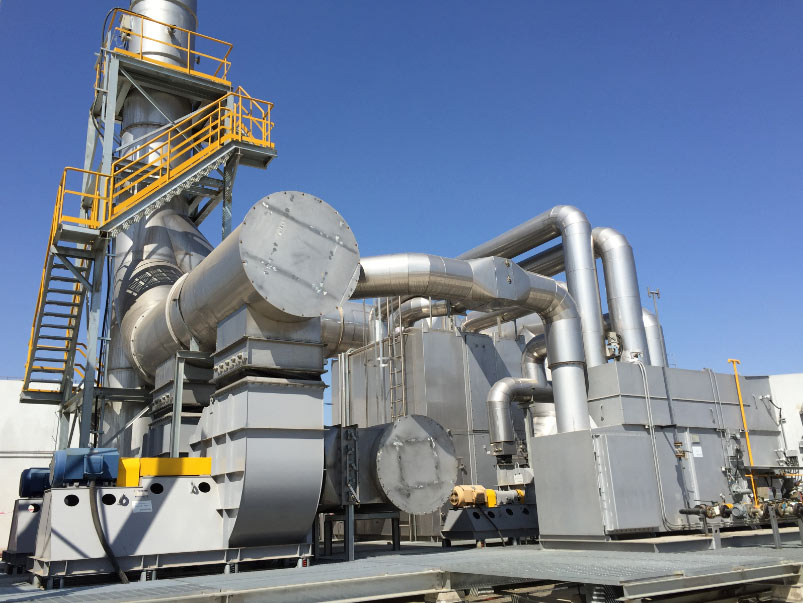

A solvent exhaust review page focused on catalyst compatibility, corrosion, halogen content and safe operating control.
Design basis and emission source
| Industry | Pharmaceutical and fine chemical production |
|---|---|
| VOC source | Solvent recovery vents, drying and reactor exhaust |
| Key risk | Halogens, corrosive compounds and catalyst poisoning |
| Selected approach | Detailed solvent review before selecting catalytic oxidation, RTO or scrubbing combination |
Challenges
Pharmaceutical solvent lists change by product. Chlorinated solvents, acid gases or catalyst poisons may make catalytic oxidation unsuitable without upstream treatment.
Selected treatment approach
The page frames the engineering review: solvent list, concentration range, corrosion, LEL margin, pretreatment, catalyst choice and compliance monitoring.
Operating result
This case improves credibility with technical buyers because it acknowledges limitations instead of claiming that one oxidizer fits every solvent stream.
Values are examples for page structure and should be replaced with measured project data when the final case record is available.
Send VOC data for catalytic oxidizer sizing
Share airflow, VOC composition, concentration range, temperature, humidity, dust or mist content, operating schedule and required emission limit. We will review whether a catalytic oxidizer, RCO, RTO, zeolite rotor or carbon system is the better fit.