
Project Overview
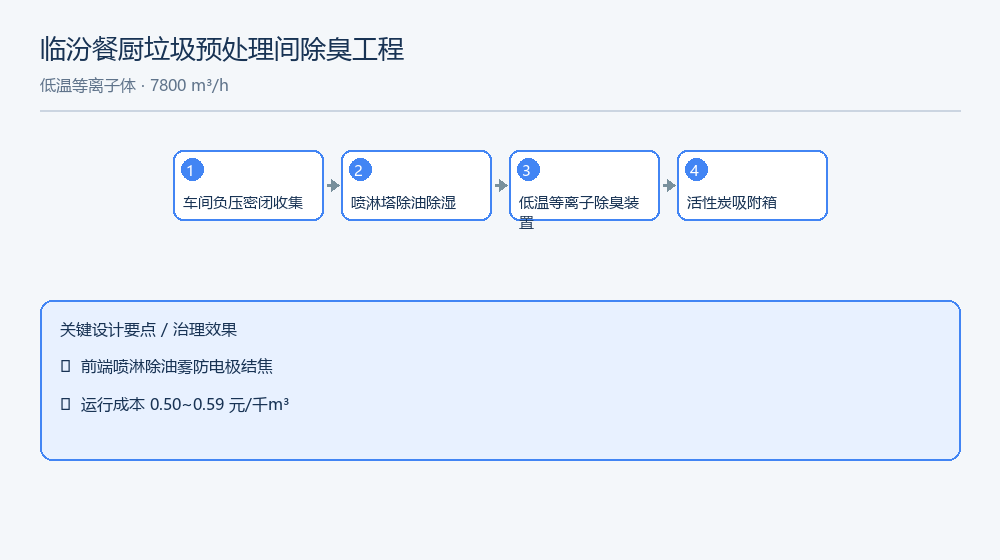
County-scale kitchen waste treatment site processing 40 t/d. Odor area: receiving bay and crushing/sorting room. Design air volume: 7,800 m3/h.
Odor Components
Mercaptans, organic acids, mixed VOCs, with traces of oil mist droplets
Operating Challenges
Exhaust contains oil mist; direct entry into the plasma unit would coke the electrodes and create a safety hazard.
Treatment Process
Negative-pressure sealed collection → scrubber tower for oil removal and dehumidifying → low-temperature plasma deodorizer → activated carbon adsorber
Main Equipment
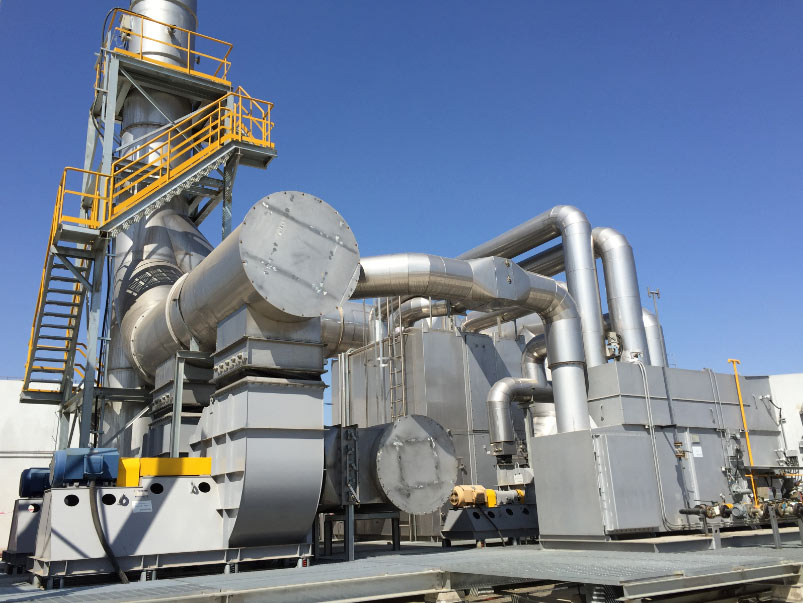
Explosion-proof induced draft fan, oil-removal scrubber tower, low-temperature plasma unit, activated carbon adsorber
Treatment Results
Kitchen-waste sour/rotten odor effectively treated; equipment shows no frequent scaling or clogging.
Operating Cost
0.50–0.59 CNY / 1,000 m3 of exhaust gas
Technical Highlights
Mandatory design rule: upstream spray removes oil mist to guarantee long-term stable plasma operation – the project’s safety design red line.
This project uses a Low-Temperature Plasma combined process. Learn more about the technology on our Low-Temperature Plasma equipment page. For a similar design, contact us at info@pollutionctrl.com / WhatsApp +86 19833770783.