
Project Overview
Small organic fertilizer plant: livestock manure fermentation workshop and curing silo. Design air volume: 8,500 m3/h.
Odor Components
Ammonia, methyl mercaptan and volatile fatty acids
Operating Challenges
Turning operations generate odor intermittently with large concentration swings; exhaust contains dust; budget insufficient for a large biofilter.
Treatment Process
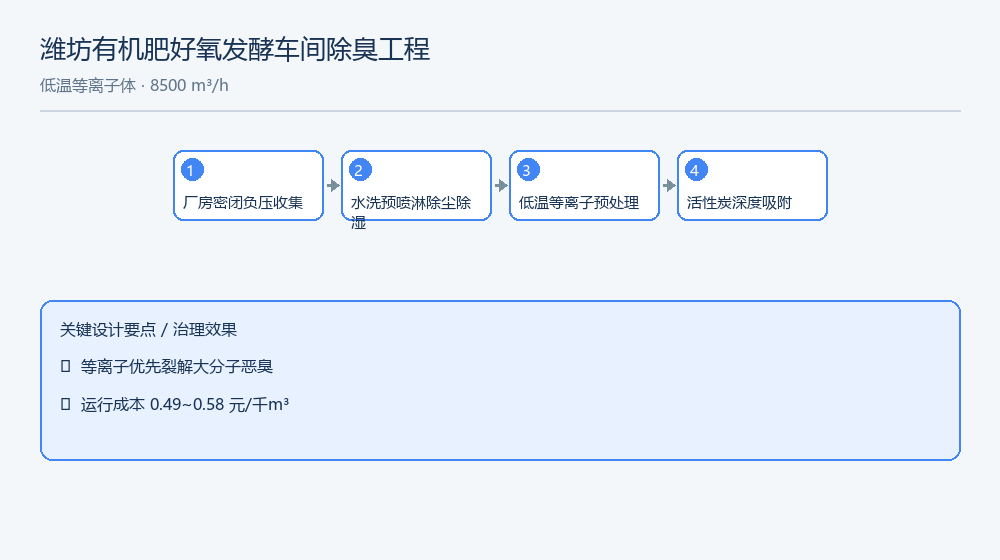
Building negative-pressure collection → water spray dedusting and dehumidifying → low-temperature plasma pretreatment → activated carbon polishing
Main Equipment
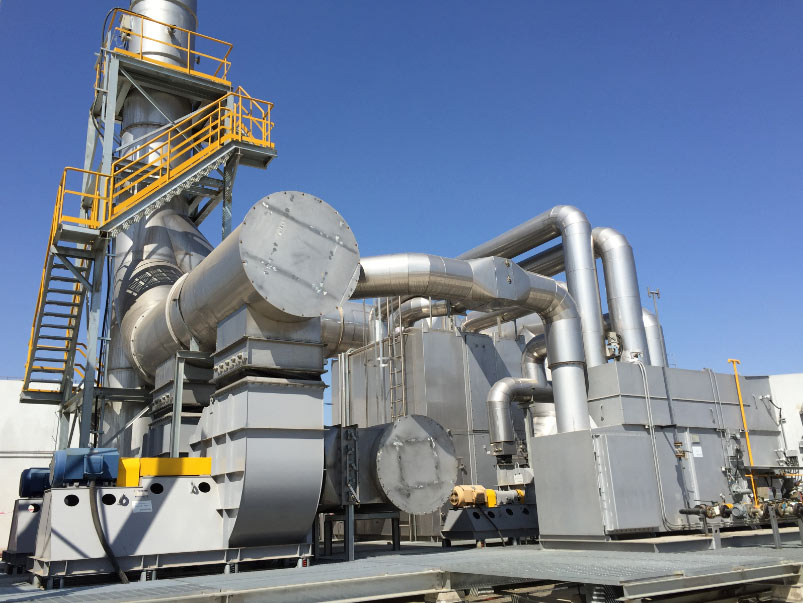
Corrosion-resistant fan, pre-scrubber tower, low-temperature plasma unit, activated carbon adsorber
Treatment Results
Fermentation sour odor effectively controlled; odor complaints from nearby residents avoided.
Operating Cost
0.49–0.58 CNY / 1,000 m3 of exhaust gas
Technical Highlights
Plasma cracks large-molecule odor compounds first, reducing downstream adsorption load and extending carbon change-out intervals.
This project uses a Low-Temperature Plasma combined process. Learn more about the technology on our Low-Temperature Plasma equipment page. For a similar design, contact us at info@pollutionctrl.com / WhatsApp +86 19833770783.