

Project Overview
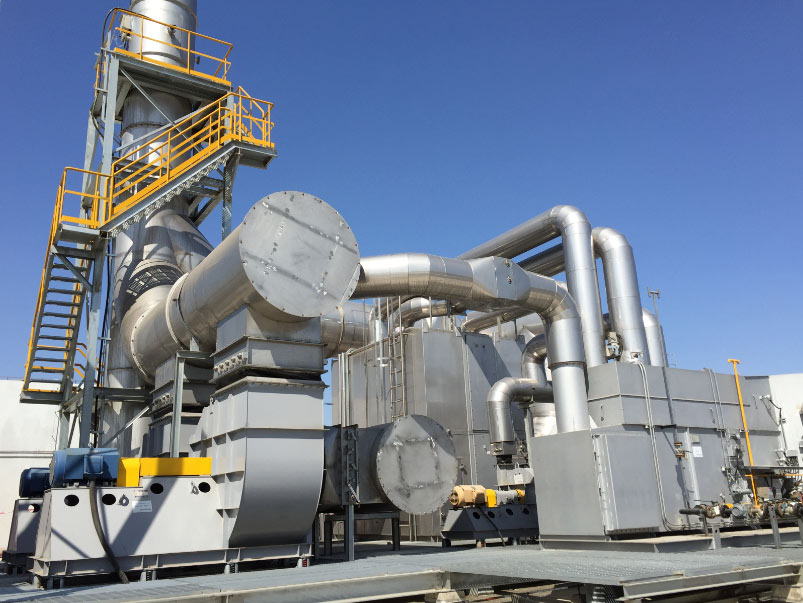
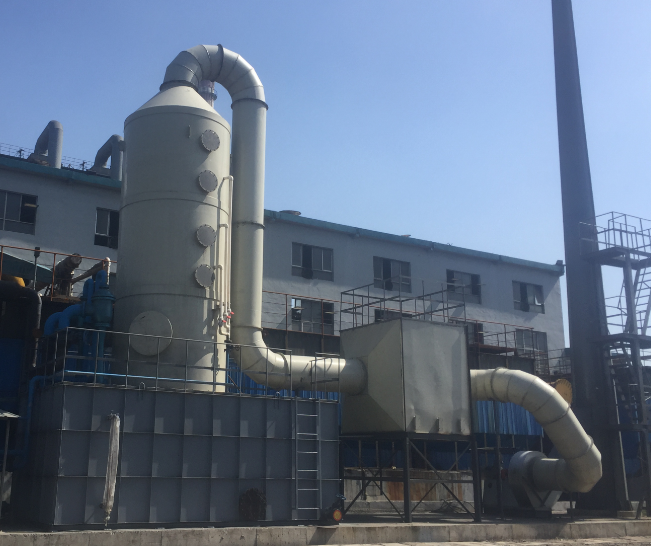
Pig breeding base: manure holding tanks and a small composting shed. Design air volume: 6,800 m3/h.
Odor Components
Ammonia, hydrogen sulfide, indole and skatole
Operating Challenges
Multiple odor points treatable as independent zones; intermittent odor generation; site is off the main road but close to villages.
Treatment Process
Enclosure negative-pressure collection → water scrubber pretreatment → MW-UV catalytic oxidation unit, with spatial atomization deodorization as auxiliary suppression
Main Equipment
Corrosion-resistant fan, scrubber tower, MW-UV oxidation unit, botanical liquid atomization unit
Treatment Results
Boundary manure odor markedly reduced; no odor spread to surrounding farmland or villages.
Operating Cost
0.50–0.59 CNY / 1,000 m3 of exhaust gas
Technical Highlights
Zoned independent treatment; MW-UV + botanical atomization combination balances treatment efficiency with in-zone odor suppression.
This project uses a Microwave UV Oxidation combined process. Learn more about the technology on our Microwave UV Oxidation equipment page. For a similar design, contact us at info@pollutionctrl.com / WhatsApp +86 19833770783.
Why a livestock odour problem is treated in zones
A breeding base with manure holding tanks and a composting shed does not have one odour source — it has several, each generating odour at a different time. Treating them as independent collection zones, each under negative pressure, is what makes the system controllable: a zone that is not generating odour can be throttled, and a zone that is generating heavily can be prioritised.
Why the scrubber runs before the UV stage
- Ammonia — ammonia is water-soluble and is removed efficiently in a scrubber; leaving it to the UV stage would waste UV energy on a compound that water handles cheaply.
- Humidity — livestock buildings produce saturated air; the scrubber also conditions the gas before it reaches the lamps.
- Dust and hair — the scrubber removes material that would otherwise foul the lamp sleeves.
Why spatial atomisation is used as an auxiliary measure
The site is close to villages, so boundary perception matters as much as the stack concentration. Atomised botanical liquid in the site area suppresses odour during handling operations, when emissions peak. It is a suppression measure, not a treatment step — it reduces perception at the boundary while the main system handles the collected air.
What to specify for a similar livestock facility
- Number and type of odour sources, and whether they operate simultaneously.
- Ammonia and H2S concentration at each source.
- Distance to the nearest receptor, since it sets the boundary target.
- Whether the site is attended, and the maintenance access available.
- Power supply and the footprint available for ducting.
Frequently asked questions
How is livestock odour actually measured?
By a combination of instrumental measurement — ammonia and H2S concentration — and sensory assessment at the boundary. A concentration limit alone does not capture odour perception, which is why boundary assessment is part of the acceptance criteria.
Why not simply use a biofilter?
Biofilters handle livestock odour well when the load is steady and land is available. Where odour generation is intermittent and the site is constrained, a compact multi-stage system is easier to control.