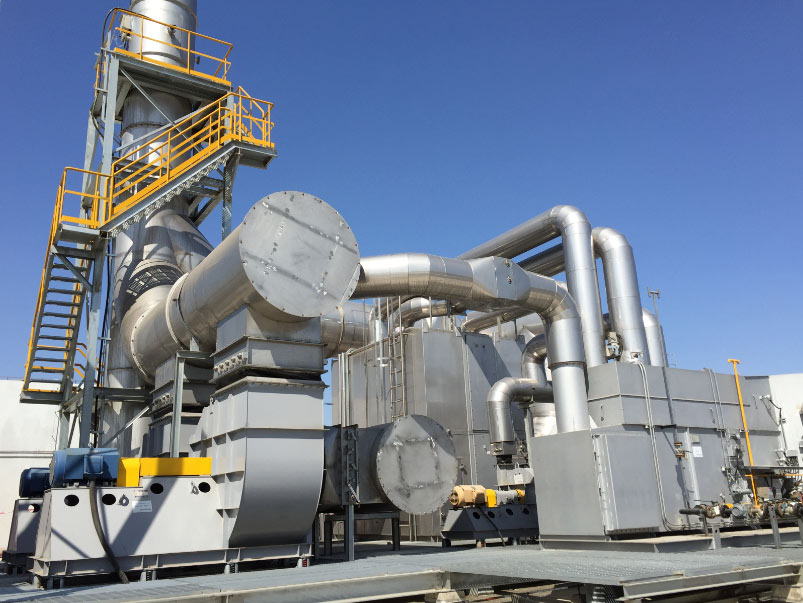


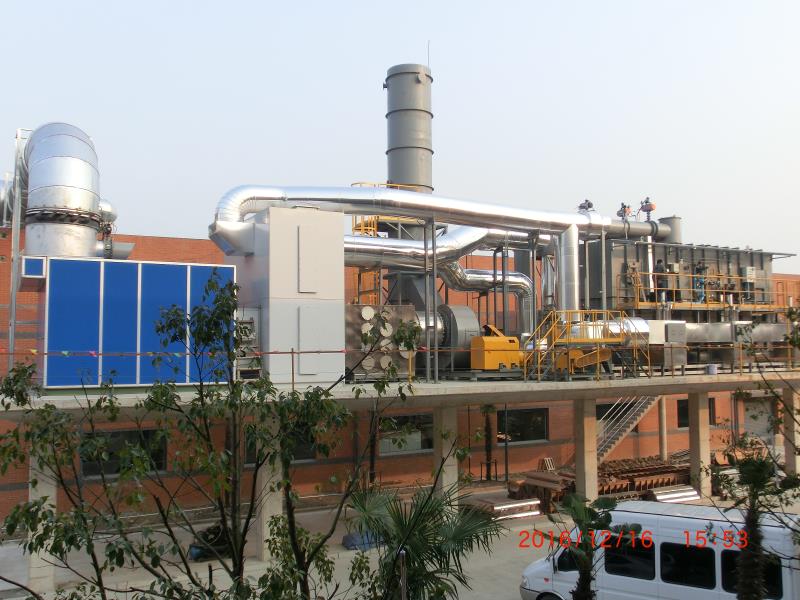
Project Overview
Odor control for a township sewage lift station and an integrated sewage treatment unit. Design air volume: 4,200 m3/h.
Odor Components
Hydrogen sulfide, ammonia and small-molecule organic acids
Operating Challenges
Scattered outdoor stations; limited budget requiring modular, compact equipment; relatively high humidity in the exhaust.
Treatment Process
Sealed tank cover collection → simple spray dehumidification → MW-UV catalytic oxidation system → activated carbon polishing
Main Equipment
FRP corrosion-resistant fan, compact scrubber tower, MW-UV unit, activated carbon adsorber
Treatment Results
No irritating odor around the pump station; meets Grade II boundary odor emission standard.
Operating Cost
0.53–0.62 CNY / 1,000 m3 of exhaust gas
Technical Highlights
Modular skid design, lift-and-install on site; FRP construction withstands outdoor humid operation.
This project uses a Microwave UV Oxidation combined process. Learn more about the technology on our Microwave UV Oxidation equipment page. For a similar design, contact us at info@pollutionctrl.com / WhatsApp +86 19833770783.
How microwave-ultraviolet oxidation controls sewage odour
Sewage odour is dominated by hydrogen sulphide, ammonia and small-molecule organic acids and mercaptans. These are low-concentration, high-volume streams, which makes thermal treatment uneconomic and makes an oxidation-based route the practical choice.
Microwave-ultraviolet oxidation combines UV photolysis with an oxidising environment, breaking the odorant molecules rather than transferring them to another phase. That distinguishes it from adsorption, where the odorant is captured but not destroyed.
Why humidity and pretreatment decide the design
- High humidity — water vapour absorbs UV energy and can condense on the lamp sleeves, reducing output. A spray or demister stage upstream is usually part of the design.
- Temperature — UV output and reaction kinetics both fall at low temperature, which matters for outdoor stations in winter.
- Dust and grease — fouling on the sleeve surface is the most common cause of declining performance, so cleaning access is a design requirement.
- H2S concentration — very high peaks can overwhelm a single stage, which is why polishing on activated carbon is common after the oxidation stage.
MW-UV versus other odour control routes
| Route | Mechanism | Best for | Limitation |
|---|---|---|---|
| MW-UV oxidation | Photolysis and oxidation of odorants | Low concentration, high volume, intermittent operation | Sleeve fouling; performance falls in cold or very humid gas |
| Activated carbon | Adsorption | Polishing, low concentration | Media replacement cost; spent carbon is hazardous waste |
| Biofilter | Biological degradation | Steady load, large footprint available | Sensitive to load swings and to cold weather |
| Chemical scrubber | Absorption in a reagent | High H2S, predictable chemistry | Chemical consumption and effluent |
What to specify for a similar station
- Design air volume and whether flow varies with pump cycling.
- Odour component list and concentration range, with peaks.
- Gas temperature, relative humidity and whether the unit sits outdoors.
- Required outlet odour or H2S limit and how it will be measured.
- Available power, footprint and access for lamp maintenance.
- Whether the station is attended or requires remote monitoring.
Frequently asked questions
Why use UV rather than just activated carbon?
Adsorption captures the odorant without destroying it, so the media becomes spent and has to be replaced and disposed of as hazardous waste. Oxidation breaks the molecule, which reduces the waste stream — at the cost of lamp maintenance.
Why is a polishing stage often added?
Odour limits are low and peaks are unpredictable. A carbon polishing stage absorbs excursions that the oxidation stage alone would pass through.