
Project Overview
Municipal domestic waste transfer station with a daily throughput of 180 t. Odor points treated: unloading hall, waste compaction bay and leachate collection trench. Design air volume: 9,500 m3/h.
Odor Components
Hydrogen sulfide, dimethyl sulfide, humus-type odor and traces of volatile organic acids
Operating Challenges
Frequent vehicle movement prevents complete enclosure; intermittent odor fluctuation; retrofit project with very limited site space and no room for a biofilter foundation.
Treatment Process
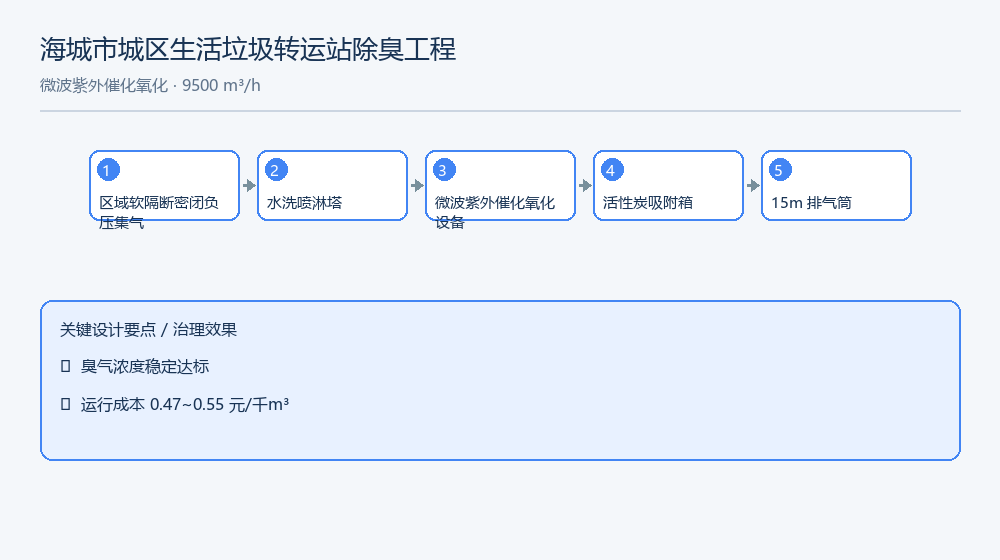
Soft-partition negative-pressure collection → water scrubber tower (dedusting, cooling, partial water-soluble odor removal) → MW-UV catalytic oxidation unit → activated carbon adsorber → 15 m exhaust stack
Main Equipment
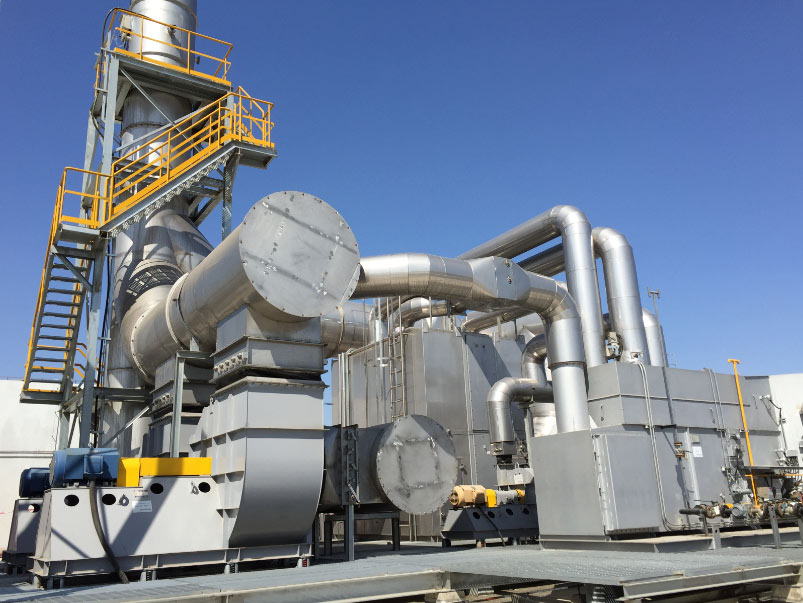
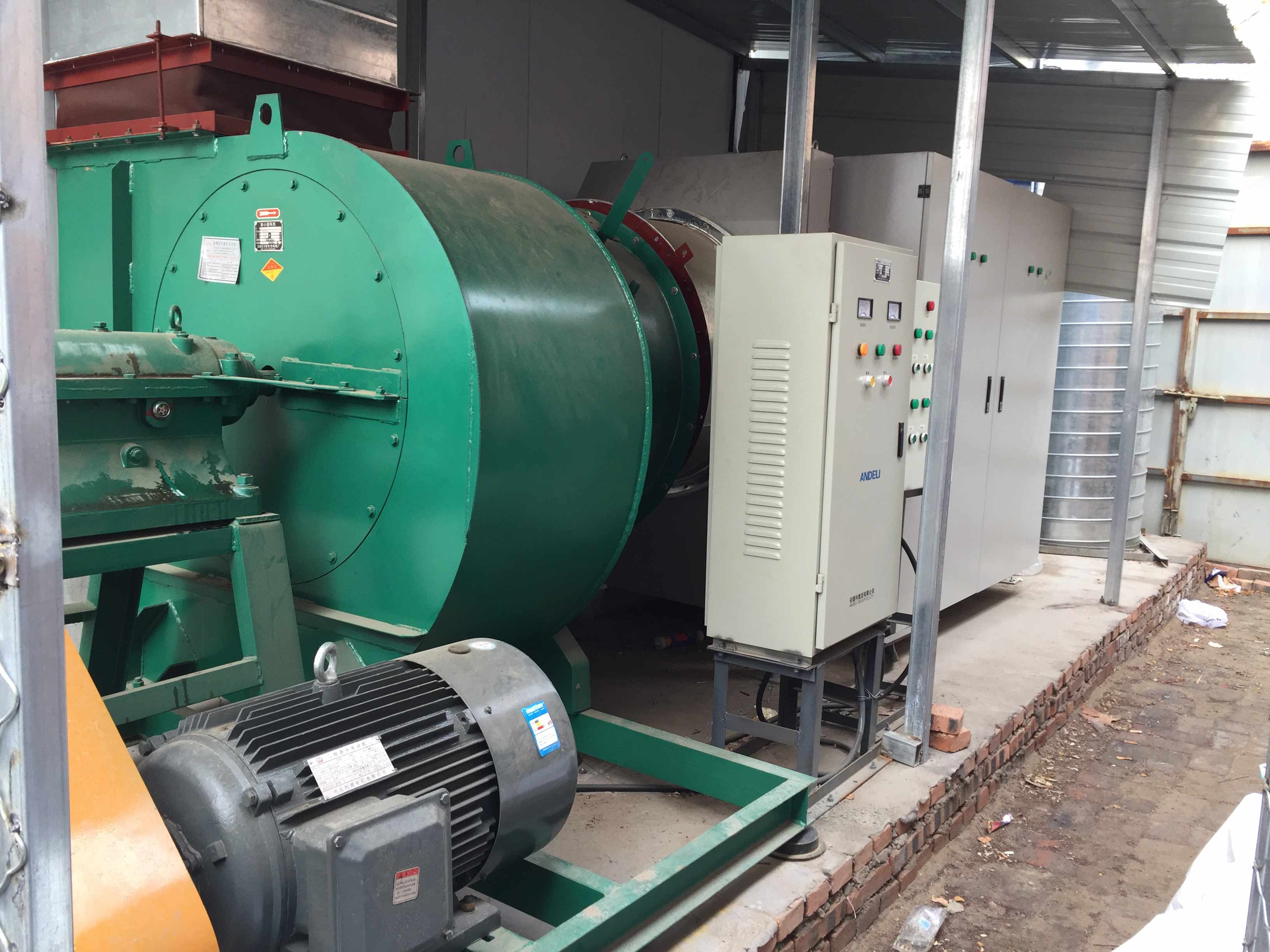
Corrosion-resistant induced draft fan, scrubber tower, microwave UV oxidation unit, activated carbon adsorber, electrical control system
Treatment Results
No obvious rotting odor in the working area; odor concentration consistently meets the standard; neighborhood complaint risk effectively reduced.
Operating Cost
0.47–0.55 CNY / 1,000 m3 of exhaust gas
Technical Highlights
Zero-civil-works retrofit; soft-partition negative-pressure collection adapts to frequent vehicle movement; MW-UV + activated carbon double safeguard ensures stable compliance.
This project uses a Microwave UV Oxidation combined process. Learn more about the technology on our Microwave UV Oxidation equipment page. For a similar design, contact us at info@pollutionctrl.com / WhatsApp +86 19833770783.
Why a waste transfer station cannot be fully enclosed
Vehicles have to enter and leave the unloading hall, so a gas-tight enclosure is not achievable. The design answer is a soft partition with local negative pressure: the hall is divided into zones, air is drawn from the occupied side toward the odour source, and the extraction point sits where the concentration is highest. That keeps the working environment acceptable without trying to seal a doorway that trucks drive through.
Why the leachate trench is the hardest point
- Concentration — leachate is the strongest odour source on the site, producing hydrogen sulphide and dimethyl sulphide at concentrations far above the hall.
- Continuous emission — unlike the unloading hall, the trench generates odour around the clock, so it cannot be treated only during operating hours.
- Corrosion — the combination of H2S and moisture demands corrosion-resistant materials throughout the extraction path.
Treating the trench as a separate collection point, rather than mixing it into the hall extraction, keeps the scrubber and UV stages from being sized by a stream that only exists at one location.
Why a biofilter was not used
The site is a retrofit with no room for a biofilter foundation. A biofilter also needs a stable load and long residence time, which suits neither the intermittent vehicle-driven fluctuation nor the constrained footprint. A compact scrubber plus UV plus carbon route fits the available space and responds faster to load changes.
Why the stack is 15 m
Where residual odour remains after treatment, discharge height provides atmospheric dispersion as a final buffer. The height is set against the nearest receptor distance, not chosen arbitrarily — a taller stack only helps if the plume reaches ground level beyond the receptor.
Frequently asked questions
How is odour from a transfer station measured?
By instrumental measurement of hydrogen sulphide and by sensory assessment at the boundary. Concentration alone does not describe perception, which is why boundary assessment forms part of the acceptance criteria.
Why treat the leachate trench separately?
Because its concentration and corrosion load are much higher than the hall air. Mixing the two streams sizes every downstream stage for the worst case and wastes capacity for most of the day.