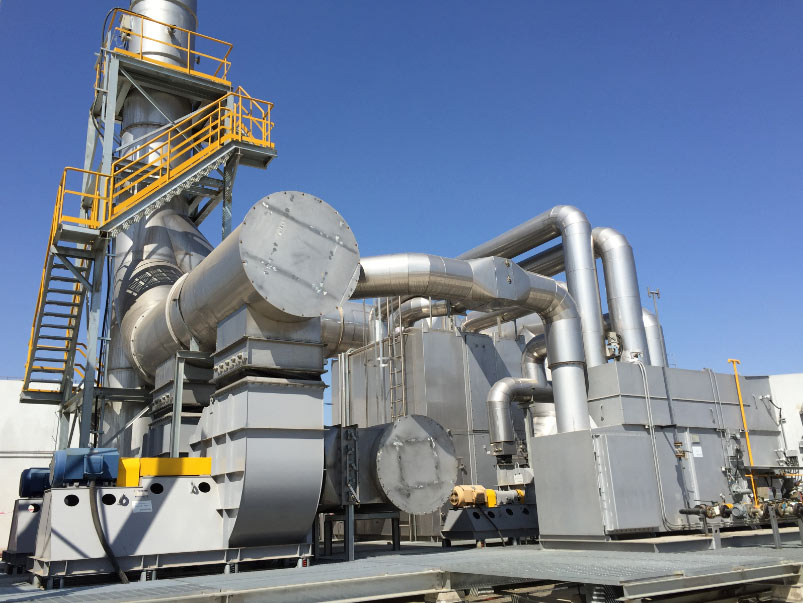

A chemical VOC treatment page comparing catalytic oxidation, RCO and RTO based on solvent chemistry and catalyst risk.
Design basis and emission source
| Industry | Chemical manufacturing |
|---|---|
| VOC source | Process vents, mixing, drying and storage exhaust |
| Key risk | Variable composition and safety margin |
| Selected approach | Technology review followed by custom oxidizer configuration |
Challenges
Chemical plants often combine changing VOC composition with corrosive or catalyst-poisoning contaminants. Safety and material compatibility must be evaluated before equipment selection.
Selected treatment approach
The page presents a data-first review covering LEL, solvent chemistry, pretreatment, bypass logic, oxidizer selection and instrumentation.
Operating result
The case page supports conversion by telling buyers exactly what information to submit for an engineering proposal.
Values are examples for page structure and should be replaced with measured project data when the final case record is available.
Send VOC data for catalytic oxidizer sizing
Share airflow, VOC composition, concentration range, temperature, humidity, dust or mist content, operating schedule and required emission limit. We will review whether a catalytic oxidizer, RCO, RTO, zeolite rotor or carbon system is the better fit.