
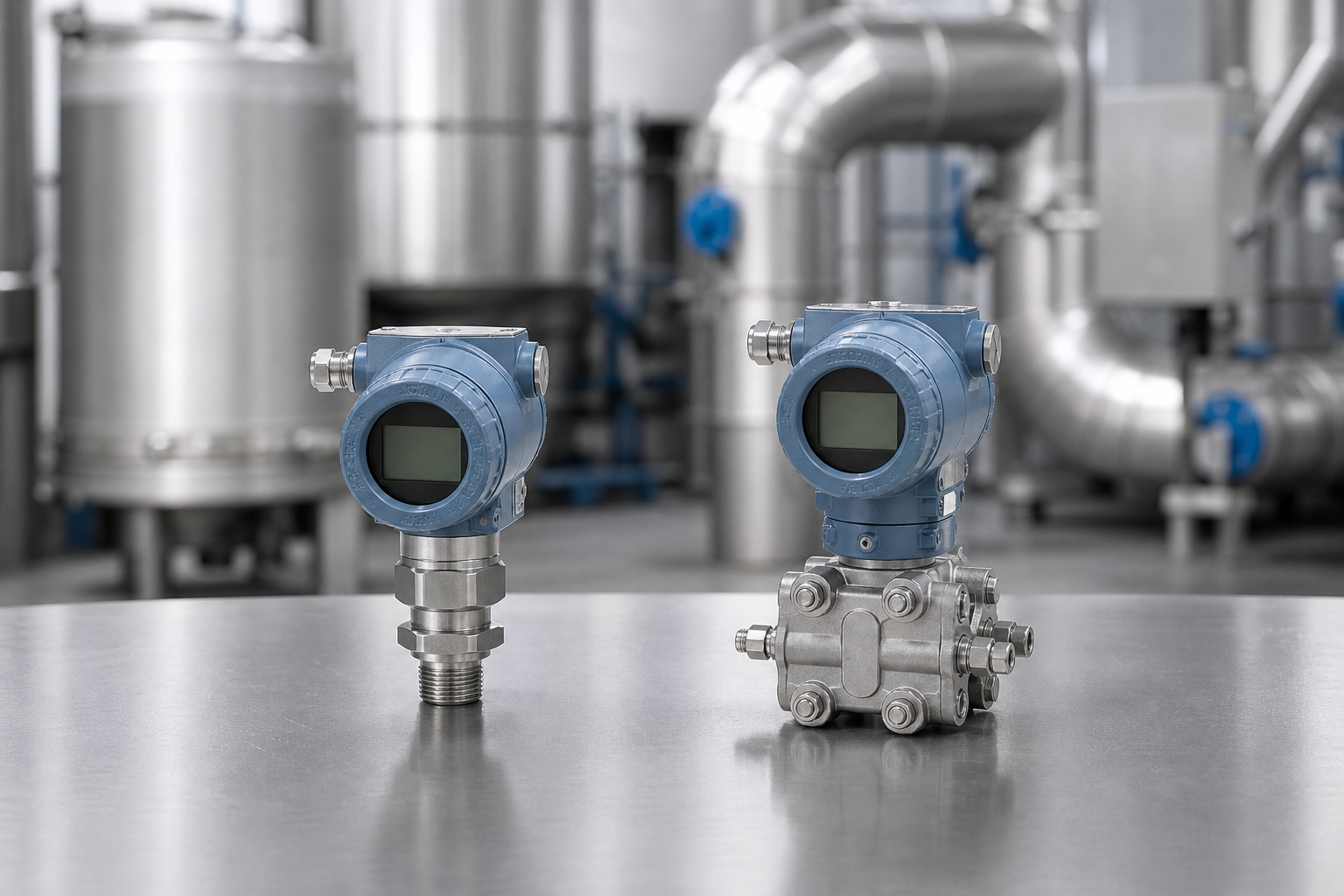
Industrial pressure transmitters convert gas or liquid pressure into an electrical signal for indication, PLC control and remote monitoring. Pollution-control equipment uses pressure measurement to monitor exhaust ducts, fans, filters, scrubbers, pumps, tanks and process lines.
PollutionCtrl supplies and sources gauge-pressure, absolute-pressure and differential-pressure transmitters for industrial environmental systems. The correct model depends on the measured medium, pressure range, static pressure, temperature, connection, wetted materials, output signal and installation environment.
Differential Pressure Transmitter Applications
A differential pressure transmitter measures the pressure difference between two points. In air-pollution systems, this is useful for tracking pressure drop across filters, baghouses, cartridge collectors, scrubbers and other treatment stages.
- Bag filter and cartridge-filter pressure-drop monitoring
- Dust-collector cleaning-control reference
- Wet-scrubber and packed-bed differential pressure
- VOC treatment equipment inlet and outlet pressure
- Fan suction and discharge monitoring
- Duct static-pressure measurement
- Cleanroom or equipment-room pressure monitoring
- Flow measurement using a compatible primary element
Gauge and Absolute Pressure Transmitters
Gauge-pressure transmitters measure pressure relative to the local atmosphere and are commonly considered for pumps, compressed-air lines and liquid systems. Absolute-pressure transmitters measure relative to a vacuum reference and may be required for selected process or vacuum applications.
Pressure Measurement in Scrubbers and Wastewater Systems
Pressure transmitters can monitor scrubber circulation pumps, dosing systems, water lines and treatment skids. Wetted materials must be compatible with the liquid or chemical solution. For viscous, corrosive or solids-containing media, diaphragm-seal or specialized connections may need to be evaluated.
Output and Installation Options
Common industrial signals may include 4–20 mA, voltage or digital communication such as RS485/Modbus, depending on the model. Local displays, cable glands, electrical connectors, impulse tubing and mounting brackets may also be selected according to the installation.
Information Required for a Quotation
- Gauge, absolute or differential-pressure measurement
- Normal operating range and maximum pressure
- Measured gas or liquid
- Process temperature and ambient conditions
- Pipe, duct or equipment connection
- Required wetted materials
- Output signal and power supply
- Display, cable or connector requirement
- Outdoor, corrosive or hazardous-area conditions
- Quantity and destination country
Replacement Pressure Transmitters
For replacement, provide the original model number and nameplate together with photos of the process connection, electrical connection and installation. Confirm the calibrated range and units. A transmitter with the wrong range or pressure reference may produce incorrect control signals.
Frequently Asked Questions
Why monitor differential pressure across a filter?
Pressure drop can help indicate filter loading or airflow resistance. Alarm and cleaning thresholds must be determined by the equipment designer or operating procedure.
Can the transmitter connect to a PLC?
Yes, when the PLC input and transmitter output are compatible and the system is wired and configured correctly.
Explore our pollution-control instrumentation, or contact PollutionCtrl for a pressure or differential-pressure transmitter quotation.