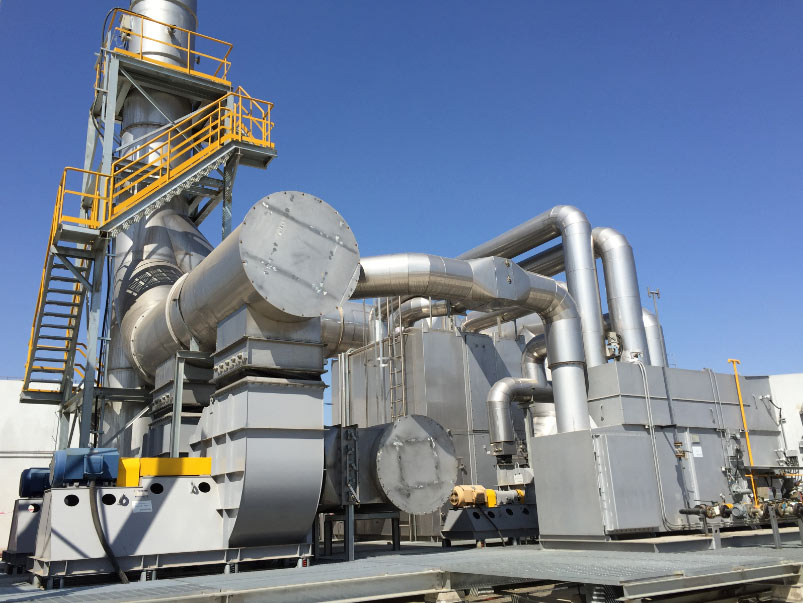

PT100 and PT1000 temperature sensors are resistance temperature detectors used for accurate temperature monitoring in industrial equipment. In pollution-control systems, they can measure process gas, liquid, equipment and surface temperatures at selected points in RTO and RCO units, exhaust ducts, heat exchangers, scrubbers and wastewater-treatment equipment.
PollutionCtrl supplies and sources industrial RTD temperature sensors according to the application. Final construction depends on the required temperature range, process medium, insertion length, mechanical connection, sheath material, wiring method, output signal and installation environment.
PT100 vs. PT1000 Temperature Sensor
A PT100 sensor has a nominal resistance of 100 ohms at 0°C, while a PT1000 has a nominal resistance of 1000 ohms at 0°C. Both use a predictable resistance change to represent temperature. Selection depends on the control system, cable length, measurement circuit, required accuracy and equipment design.
Temperature Sensors for RTO and VOC Treatment
- RTO and thermal-oxidizer gas-temperature monitoring
- RCO and catalytic-system temperature measurement
- VOC exhaust duct inlet and outlet temperature
- Heat-exchanger and heat-recovery monitoring
- Wet-scrubber liquid and circulation-line temperature
- Activated-carbon equipment temperature monitoring
- Wastewater tank, pipe and process-liquid measurement
- Fan, pump, motor or equipment-surface temperature monitoring
Sensor Construction Options
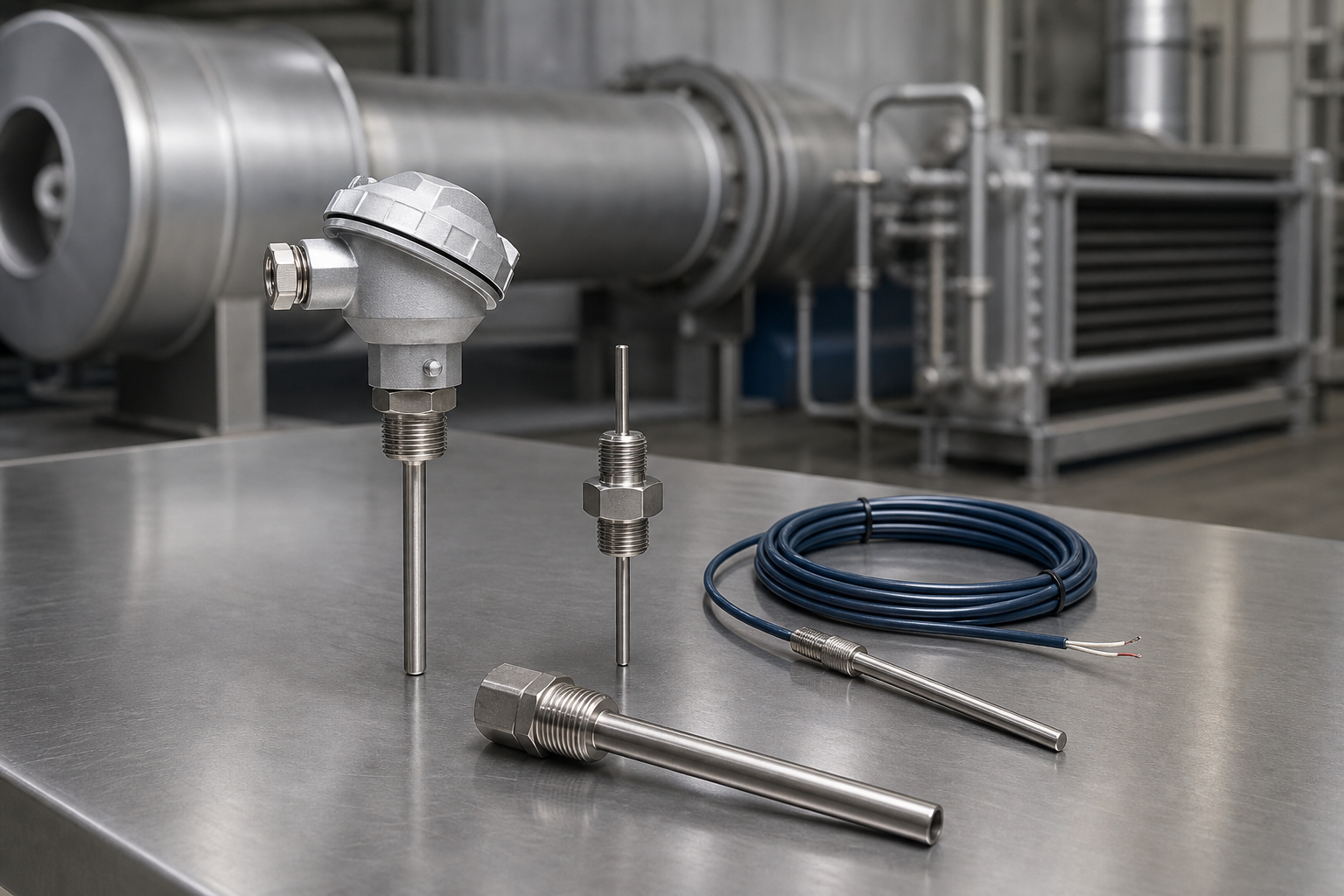
Common RTD assemblies include probe sensors, threaded process sensors, terminal-head assemblies, cable sensors and sensors installed in thermowells. Two-wire, three-wire and four-wire configurations may be available. A head-mounted or separate temperature transmitter can convert the RTD signal to an industrial output such as 4–20 mA when required.
Probe diameter, insertion length, response time and sheath material should match the application. Corrosive gas, chemicals, vibration, condensation, high airflow and outdoor exposure must be considered before selecting the construction.
Information Needed for Selection
- PT100 or PT1000 requirement
- Measurement range and normal operating temperature
- Measured medium and process conditions
- Probe diameter and insertion length
- Thread, flange, compression fitting or thermowell connection
- Sheath or wetted-material requirement
- Two-wire, three-wire or four-wire connection
- Cable length, terminal head or electrical connector
- Direct RTD signal or transmitter output
- Quantity and installation location
Replacement PT100 and PT1000 Sensors
For a replacement sensor, send the existing nameplate, wiring diagram and clear photos. Measure the probe diameter, insertion length, thread size and cable length. A similar-looking sensor may not be electrically or mechanically compatible, so the original equipment information is important.
Frequently Asked Questions
Can a PT100 sensor connect directly to a PLC?
It depends on whether the PLC input supports the selected RTD wiring method. Otherwise, a temperature transmitter may be used to provide a compatible signal.
Is a thermowell required?
A thermowell may be considered where the sensor needs mechanical protection or removal without opening the process. Suitability depends on pressure, velocity, vibration, response-time and material requirements.
See our complete industrial process instrumentation range, or contact PollutionCtrl with your RTO, VOC, scrubber or wastewater temperature-measurement requirements.