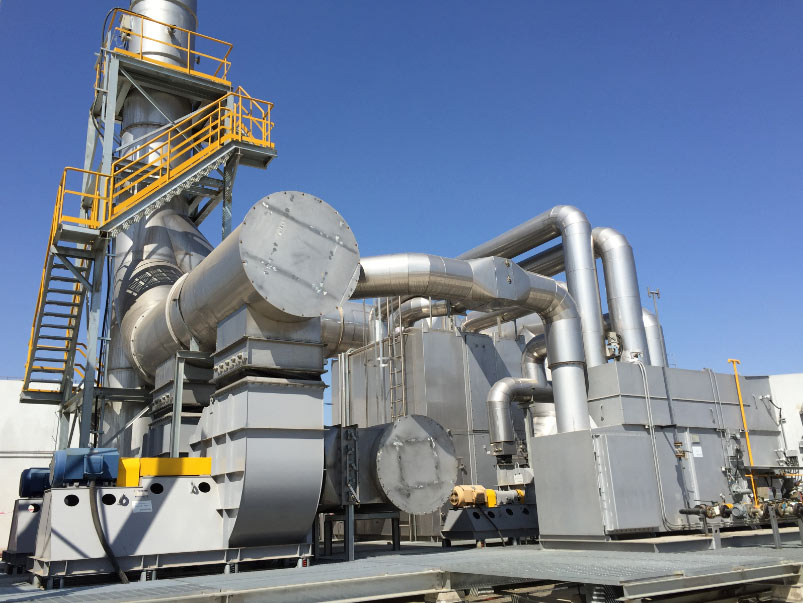

A regenerative thermal oxidizer (RTO) and a direct-fired thermal oxidizer (TO) both destroy suitable organic pollutants by high-temperature oxidation. The main difference is heat recovery: an RTO uses ceramic media beds, while a conventional TO does not use regenerative beds.
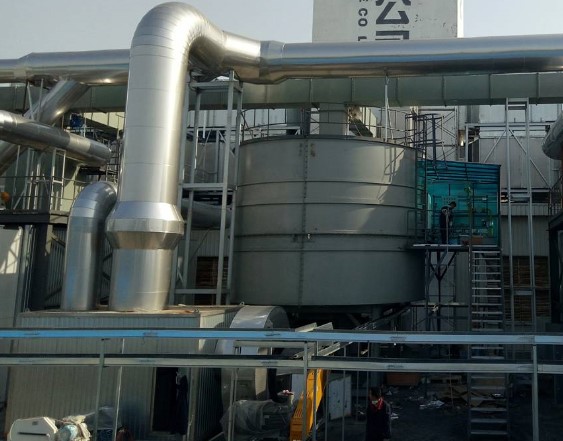
Quick comparison
| System | Typical fit | Main characteristic |
|---|---|---|
| RTO | Medium-to-high airflow, continuous VOC exhaust | Ceramic-bed heat recovery and lower steady-state fuel demand |
| Thermal oxidizer | High-concentration or specialized waste gas | Simple high-temperature oxidation without regenerative beds |
| Catalytic oxidizer | Suitable medium-concentration streams | Lower oxidation temperature using a catalyst |
When an RTO may be preferred
An RTO may be preferred when airflow is high, operation is continuous and long-term fuel consumption is important. Ceramic heat recovery can also support stable operation when the exhaust profile is well understood.
When another technology may be better
A direct-fired thermal oxidizer may be more appropriate for high-concentration streams or a process where regenerative heat recovery is not justified. A catalytic oxidizer may suit lower-temperature or intermittent applications when the gas is compatible with the catalyst. The correct choice depends on VOC chemistry, airflow, concentration, particulates, operating schedule, safety and emission limits.
Data required for a technology comparison
- Total and minimum airflow
- VOC species and concentration range
- Inlet temperature and humidity
- Dust, oil mist and condensables
- Operating hours and process variation
- Required outlet limit and available utilities
Review PollutionCtrl RTO systems or send your process data for a preliminary evaluation.
Next Steps for an RTO Project
RTO selection should be based on the complete exhaust operating envelope. A preliminary review is more useful when it includes airflow range, VOC composition and concentration, inlet conditions, contaminants, operating hours, emission limits and available utilities.
Request a preliminary RTO evaluation
Send the process information you have and we can review technology fit, configuration options and the data still needed for sizing.
Related resources: How an RTO works · RTO vs. thermal oxidizer · RTO sizing guide