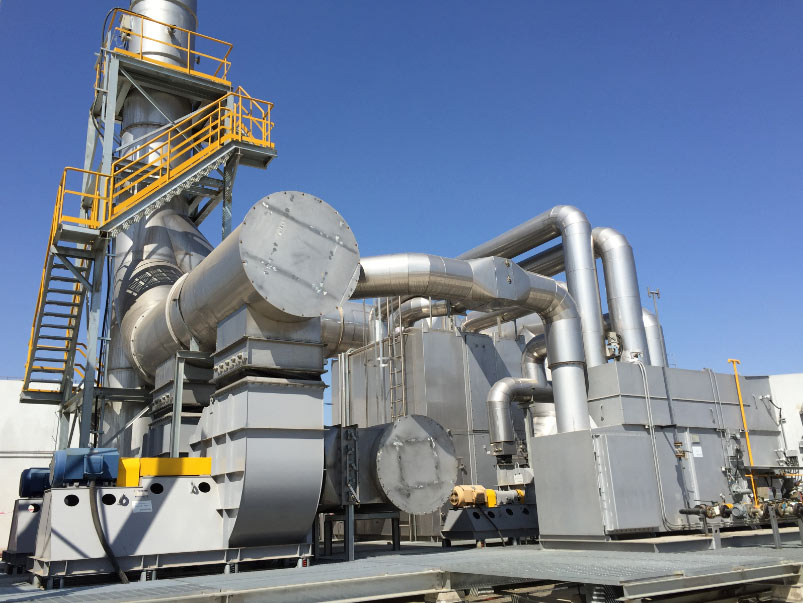

A regenerative thermal oxidizer (RTO) treats industrial exhaust containing volatile organic compounds (VOCs), hazardous air pollutants (HAPs) and organic odors. It uses ceramic heat-exchange media to recover heat from the cleaned gas and reuse that heat to preheat the incoming process air.
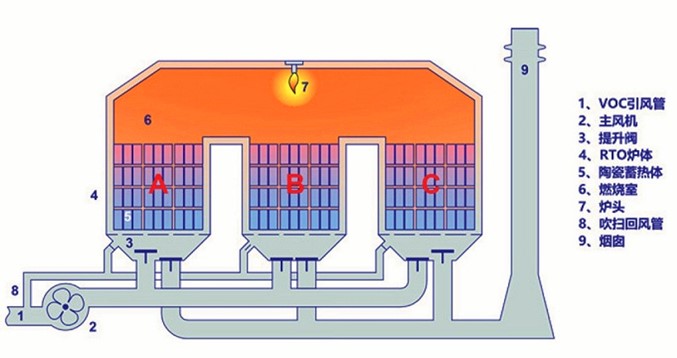
What is a regenerative thermal oxidizer?
An RTO is an enclosed high-temperature oxidation system for industrial air pollution control. The process oxidizes suitable organic pollutants into mainly carbon dioxide and water vapor. The ceramic beds reduce supplemental fuel demand compared with a direct-fired thermal oxidizer.
RTO operating cycle
- Preheat: VOC-laden exhaust passes through a hot ceramic bed.
- Oxidize: The preheated gas enters the combustion chamber, where temperature, residence time, turbulence and oxygen are controlled.
- Recover: Clean hot gas transfers heat into a second ceramic bed.
- Reverse: Switching valves or a rotary distributor changes the flow path so the recovered heat is reused.
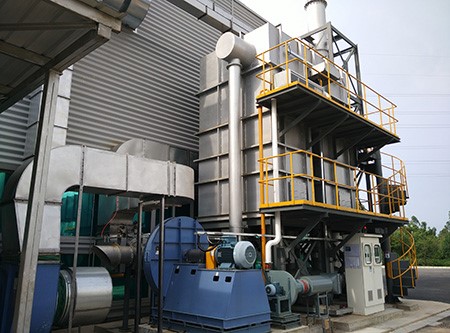
What determines RTO performance?
- VOC composition and concentration
- Airflow and process variability
- Oxidation temperature and residence time
- Particulate, oil mist and condensable content
- Ceramic media design and pressure drop
- Valve sealing, controls and safety interlocks
When is an RTO suitable?
RTOs are commonly evaluated for medium-to-high airflow, continuous industrial exhaust with oxidizable VOCs or organic odors. Final selection requires a process-specific review. Streams containing dust, paint mist, acid gases or condensables may require pretreatment.
Related RTO resources
Next Steps for an RTO Project
RTO selection should be based on the complete exhaust operating envelope. A preliminary review is more useful when it includes airflow range, VOC composition and concentration, inlet conditions, contaminants, operating hours, emission limits and available utilities.
Request a preliminary RTO evaluation
Send the process information you have and we can review technology fit, configuration options and the data still needed for sizing.
Related resources: How an RTO works · RTO vs. thermal oxidizer · RTO sizing guide