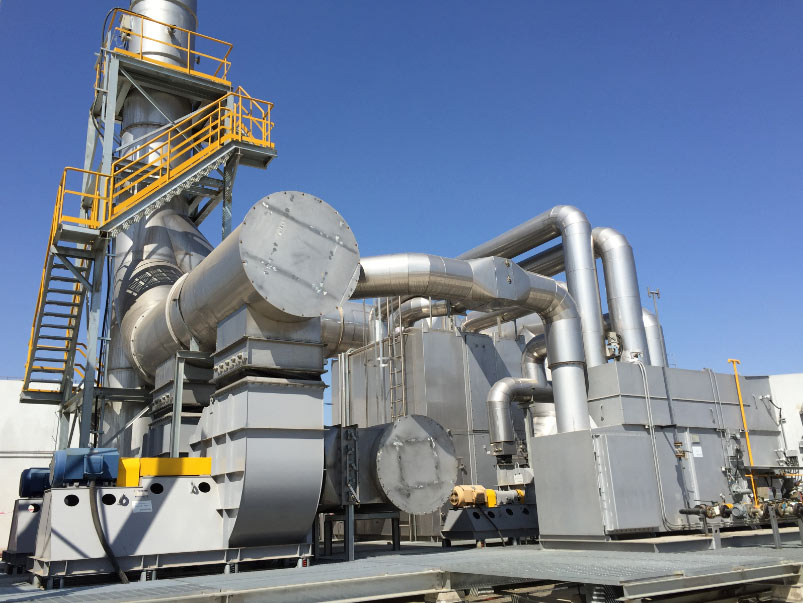

The preheat system brings the exhaust stream to catalyst light-off temperature and stabilizes operation when VOC heat release changes. It may use a gas burner, electric heater or combined arrangement.
Why this component matters
A catalytic oxidizer saves energy only when temperature control, heat recovery and VOC heat release are balanced. Incorrect heater sizing can cause slow start-up, temperature instability or unnecessary utility cost.
| Airflow | Total, minimum and maximum operating airflow. Include simultaneous-use assumptions for multiple emission points. |
|---|---|
| VOC composition | Known solvents, average and peak concentration, calorific value if available, and any changing product recipes. |
| Contaminants | Dust, oil mist, resin aerosol, silicone, sulfur, phosphorus, halogens, heavy metals or catalyst-poisoning compounds. |
| Gas conditions | Normal and peak temperature, humidity, oxygen level, pressure and condensation risk. |
| Compliance target | Required outlet concentration, destruction efficiency, monitoring method and project location. |
What should be reviewed before final selection?
Start-up duty
The heater must raise the reactor and process air to the required catalyst inlet temperature within an acceptable start-up period.
Gas train and flame safety
Burner packages require pressure regulation, safety shutoff, ignition, flame detection, purge and code-compliant interlocks.
Electric heating option
Electric heaters suit smaller flows or sites without gas supply, but electrical load and control steps must be evaluated.
Temperature uniformity
Good mixing prevents cold zones that cause VOC slip and hot zones that shorten catalyst life.
Turndown control
Modulation should follow VOC load and airflow changes without hunting or overshoot.
Energy balance
The final design should compare start-up fuel, steady fuel, electricity and recovered heat.
Catalytic Oxidizer Burner and Electric Heating System questions
Can a catalytic oxidizer be fully electric?
Yes for suitable airflow and temperature duty. Power availability and operating cost must be checked.
Does the burner stay on all the time?
Not always. Once the system is hot, VOC heat release and heat recovery may reduce or eliminate supplemental heating in some duties.
What happens if catalyst inlet temperature is too low?
Oxidation may be incomplete, causing VOC slip and failure to meet the outlet limit.
Send VOC data for catalytic oxidizer sizing
Share airflow, VOC composition, concentration range, temperature, humidity, dust or mist content, operating schedule and required emission limit. We will review whether a catalytic oxidizer, RCO, RTO, zeolite rotor or carbon system is the better fit.