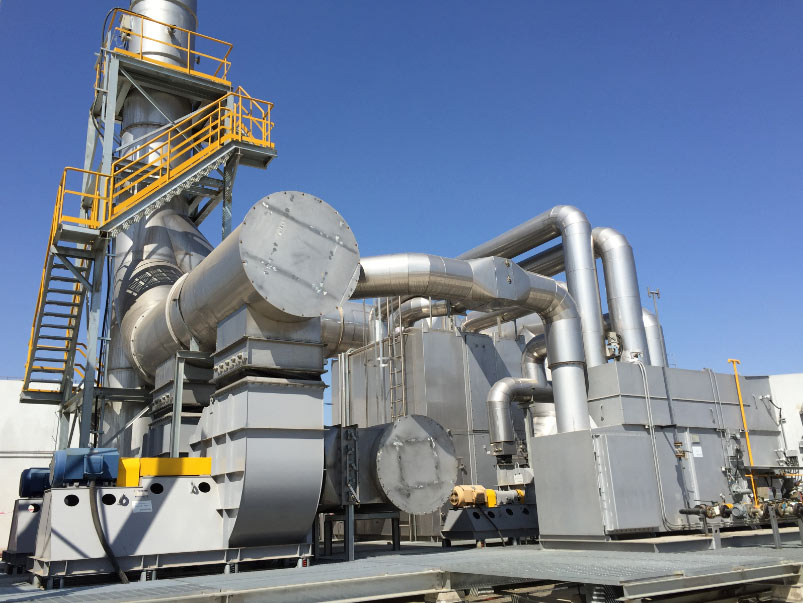

Valves and dampers control airflow path, dilution, bypass, isolation and emergency exhaust. They protect the process, catalyst and plant safety system during normal operation and upset conditions.
Why this component matters
The valve package is part of the safety strategy, not an accessory. Poor sealing, slow actuation or incorrect bypass logic can create untreated emissions, high temperature risk or process backpressure problems.
| Airflow | Total, minimum and maximum operating airflow. Include simultaneous-use assumptions for multiple emission points. |
|---|---|
| VOC composition | Known solvents, average and peak concentration, calorific value if available, and any changing product recipes. |
| Contaminants | Dust, oil mist, resin aerosol, silicone, sulfur, phosphorus, halogens, heavy metals or catalyst-poisoning compounds. |
| Gas conditions | Normal and peak temperature, humidity, oxygen level, pressure and condensation risk. |
| Compliance target | Required outlet concentration, destruction efficiency, monitoring method and project location. |
What should be reviewed before final selection?
Bypass strategy
A high-temperature or emergency bypass may protect catalyst and upstream production equipment during upset conditions.
Isolation and maintenance
Isolation dampers allow safe maintenance of filters, heater, catalyst or heat exchanger sections.
Dilution control
Dilution air can maintain LEL margin and temperature limits when concentration varies.
Actuation and feedback
Pneumatic or electric actuators should include position confirmation for PLC logic.
Leakage and sealing
Leakage paths must be considered when emission limits or safety sequences depend on tight closure.
Materials and temperature
Valve bodies, seals and bearings must suit the gas temperature and chemical environment.
Catalytic Oxidizer Valves, Dampers and Bypass System questions
Why does a catalytic oxidizer need bypass dampers?
Bypass dampers can protect equipment during over-temperature, fan failure, start-up, shutdown or process upset events.
Are dampers part of the safety interlock?
Yes. Position feedback and actuator status are commonly used in purge, start-up and fault logic.
What valve data is needed?
Provide airflow, temperature, pressure, duct size, chemical exposure, leakage requirement and actuation preference.
Send VOC data for catalytic oxidizer sizing
Share airflow, VOC composition, concentration range, temperature, humidity, dust or mist content, operating schedule and required emission limit. We will review whether a catalytic oxidizer, RCO, RTO, zeolite rotor or carbon system is the better fit.