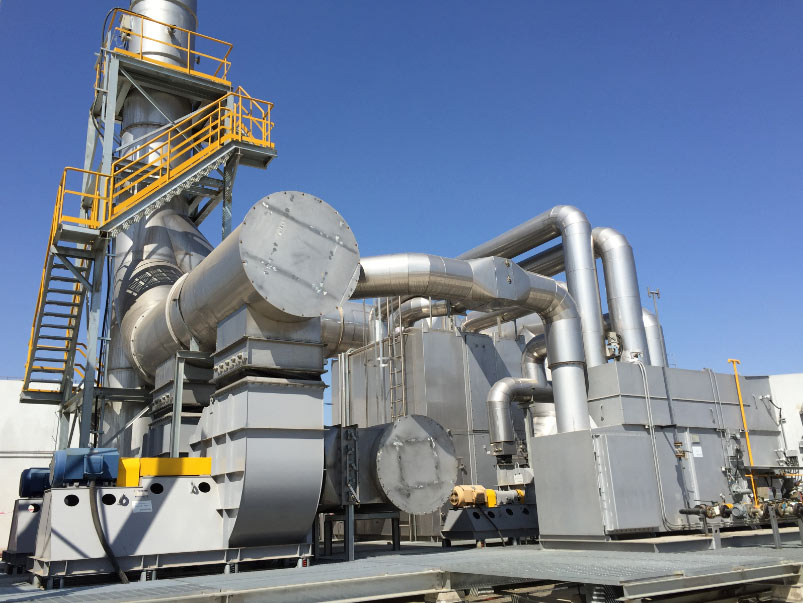

The Ultimate Guide to Chemical Industry Regenerative Thermal Oxidizers (RTO): Efficiency & Innovation in Air Pollution Control
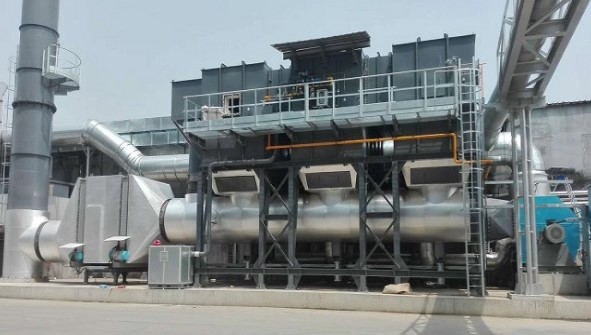
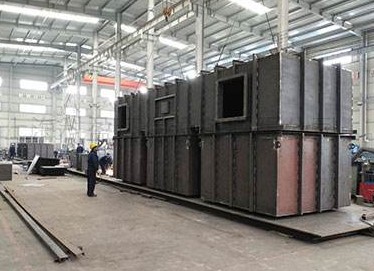
Industrial facilities across a wide range of sectors generate exhaust streams containing Volatile Organic Compounds (VOCs), Hazardous Air Pollutants (HAPs), and process-related odors. Regenerative Thermal Oxidizers (RTOs) are among the most widely used technologies for treating these emissions because they combine thermal oxidation with regenerative heat recovery.
RTO systems are commonly installed in chemical manufacturing plants, coating operations, printing facilities, pharmaceutical production, electronics manufacturing, and other industries where VOC control is required.
What Is a Regenerative Thermal Oxidizer?
A Regenerative Thermal Oxidizer (RTO) is an emission control system that treats VOC-containing exhaust streams through thermal oxidation.
During operation, contaminated process air is heated to temperatures typically ranging from 760°C to 850°C. Under these conditions, organic compounds are oxidized into carbon dioxide and water vapor. System performance depends on maintaining the appropriate combination of temperature, residence time, and airflow distribution.
A distinguishing feature of RTO technology is the use of ceramic heat recovery media. Thermal energy from the treated exhaust stream is captured and transferred to incoming process air, reducing fuel consumption compared with conventional thermal oxidation systems.
How an RTO Works
Most RTO systems operate using multiple ceramic media chambers that alternate between heat recovery and process air preheating.
1. Process Air Preheating
VOC-containing exhaust air enters a ceramic media bed that has been heated during a previous cycle. The stored thermal energy raises the temperature of the incoming air before it reaches the combustion chamber.
2. Thermal Oxidation
The preheated air enters the oxidation chamber, where burners maintain the operating temperature required for VOC destruction.
3. Heat Recovery
After oxidation, the treated exhaust stream passes through another ceramic media bed. Heat from the exhaust gas is transferred to the ceramic media and stored for reuse during subsequent cycles.
4. Chamber Switching and Purge
In multi-bed systems, airflow is periodically redirected between chambers. Many three-bed RTO designs incorporate a purge cycle to reduce VOC carryover and improve overall destruction performance.
Thermal Efficiency and Fuel Consumption
One of the primary reasons RTO technology is widely used is its ability to recover a large portion of the thermal energy generated during operation.
Depending on system design and operating conditions, thermal recovery efficiencies may exceed 95%. For applications with moderate or high VOC concentrations, the oxidation process itself can provide a significant portion of the energy required to maintain operating temperature after start-up.
Fuel consumption varies according to airflow volume, VOC loading, operating temperature, and production schedules.
Electric RTO Systems
Electrically heated RTO systems have received increased attention in regions pursuing industrial decarbonization initiatives.
Instead of natural gas-fired burners, these systems use electric heating elements to achieve and maintain oxidation temperatures. Their suitability depends on factors such as electricity pricing, available electrical infrastructure, operating schedules, and facility sustainability objectives.
While electric RTOs can reduce direct combustion emissions, economic feasibility varies by region and application.
Typical Industrial Applications
Chemical Manufacturing
Chemical production facilities often generate exhaust streams with varying VOC concentrations and compositions. RTO systems are commonly used because they can accommodate a broad range of operating conditions and contaminant profiles.
Coating and Surface Finishing
Paint booths, drying ovens, resin production lines, and coating processes frequently rely on RTO technology for VOC emission control.
Printing and Packaging
Rotogravure printing, laminating, extrusion coating, and packaging operations commonly generate solvent-based emissions suitable for thermal oxidation treatment.
Electronics and Semiconductor Manufacturing
RTO systems are used to treat process exhaust streams containing organic compounds generated during electronics assembly and semiconductor fabrication.
Cannabis Processing
Facilities involved in cannabis cultivation and extraction may use thermal oxidation systems for odor control and management of solvent-related emissions, depending on process requirements and local regulations.
RTO vs. RCO
Another technology frequently considered alongside RTO systems is the Regenerative Catalytic Oxidizer (RCO).
| Feature | RTO | RCO |
|---|---|---|
| Oxidation Method | Thermal Oxidation | Catalytic Oxidation |
| Typical Operating Temperature | 760–850°C | 300–500°C |
| Catalyst Required | No | Yes |
| Sensitivity to Contaminants | Lower | Higher |
| Maintenance Requirements | Moderate | Catalyst Management Required |
| Suitable for Complex VOC Streams | Often Yes | Depends on Catalyst Compatibility |
The selection process should consider VOC composition, airflow volume, operating costs, contaminant characteristics, and long-term maintenance requirements.
System Selection Considerations
Selecting an RTO involves evaluating:
Airflow volume
VOC concentration
Process operating schedule
Available installation space
Fuel and utility costs
Emission requirements
Heat recovery opportunities
Maintenance requirements
In some facilities, additional heat recovery systems may be incorporated to utilize excess thermal energy for process heating, hot water generation, or steam production.
Conclusion
Regenerative Thermal Oxidizers remain one of the most widely applied technologies for industrial VOC control. By combining thermal oxidation with regenerative heat recovery, RTO systems can provide effective emission treatment while reducing fuel consumption relative to conventional thermal oxidation approaches.
The most appropriate system configuration depends on process conditions, emission characteristics, energy requirements, and site-specific operational objectives.
Related Products