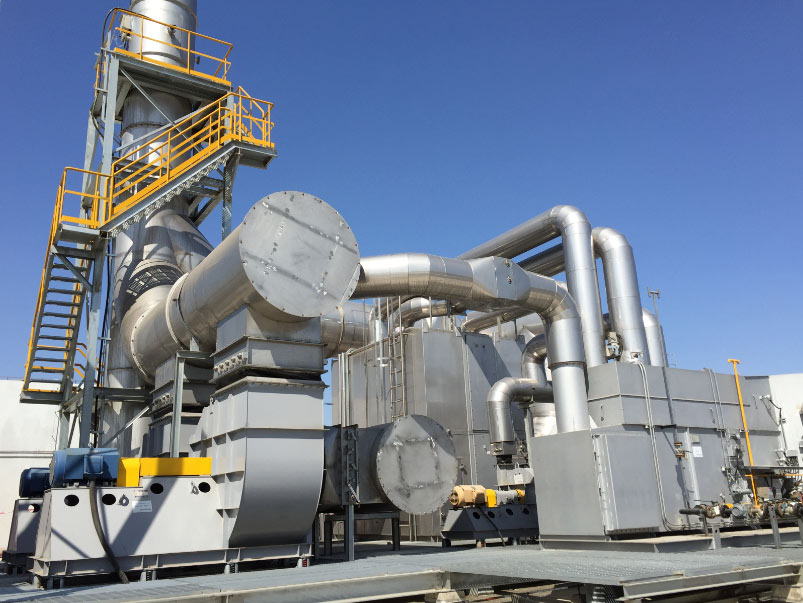

Reference-design note: This page describes an engineering reference assembled from the supplied tank-farm technical materials. It is not presented as a verified PollutionCtrl customer claim. Actual capacity, temperatures, recovery performance and equipment configuration must be confirmed from project data.
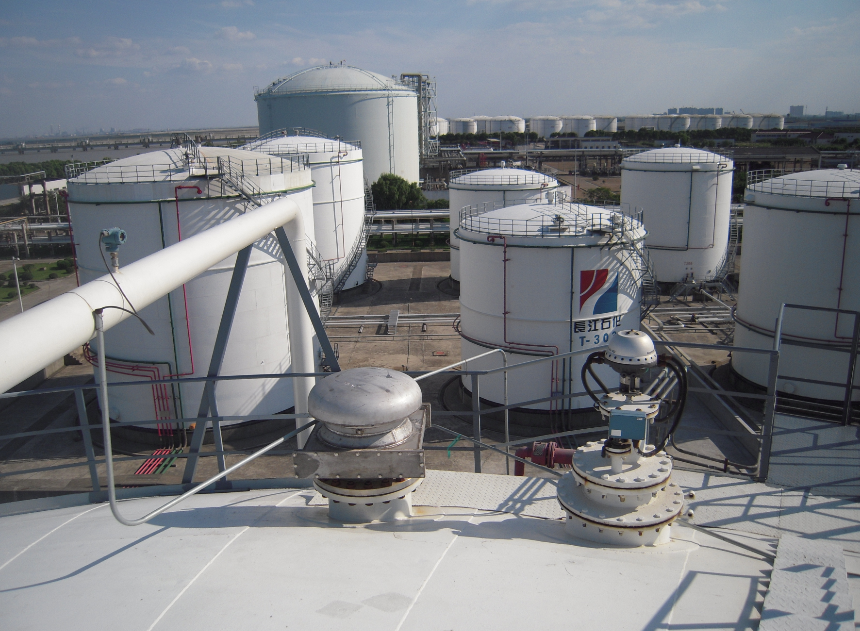
Application background
Methanol tank farms and loading areas can produce variable vapor during filling, transfer and temperature changes. A staged condensation section can recover condensable components, while adsorption can polish the residual gas before discharge or recycle.
Reference process route
Tank and loading vapor → pressure-controlled collection header → liquid separation → staged cooling/condensation → condensate collection → alternating adsorption beds → vacuum desorption and recycle → monitored outlet.
Engineering points to confirm
- Actual methanol concentration, water content and non-condensable gas composition
- Normal and peak flow during tank breathing and loading
- Cooling duty, defrost strategy and condensate return route
- Adsorption-bed temperature rise, switching cycle, pressure drop and regeneration
- LEL, oxygen, flame protection, nitrogen blanketing and emergency isolation
Need a site-specific methanol VRU design?
Use this reference only as a starting point and provide measured gas data for a project review.
What a tank farm vapour recovery unit does
Filling a storage tank displaces vapour from the headspace. A vapour recovery unit captures that displaced vapour instead of venting it, and returns the recovered liquid to the tank or to the product stream. For methanol, which is water-miscible and has a high vapour pressure, the recovery route has to handle a vapour that is both valuable and readily absorbed.
Why condensation comes before adsorption
- Condensation removes the bulk — cooling the vapour stream condenses the majority of the methanol, which reduces the load on the adsorption stage and recovers product directly as liquid.
- Adsorption polishes the remainder — activated carbon captures the residual concentration that condensation cannot reach, meeting the emission limit.
- Regeneration returns product — the carbon bed is regenerated with hot gas or vacuum, and the desorbed vapour is condensed, so the captured methanol is not lost.
Using adsorption alone would mean a bed sized for the full vapour load and a much larger regeneration duty; using condensation alone would leave a residual that may not meet the limit.
Design questions for a methanol tank farm
- Tank volume, filling rate and the resulting peak vapour flow.
- Vapour composition, including inert gas if the tank is blanketed.
- Required emission limit and the measurement basis.
- Whether recovered liquid can be returned to the tank or must go to a separate receiver.
- Temperature of the vapour and the coolant available for condensation.
- Material compatibility, since methanol attacks some elastomers and seal materials.
Frequently asked questions
Why is methanol harder to recover than diesel vapour?
Because it is water-miscible and highly volatile, so simple knock-out does not capture it completely, and the presence of water changes the condensation behaviour. The adsorption stage is what brings the outlet down to the limit.
Does a VRU need inert gas blanketing?
Where the vapour can enter a flammable range during filling, blanketing with nitrogen is used to keep the headspace below the limiting oxygen concentration. The VRU design then has to handle an inert-rich stream.